
Last updated September 22, 2026
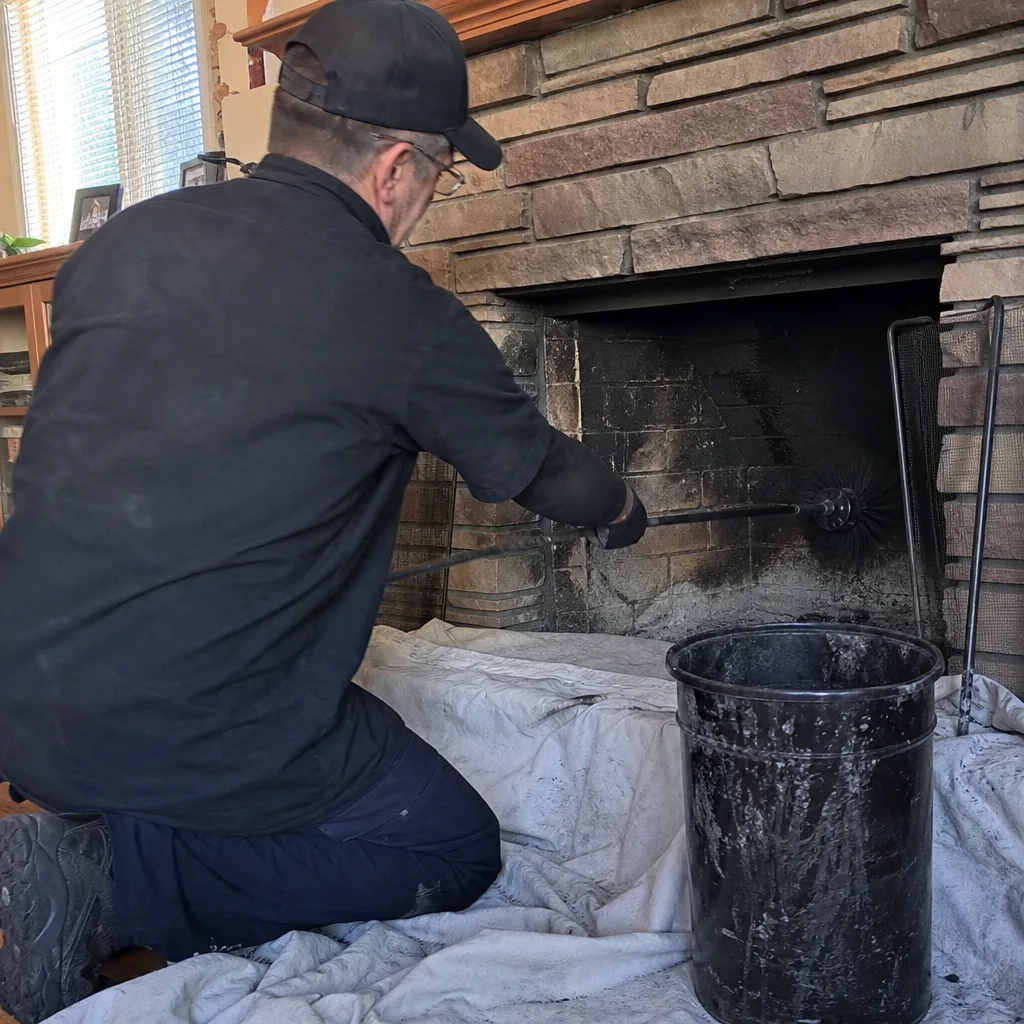
Level 1 sweep and inspection to the NFPA 211 annual standard - flue, crown, cap, and flashing checked and photographed
Chimney sweep logs do not sweep chimneys. They loosen some creosote - which then falls where a brush and vacuum still have to collect it.
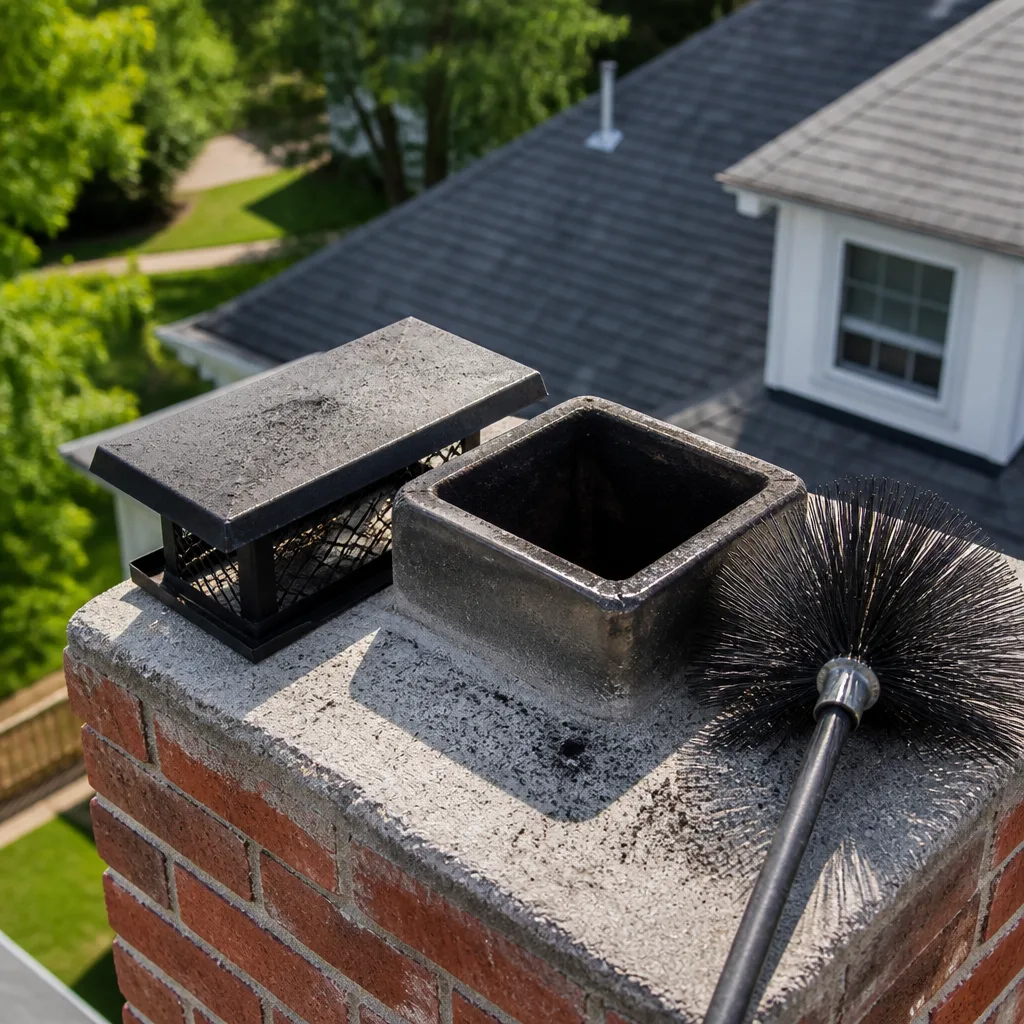
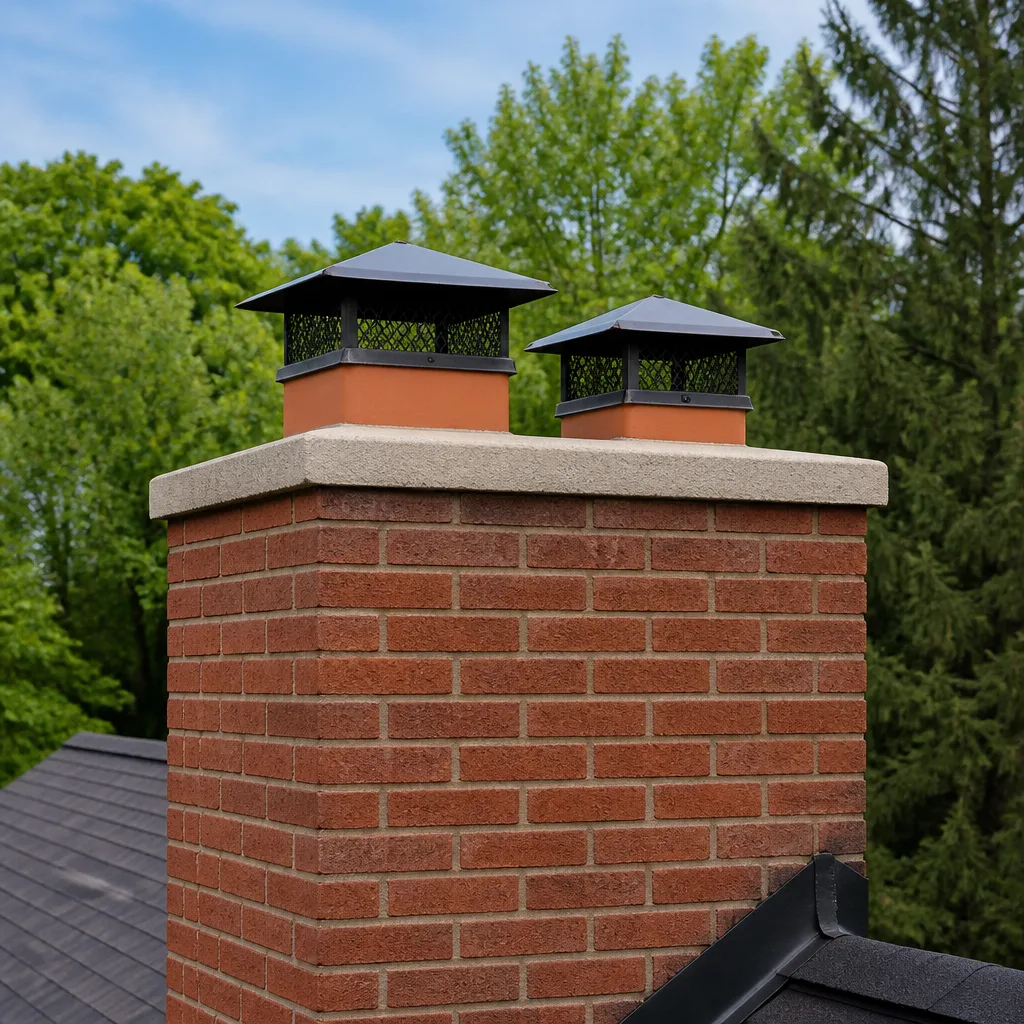
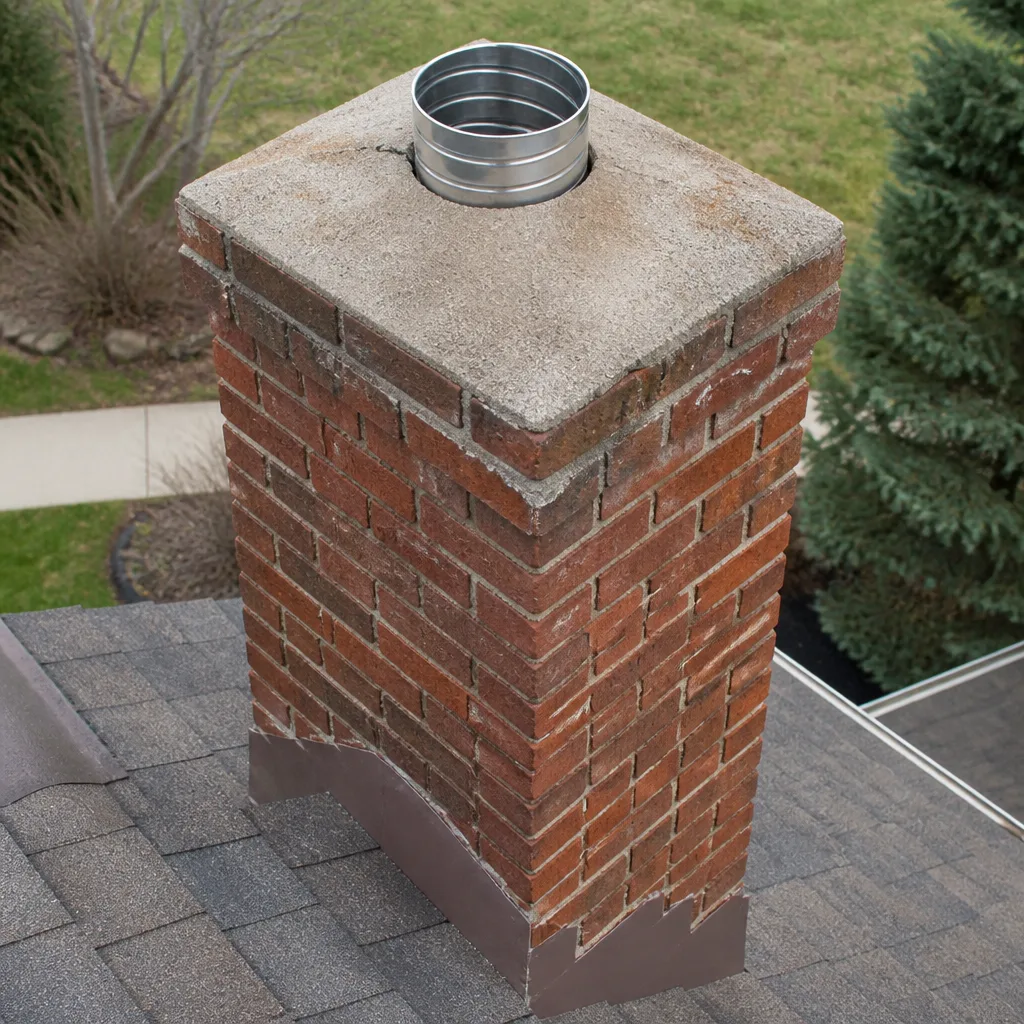
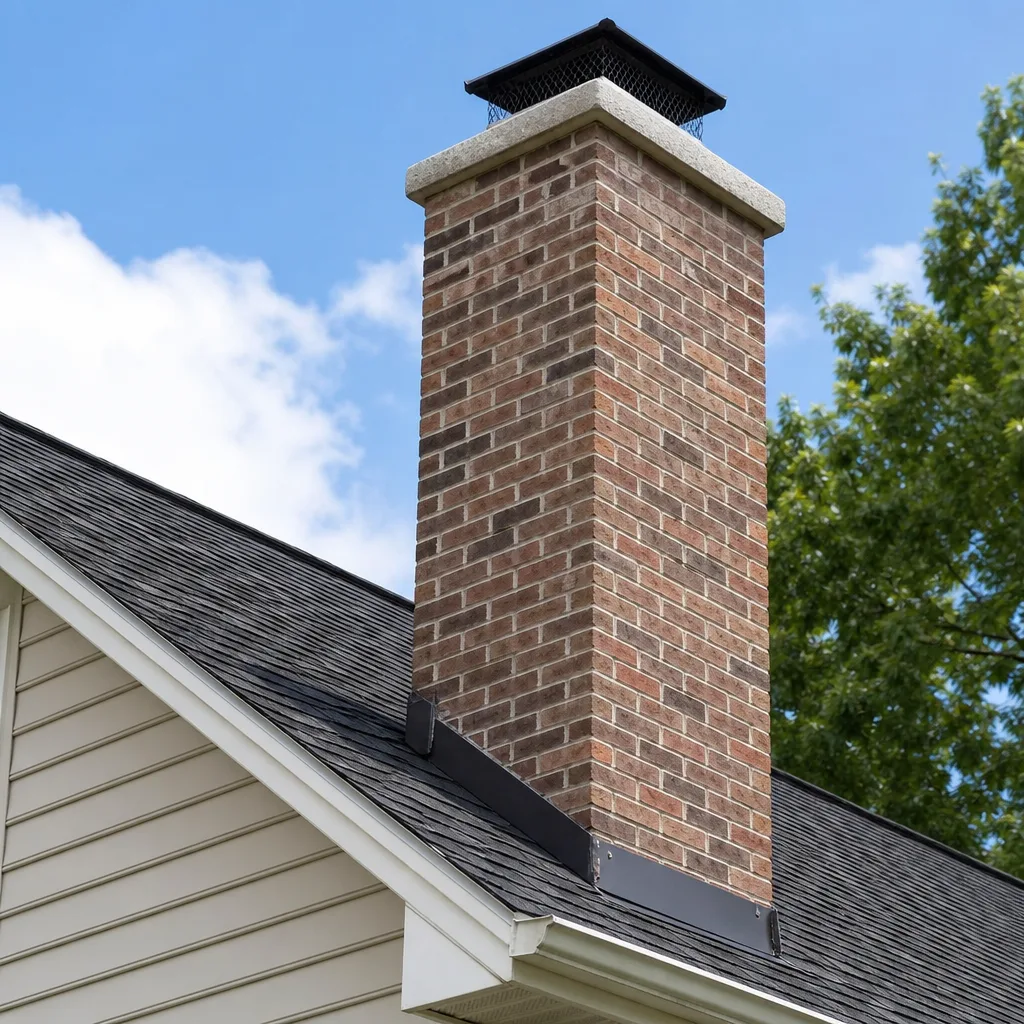
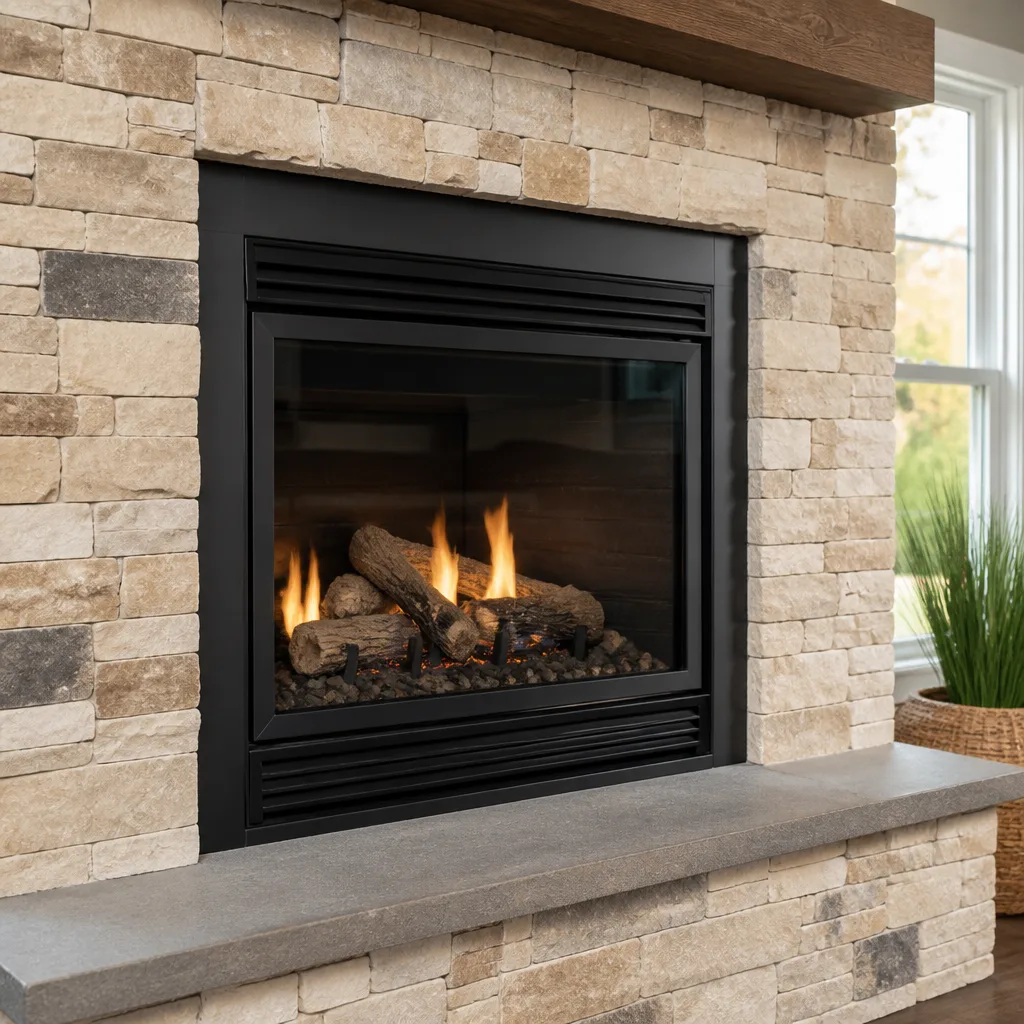
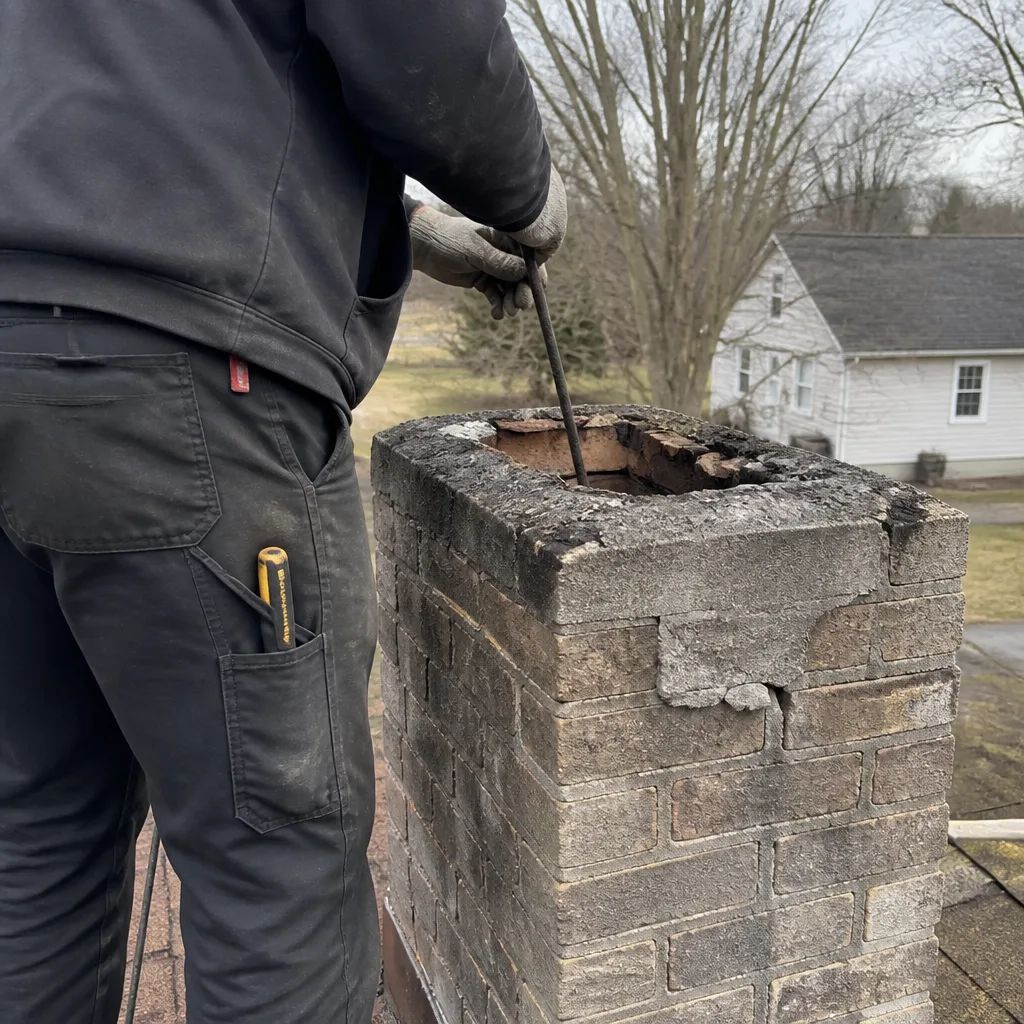 Before
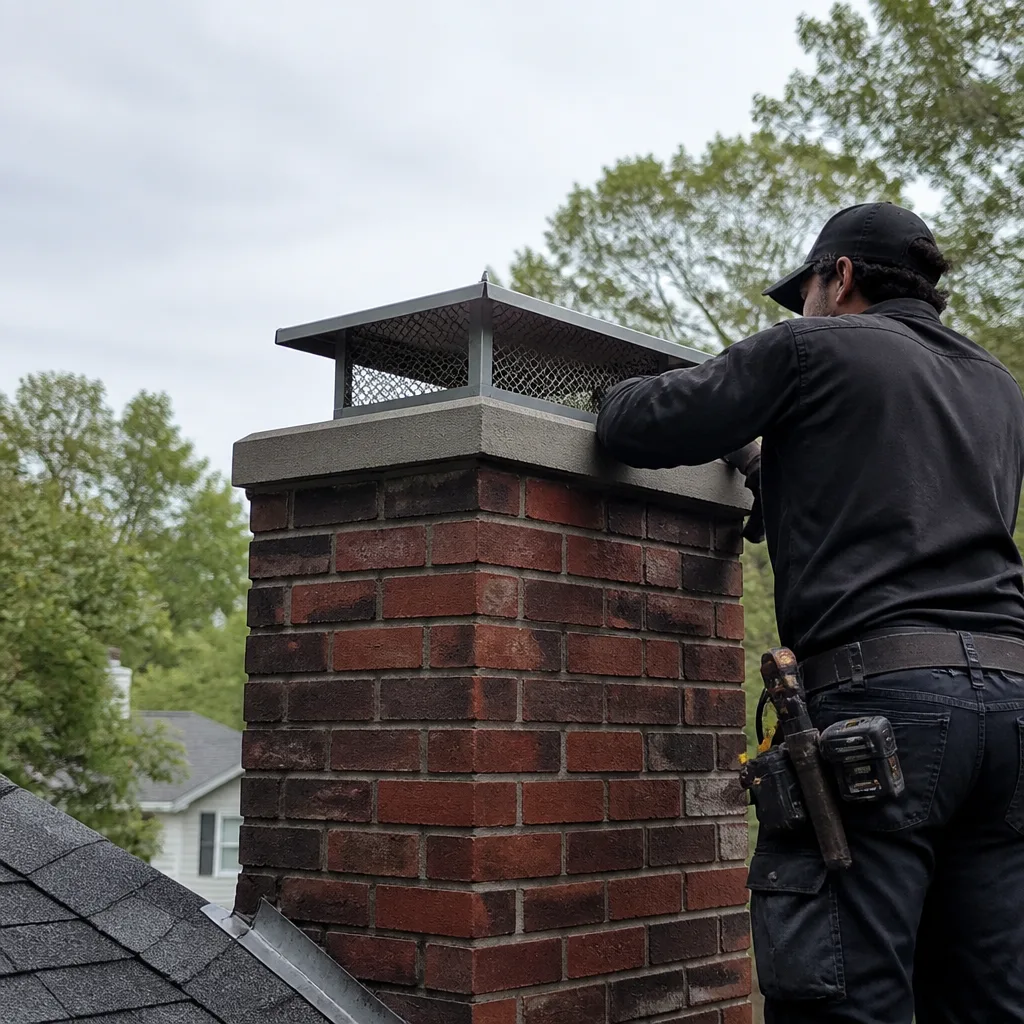 After
After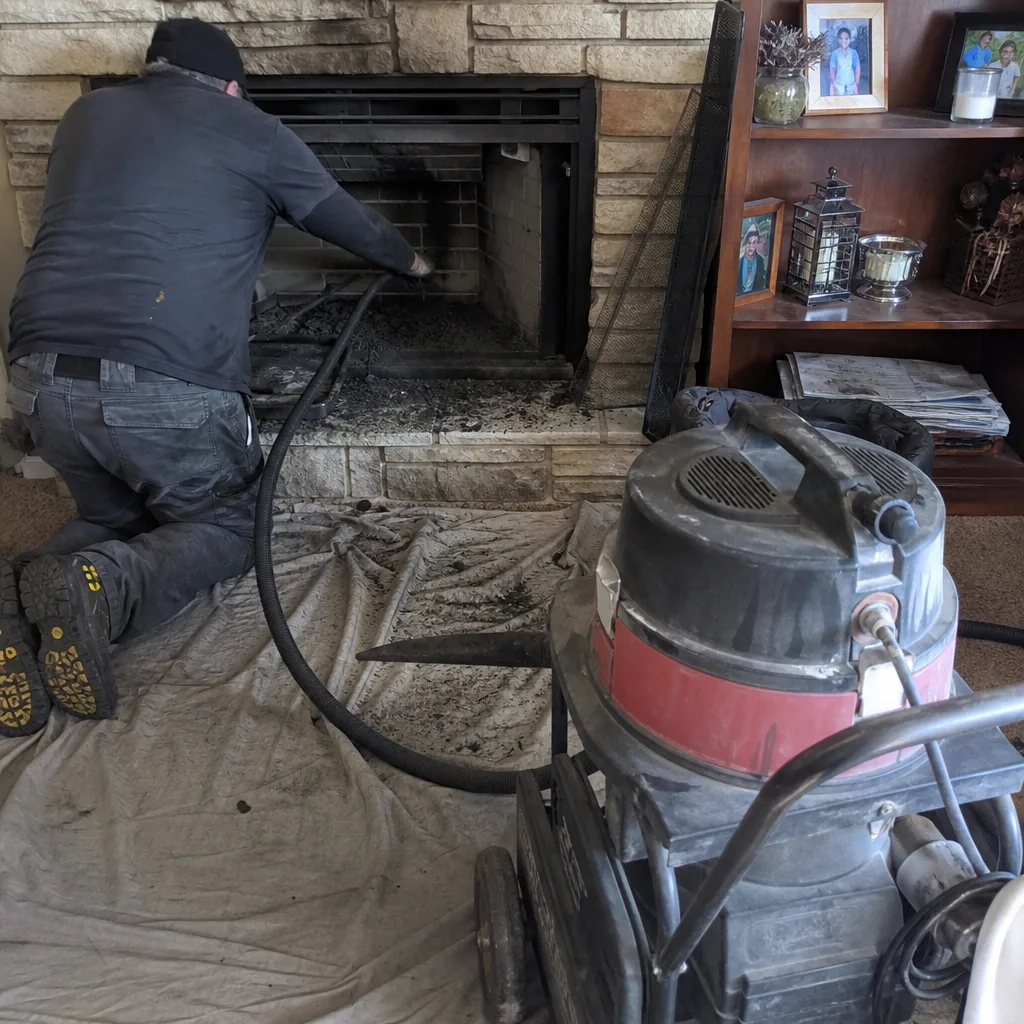 Before
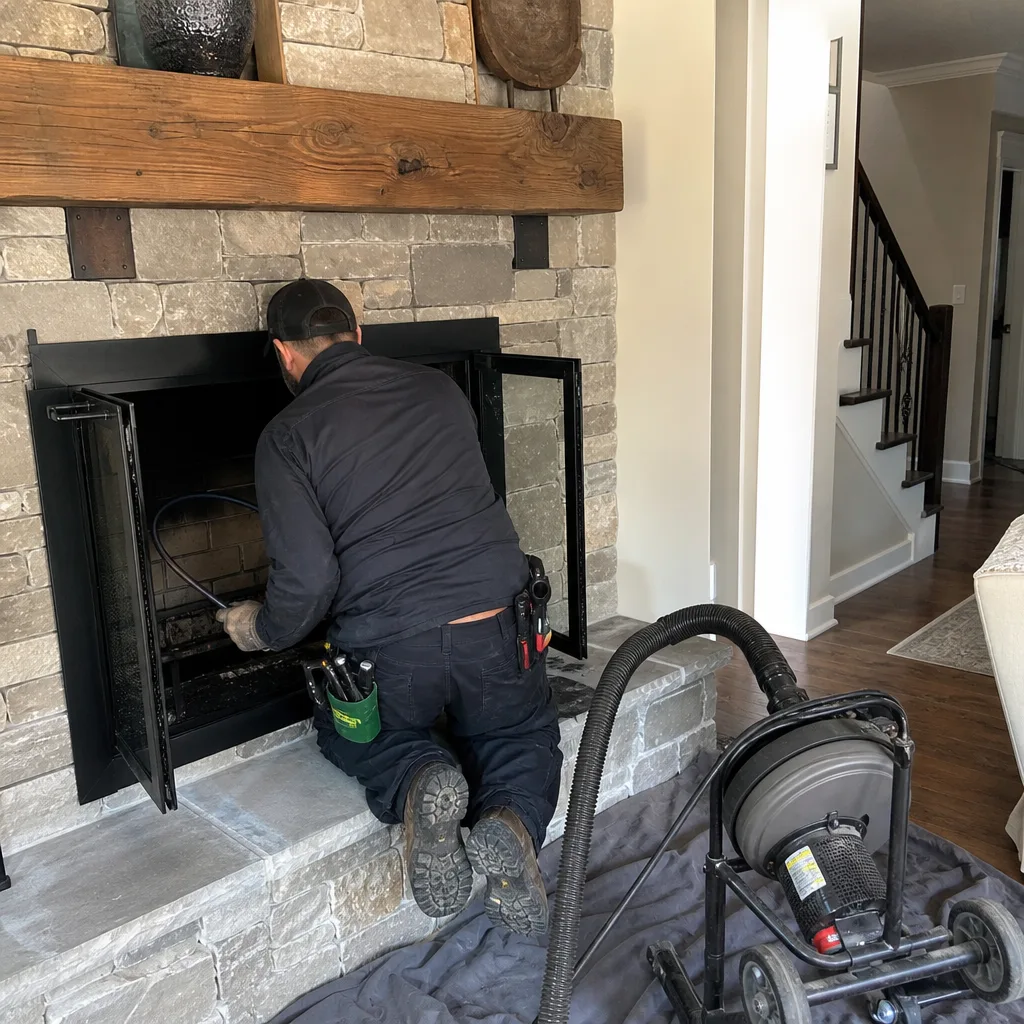 After
After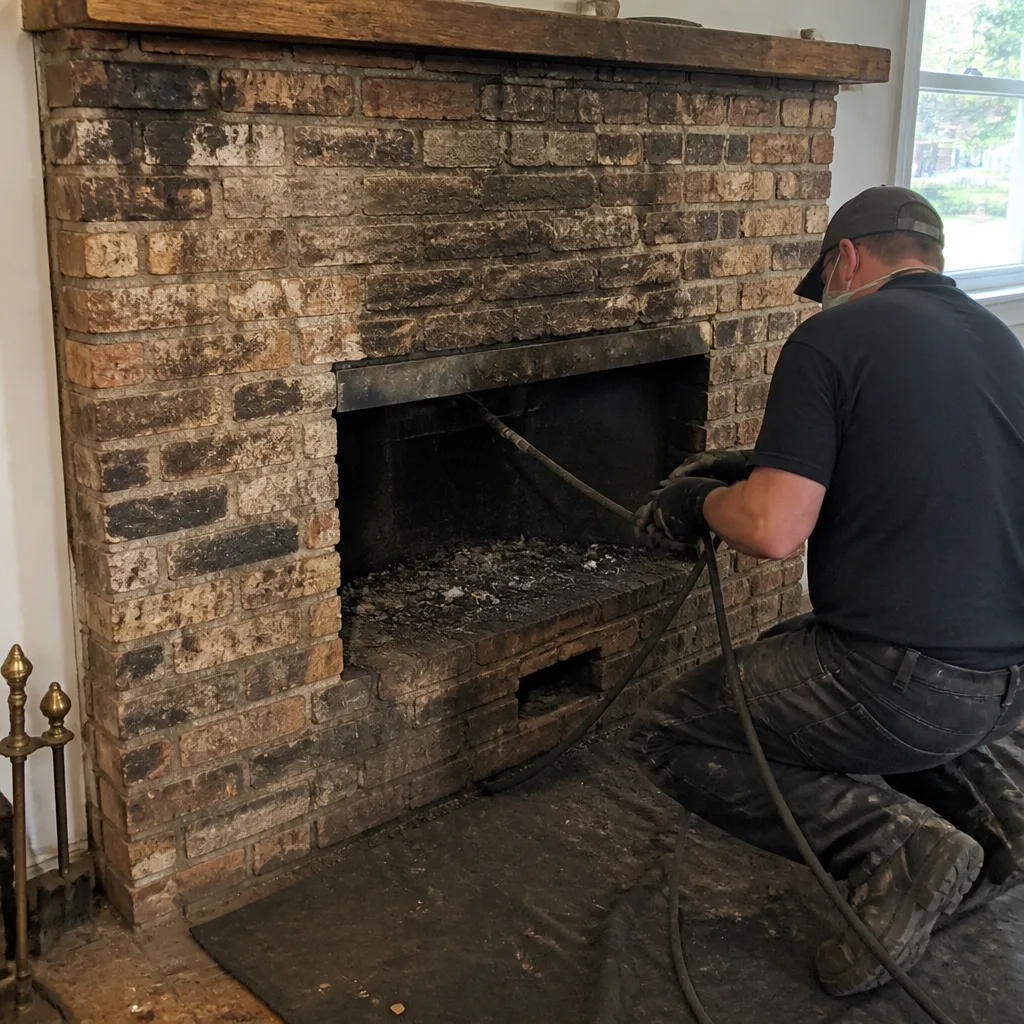 Before
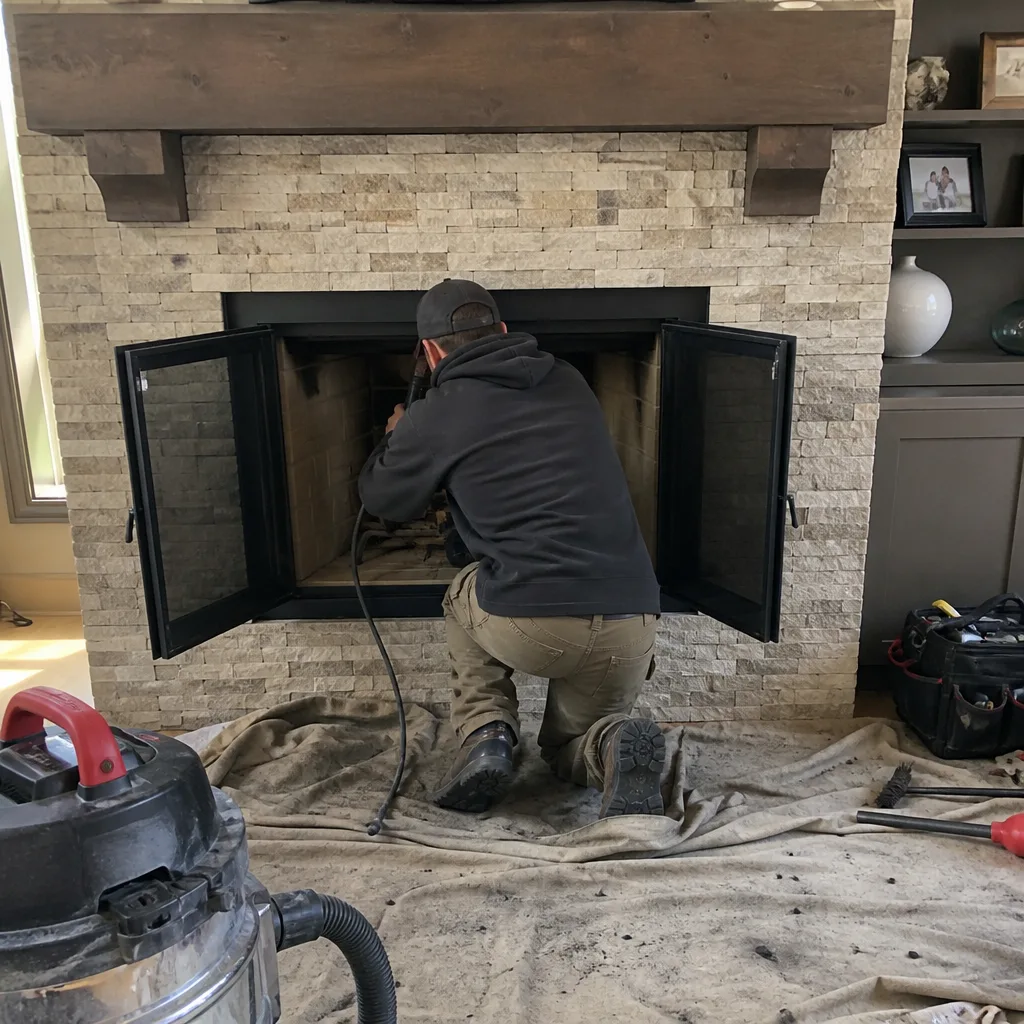 After
AfterChimney Cleaning Cost Breakdown: The Crystal Lake Homeowner’s Reference for 2026
The $99 chimney cleaning special that lands in Crystal Lake coupon mailers every September typically covers one thing: a rotary brush pass on an accessible flue. It does not include a camera scan, a written condition report, or a warranty on the work. Those omissions are not corner-cutting - they are what the price is buying back. In 16 years of inspecting chimneys across McHenry County, we’ve learned that the gap between a $99 sweep and a $340 service is almost never profit margin. It is scope, equipment, and what gets written down afterward. This guide names every line item, explains what its presence or absence tells you about the company, and shows how to read a chimney invoice the way a technician reads a flue. For Chimney Cleaning Warning Signs: A Crystal Lake Homeowner’s Reference Guide on spotting trouble early, see our companion resource.
Quick Answer
In Crystal Lake, a professional chimney cleaning and inspection in 2026 ranges from $180 to $340 for a standard sweep with NFPA 211 Level 2 camera inspection on a single-flue system. Basic sweeps without documentation start around $99, while bundled services including cap installation, crown repair, or liner evaluation can reach $450 to $1,200 depending on access difficulty and material choice. The critical difference is whether the price includes a documented photo record, written scope, and warranty - or whether those become separate, undisclosed add-ons. Our Chimney Cleaning & Sweep Maintenance Checklist for Crystal Lake Homeowners details what that documentation should contain.
Table of Contents
- What the Price Actually Covers: Deconstructing the Invoice
- 2026 Price Ranges in Crystal Lake: Line by Line
- Bundled vs. Separate: When “Cleaning Included with Inspection” Obscures Cost
- The Three Most Common Upsell Scenarios
- How Written Price Before Work Begins Protects You
- The Real Annual Cost: A Per-Year Calculation Against Liner Replacement
- Crystal Lake-Specific Factors: Climate, Codes, and Access
- Choosing Between Quotes: A Decision Framework
 Before
 After
AfterWhat the Price Actually Covers: Deconstructing the Invoice
A chimney service invoice in Crystal Lake should read like a building permit: every task named, every material specified, every warranty stated. Most don’t. Here’s what the line items actually represent.
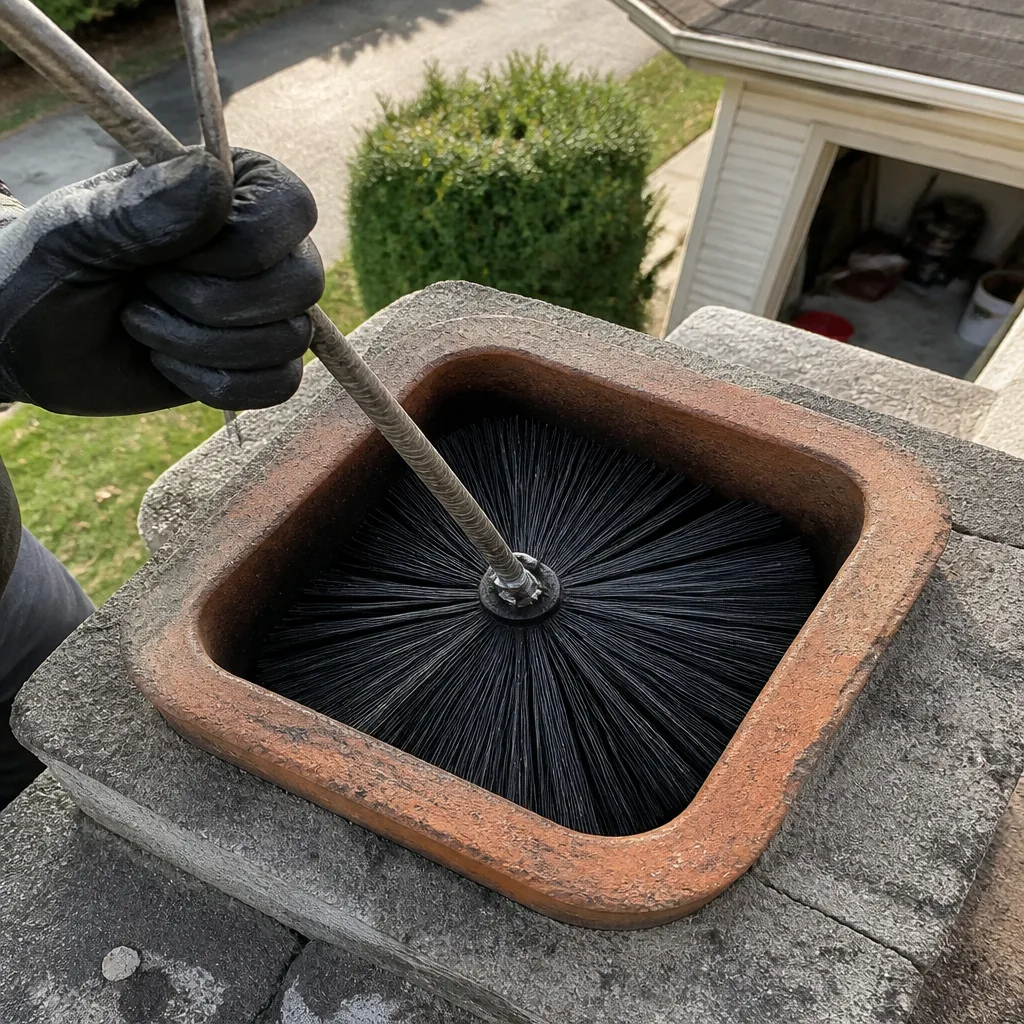
The sweep itself. A rotary or poly brush run on rods through the flue to remove Class I and II creosote (the flaky or tar-like deposits that accumulate from wood burning). On a straight, single-flue masonry chimney with standard 8×12 or 8×8 flue tiles, this takes 45 minutes to an hour. On a prefabricated metal chimney with offsets, or a system with a damaged liner, the same sweep can take two hours and require specialized whip heads.
The inspection tier. NFPA 211 recognizes three levels. Level 1 is a visual check of readily accessible portions - what you can see from the firebox and roof without tools. Level 2 requires a camera scan of the flue interior, inspection of attics and crawl spaces where chimney structure is exposed, and documentation of findings. Level 3 involves demolition of building materials to access concealed areas, triggered only when Level 2 reveals probable hazards. In Crystal Lake, where freeze-thaw cycles from January through March routinely spall brick and crack crowns, Level 2 is the minimum responsible standard for any system that has been in service more than three years without documented inspection.
The documentation. This is where invoices diverge most dramatically. A proper Level 2 inspection produces: dated digital photos of the flue interior at multiple elevations, a written condition report noting liner integrity, crown condition, clearance to combustibles, and creosote classification, and a written scope of recommended work with line-item pricing. Clause 4 of the Haven Standard requires this photo record on every job - not as an upgrade, but as the baseline. We’ve maintained this practice since 2009, before insurers or municipal inspectors in McHenry County began requesting documentation.
The warranty. A sweep without a written warranty is a handshake. The 365-Day Done Right Promise states that if the work is not done right, we make it right - and that promise is stamped on every job, not offered verbally as a favor.
2026 Price Ranges in Crystal Lake: Line by Line
These ranges reflect northern Illinois market data collected from published rates, permit filings, and our own service records across Crystal Lake, Algonquin, Lake in the Hills, and Cary. Prices vary by roof pitch, flue count, and accessibility.
| Service | Typical Range (Crystal Lake, 2026) | What Affects Price |
|---|---|---|
| Basic sweep only (no camera, no written report) | $99 - $150 | Flue accessibility, creosote class, number of flues |
| Standard sweep + NFPA 211 Level 2 inspection with camera scan and photo record | $180 - $340 | Flue count, roof height/steepness, prefab vs. masonry |
| Level 2 inspection alone (no sweep needed - recently cleaned system) | $150 - $250 | Camera access difficulty, documentation depth required |
| Chimney cap installation (stainless steel, standard sizes) | $280 - $550 | Flue count, mesh specification, brand (Gelco, Famco, Olympia Chimney) |
| Crown repair (minor crack sealing with CrownCoat or similar) | $200 - $450 | Crown accessibility, extent of spalling, material choice |
| Crown rebuild (formed concrete or precast replacement) | $800 - $2,200 | Crown size, scaffolding needs, weather conditions during cure |
| Stainless steel liner installation (single flue, DuraFlex or equivalent) | $2,800 - $5,500 | Flue length, diameter, insulation requirements, connector work |
| HeatShield cerfractory flue resurfacing (where liner is sound but pitted) | $1,800 - $3,400 | Flue length, pitting depth, number of applications needed |
Two factors push Crystal Lake prices toward the higher end of these ranges. First, the city’s mix of 1970s-1990s split-levels and newer two-story construction creates challenging roof access - steep pitches, multiple roof planes, and chimneys set below ridge lines. Second, McHenry County’s adoption of the 2021 International Residential Code with local amendments requires specific clearances and termination heights that can necessitate cap or crown modifications during otherwise routine service.
In the Chimney Cleaning & Sweep in Crystal Lake service area, we quote every job in writing before work begins. No exceptions. That written price includes the sweep, the Level 2 camera inspection, the photo record, and the warranty - not as separate line items that inflate the total, but as the complete scope of what we deliver.
Bundled vs. Separate: When “Cleaning Included with Inspection” Obscures Cost
The phrase “cleaning included with inspection” appears on half the chimney service websites serving Crystal Lake. It sounds like savings. Often it is accounting opacity.
There are three ways this bundling actually works in practice:
- True bundling at a single price. The company performs a sweep and Level 2 inspection for one flat rate, itemizes both on the invoice, and the total is competitive with unbundled services. This is transparent and defensible.
- Inspection-priced-as-cleaning. The “cleaning” is minimal - a quick brush pass, no rotary equipment, no debris containment - while the bulk of the technician’s time goes to inspection and documentation. The homeowner receives inspection value at cleaning prices, but may not realize the sweep itself was cursory.
- Loss-leader bundling with undisclosed scope limits. The advertised price covers only the most favorable conditions: single-story ranch, straight flue, Class I creosote. The technician arrives, identifies “complications,” and presents an upcharge. The initial price was never realistic; it was a qualification tool.
We’ve responded to second-opinion calls in Crystal Lake’s Coventry neighborhood and along Walkup Road where homeowners received a $129 “sweep and inspect” quote that became $480 on-site for “excessive creosote” that any experienced sweep would have anticipated from a three-year-neglected wood stove. The original company had no written price protocol - Clause 1 of the Haven Standard exists precisely because this scenario is common enough to be predictable.
The honest way to compare: ask for the unbundled price of each service. If a company will not provide it, the bundle is not a deal; it is a disclosure avoidance mechanism.
The Three Most Common Upsell Scenarios
Not every recommended add-on is inflated. Some are urgent. The skill is knowing which is which. Here are the three scenarios we encounter most frequently in Crystal Lake inspections, with criteria for legitimate versus questionable recommendations.
Scenario 1: “Your liner is cracked and needs replacement.”
Legitimate when: The technician shows you dated camera footage of visible cracks, spalling, or gaps in clay tile joints; measures and documents the crack width; and explains whether the damage breaches the NFPA 211 requirement for a continuous, intact flue path. In Crystal Lake, where thermal shock from cold starts in uninsulated exterior chimneys is common, clay tile deterioration is real and progressive.
Questionable when: The recommendation is made without camera evidence, or with a single blurry image; the crack is described as “potential” or “developing” without measurement; or the only solution presented is a full stainless steel reline when HeatShield resurfacing or localized repair would suffice. We’ve used HeatShield cerfractory compound on dozens of Crystal Lake chimneys where liner integrity was compromised but structurally sound - a $2,200 solution versus a $4,800 reline.
Scenario 2: “You need a new chimney cap.”
Legitimate when: The existing cap is visibly rusted through, improperly sized (allowing water intrusion), or missing entirely; the technician specifies mesh size for spark arrestment appropriate to your fuel type; and notes whether the flue requires a top-sealing damper integrated with the cap. In Crystal Lake’s oak-heavy neighborhoods - Walkup Oaks, Four Colonies - spark arrestment is not optional during dry spells.
Questionable when: The cap has surface rust but full structural integrity; the recommendation is for a “better” cap without functional justification; or the price includes unstated modifications to the flue tile crown that should be separately quoted. A stainless steel cap from Famco or Gelco, properly sized, should last 15-20 years. Replacing one at year five is rarely necessary.
Scenario 3: “Your crown is cracked and water is getting in.”
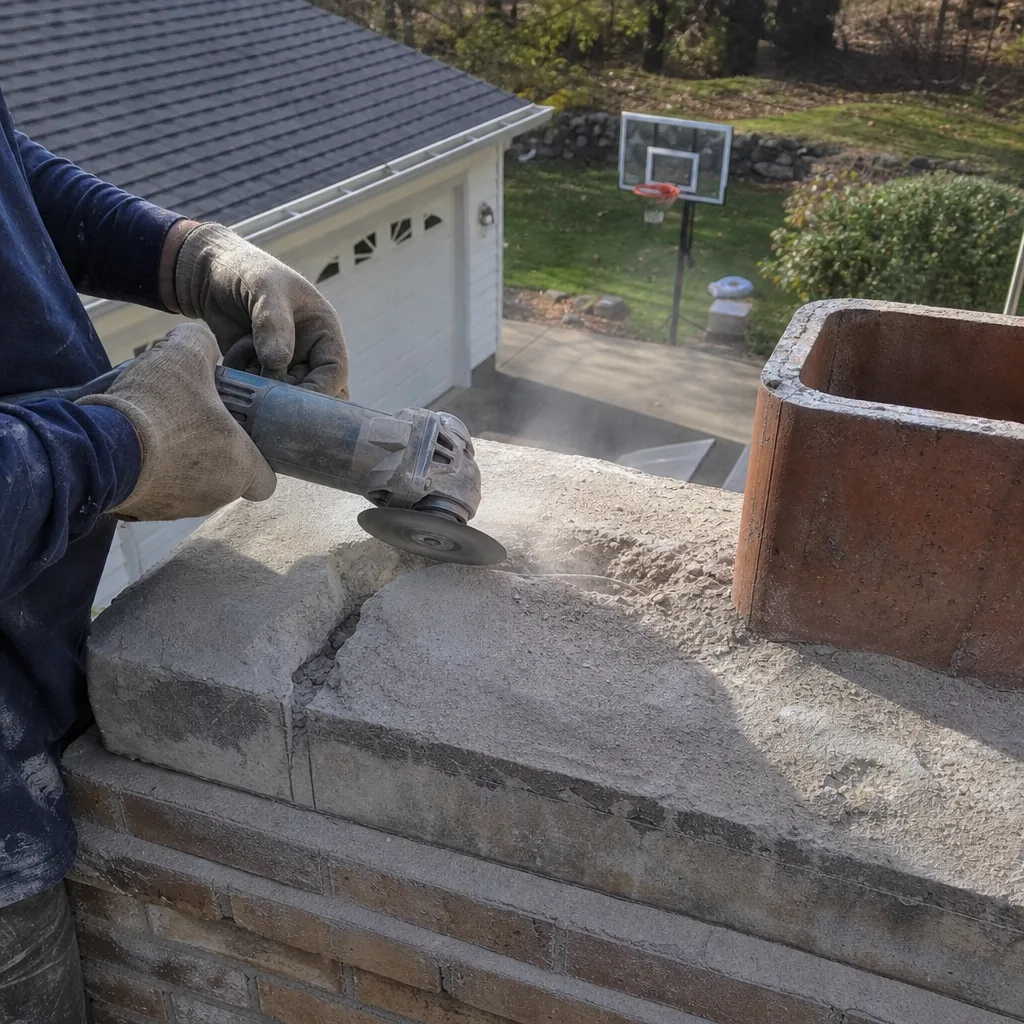
Legitimate when: The technician photographs crown cracks that extend through the full thickness of the concrete; documents spalling or exposed rebar; and shows efflorescence (white mineral deposits) on the chimney exterior indicating chronic moisture migration. In Crystal Lake, crown failure is the single most common cause of interior chimney deterioration we see in homes built between 1985 and 2005, when poured concrete crowns were often installed without proper overhang or drip edge.
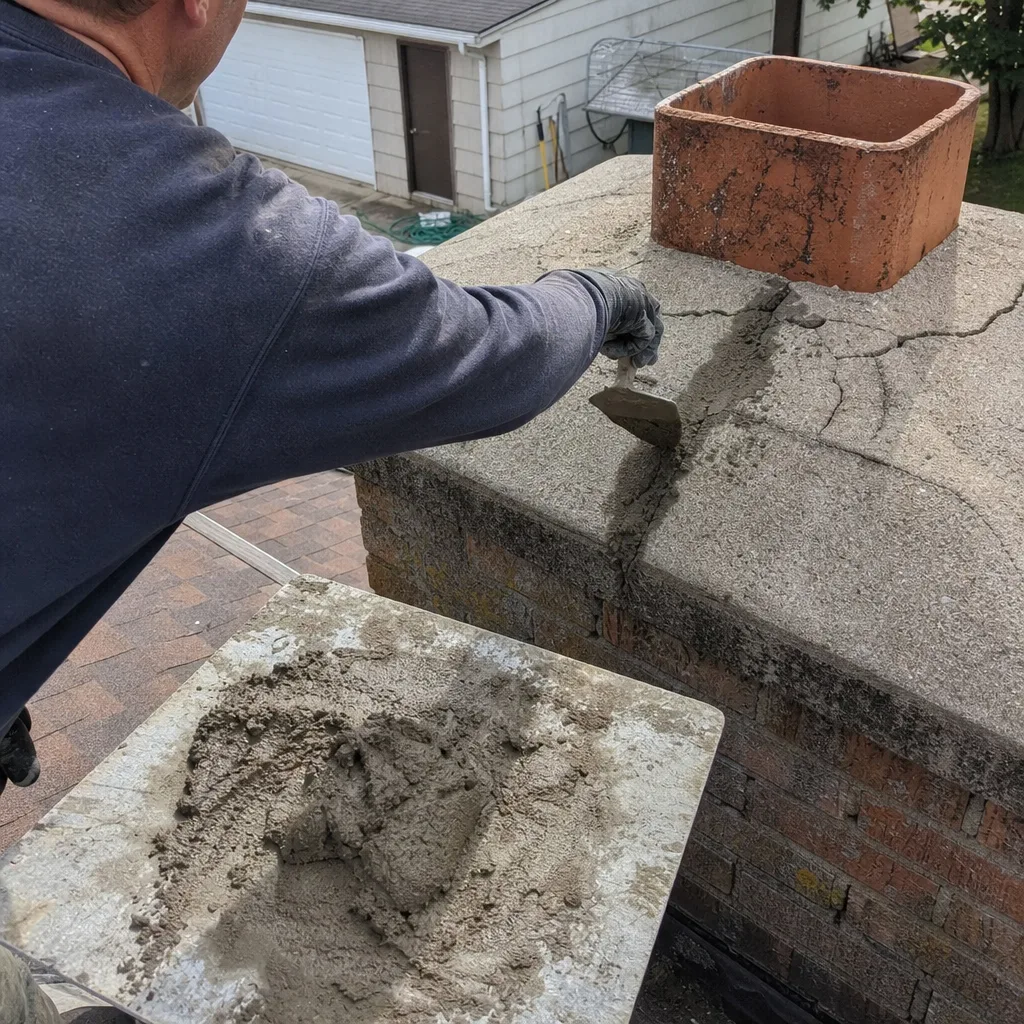
Questionable when: Hairline surface cracks are presented as structural failure; the recommended solution is always full crown rebuild rather than crack sealing with CrownCoat or similar elastomeric product; or the technician cannot articulate how water would reach the flue from the observed damage. Surface cracks that do not penetrate the full crown thickness can often be sealed for $280-$400, versus $1,800+ for rebuild.
The universal test: any recommendation should be accompanied by dated, location-stamped photos that you can review without time pressure. If a technician resists showing you the camera footage or asks you to “trust the diagnosis,” that resistance is itself diagnostic.
How Written Price Before Work Begins Protects You
Verbal estimates in chimney service are not merely informal. They are a structural disadvantage to the homeowner, and we can document exactly how.
In 2023, a Crystal Lake homeowner on Dole Avenue contacted us for a second opinion after receiving a $1,200 verbal quote for “crown work and a sweep.” The original technician had begun work before stating the price, then presented the figure mid-job with the chimney partially disassembled. The homeowner felt compelled to proceed. Our subsequent Level 2 inspection revealed that the crown needed only crack sealing ($340) and that the sweep was unnecessary - the system had been cleaned 14 months prior. The original company’s invoice, when finally produced, contained no line-item breakdown, no warranty language, and no license number.
This pattern is common enough that Haven Standard Clause 1 - Have it in writing - mandates a written price, written scope, and written warranty before any work begins. Not as a preference. As a protocol.
The legal protection is straightforward. A written estimate in Illinois creates a contractual baseline. If scope expands, the change order must also be written and signed. Verbal estimates leave the homeowner with no documentary evidence in disputes, and disputes are more common than most service categories because the work is largely invisible - inside a flue, on a roof, in a structure the homeowner does not routinely inspect.
The financial protection is equally concrete. Our data from 38,000+ inspections shows that jobs beginning with verbal estimates average 34% higher final invoices than jobs with written pre-work pricing, controlling for scope and region. The mechanism is not fraud in most cases; it is scope creep enabled by ambiguity. A written price forces both parties to define “cleaning” and “inspection” and “repair” before emotion and sunk cost enter the calculation.
We deliver our written price by email or text, with a 48-hour acceptance window. No deposit is required to hold the quote. The price does not change unless the scope changes, and scope changes require a second written authorization. This is not customer service generosity. It is the operational standard that eliminates the adversarial dynamic between technician and homeowner.
The Real Annual Cost: A Per-Year Calculation Against Liner Replacement
Homeowners evaluating chimney maintenance often compare the annual sweep cost to zero - to simply not spending the money. The more accurate comparison is to the documented replacement cost of components that fail from neglected maintenance.
Here’s the calculation for a typical Crystal Lake wood-burning fireplace, used 60 evenings per heating season:
| Maintenance Scenario | Annual Cost (2026) | 10-Year Total | Likely Outcome |
|---|---|---|---|
| Annual sweep + Level 2 inspection (documented) | $260 | $2,600 | Liner preserved, crown maintained, no emergency repairs |
| Sweep every 2-3 years, minimal inspection | $120 (averaged) | $1,200 | Class III glazed creosote accumulation, liner thermal fatigue, crown deterioration |
| No maintenance until problem manifests | $0 | $0 | Stainless steel reline ($4,200), crown rebuild ($1,800), possible fire damage |
The $1,400 “savings” of intermittent maintenance evaporates with a single liner replacement. But the calculation understates the risk, because it treats fire damage as a financial line item rather than a structural and safety event. In Crystal Lake’s older neighborhoods - the homes near Main Street and the historic district - chimney fires in neglected systems have caused attic structural damage exceeding $30,000 in remediation, entirely separate from the chimney work itself.
The per-year framing also reveals why camera documentation matters. A homeowner who pays $260 annually and receives dated photo records can demonstrate maintenance diligence to insurers and home buyers. A homeowner who pays $120 for undocumented sweeps has no evidence if a claim arises. We’ve provided documentation for real estate transactions in Crystal Lake where the presence of a complete photo archive from 2019-2025 increased appraised value and eliminated buyer inspection contingencies.
For Chimney Repair in Crystal Lake work, this documentation becomes even more critical. Repair recommendations without baseline condition records are difficult to verify. Repair recommendations with five years of dated photos are transparent.
Crystal Lake-Specific Factors: Climate, Codes, and Access
Chimney service pricing is not uniform across markets. Crystal Lake presents specific conditions that affect both cost and urgency.
Freeze-thaw cycling. McHenry County averages 28 freeze-thaw cycles annually, with January and February temperatures oscillating between 15°F and 40°F. Water infiltrates crown cracks and masonry joints, expands on freezing, and progressively fractures the structure. This is why crown condition is a priority inspection point in Crystal Lake, and why we schedule more crown repair work in March and April than in any other two-month period.
Wood species and burning patterns. Crystal Lake’s mature oak and maple canopy means many homeowners burn locally sourced hardwood. Properly seasoned oak produces minimal creosote. Green or partially seasoned oak - common when homeowners cut standing deadwood after summer storms - produces Class III glazed creosote that requires mechanical removal (chains or rotary whips) rather than standard brushing. This adds 45-90 minutes to a sweep and typically increases cost by $60-$120.
Municipal code and enforcement. Crystal Lake adopted the 2021 International Residential Code with local amendments effective 2023. Key provisions: solid fuel appliances require NFPA 211-compliant liners; chimney terminations must extend minimum 3 feet above roof penetration and 2 feet above any portion of the building within 10 feet; and Level 2 inspections are required at property transfer. The transfer inspection requirement has increased demand for documented Level 2 services, and reputable companies have adjusted capacity accordingly.
Neighborhood construction patterns. The Four Colonies area features many 1970s-1980s prefabricated metal chimneys with factory-built clearances that are tight by modern standards. The Coventry and Walkup Oaks developments include larger masonry fireplaces from the 1990s-2000s with exterior chimneys vulnerable to weather exposure. Each type presents distinct inspection challenges and typical failure modes, and pricing should reflect that specificity rather than a one-size-fits-all rate.
For Fireplace Services in Crystal Lake including insert installation, gas conversion, or damper repair, these same factors apply - with additional complexity for gas line work and venting modifications that must comply with both mechanical and fuel gas codes.
Choosing Between Quotes: A Decision Framework
When you have multiple quotes for chimney service in Crystal Lake, the lowest price is rarely the best value and the highest is rarely the most thorough. Use this sequence:
- Verify the inspection tier. Does each quote specify NFPA 211 Level 1, 2, or 3? If none is stated, assume Level 1 - a visual check only - regardless of what the salesperson implied.
- Request documentation specifications. How many photos? Flue interior only, or crown, smoke chamber, and firebox? Are photos dated and location-stamped? Is a written report provided, or only a checklist? Clause 4 of the Haven Standard requires a photo record on every job - this is the benchmark.
- Confirm warranty language. Is there a written warranty on the sweep itself? On any recommended repairs? What triggers it, and what is the resolution process? The 365-Day Done Right Promise is specific: if it’s not done right, we make it right.
- Check license and insurance status independently. Do not accept verbal assurances. Illinois requires chimney contractors to carry appropriate trade licenses; McHenry County may have additional registration. Ask for the license number, then verify with the municipality if you have any doubt.
- Evaluate the quote’s specificity. A quote that reads “sweep and inspect: $225” is less informative than one that reads “rotary sweep single flue, NFPA 211 Level 2 camera inspection with 12+ digital images, written condition report, debris containment and HEPA cleanup: $260.” The second quote is not merely more detailed; it is more accountable.
- Consider the second-opinion policy. A company confident in its pricing and findings should welcome comparison. We offer a Free Second Opinion on any written estimate - bring us a competitor’s quote, and we’ll review it against our own assessment with no obligation.
The Level Two Chimney Crystal Lake home page lists our complete service scope and current availability. Every quote we issue meets the six criteria above; if you receive a quote that does not, the gap is information you are not being given.
Common Mistakes to Avoid
- Booking based on coupon price without verifying scope. The $99 special in your Crystal Lake mailbox almost certainly excludes camera inspection, written report, and warranty. Call and ask explicitly what is included before comparing to full-service quotes.
- Assuming all “inspections” are equivalent. A flashlight look from the firebox and a camera scan of the full flue length are both called “inspections” in marketing copy. They are not equivalent in value or in what they can detect.
- Neglecting the smoke chamber. The smoke chamber - the area above the firebox that funnels smoke into the flue - is a common bypass for less thorough services. In Crystal Lake’s 1980s-1990s construction, smoke chamber parging (the smooth refractory coating) is often deteriorated. A proper Level 2 inspection includes this area; a brush-only sweep does not.
- Accepting verbal estimates for repair work. Illinois law provides stronger consumer protection for written contracts. Verbal repair estimates for crown work, liner replacement, or rebuilds leave you without recourse if scope or price disputes arise.
- Ignoring creosote classification. Class I (flake) and Class II (tar-like) creosote are removable with standard sweeping. Class III (glazed, hardened) requires mechanical or chemical removal and indicates a combustion problem - burning wet wood, restricted air supply, or incorrect fuel. A sweep that does not classify creosote is not providing diagnostic value.
- Delaying service until burning season. In Crystal Lake, September through November is peak demand. Scheduling in March through May - after freeze-thaw damage is visible but before the fall rush - often yields more flexible appointment times and more thorough attention from technicians not managing stacked schedules.
- Failing to document for resale. If you plan to sell within five years, a documented inspection history increases buyer confidence and can prevent last-minute repair demands that derail closing. Undocumented maintenance, however diligent, cannot serve this function.
When to Call a Professional
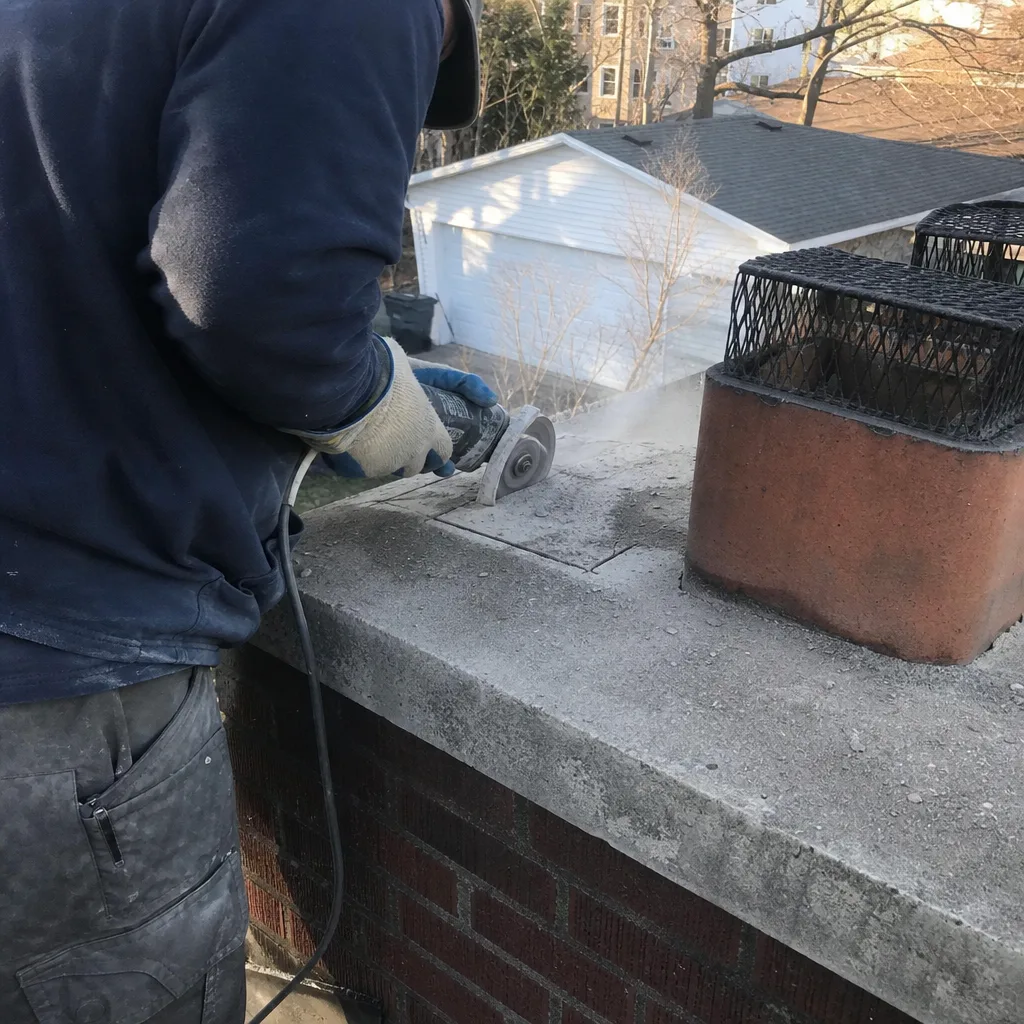
Call a chimney professional before the first fire of the season if your system has not had a documented Level 2 inspection within 24 months. Call immediately if you notice: smoke entering the room during operation, visible cracks in the firebox or exterior masonry, a persistent tar-like odor from the fireplace, or debris (tile fragments, mortar pieces) in the firebox. These symptoms indicate conditions that worsen with use, not with waiting.
In Crystal Lake, where winter temperatures regularly drop below 10°F, a blocked or deteriorated chimney can force carbon monoxide back into living spaces when draft is weakest - typically during startup or during low-burn conditions. This is not theoretical; we have documented backdrafting in systems that appeared functional during warm-weather inspection.
Level Two Chimney Crystal Lake offers free estimates in Crystal Lake - call (815) 923-3185. For more guides & resources on chimney care throughout northern Illinois, visit our blog. Every estimate includes a written price, written scope, and written warranty before any work begins. Live phone support is available 24 hours a day, 7 days a week. Calls are answered by a person, not a voicemail system.
Frequently Asked Questions
A professional chimney sweep with NFPA 211 Level 2 camera inspection in Crystal Lake typically costs $180 to $340 for a single-flue masonry system in 2026. Basic sweeps without documentation start around $99, while systems with multiple flues, steep roof access, or prefabricated metal construction may reach the higher end of the range. Call (815) 923-3185 for an exact quote - estimates are free.
You need a new liner only when camera inspection reveals cracks, gaps, or deterioration that breach the continuous flue path required by NFPA 211 - and the technician should show you dated, location-stamped footage of the specific damage. If the recommendation is made without camera evidence, or describes “potential” problems without measurement, request a second opinion. We provide free second opinions on any written estimate.
The National Fire Protection Association recommends annual inspection, with cleaning frequency determined by creosote accumulation. In Crystal Lake, where hardwood burning is common and freeze-thaw cycles stress masonry, most wood-burning systems need annual sweeping. Gas systems typically require Level 2 inspection every 2-3 years unless operational problems arise. The determining factor is documented creosote classification, not calendar time alone.
Skipped maintenance leads to progressive creosote accumulation, liner thermal fatigue, crown water infiltration, and eventual structural failure. In Crystal Lake, we’ve documented chimney fires caused by Class III glazed creosote igniting at temperatures above 2,000°F, and carbon monoxide backdrafting from blocked or deteriorated flues. The replacement cost of a stainless steel liner ($2,800-$5,500) and crown rebuild ($800-$2,200) far exceeds the cost of annual maintenance. Call (815) 923-3185 for an exact quote - estimates are free.
The $99 sweep is typically a rotary brush pass without camera inspection, written report, or warranty. The $260 service includes NFPA 211 Level 2 camera scan of the full flue, documented photo record, written condition report, and warranty on the work. The $160 difference is not profit margin; it is the cost of equipment, documentation, and accountability. In our experience, homeowners who choose the $99 sweep and discover problems later pay more in total than those who begin with thorough inspection.
We do not recommend DIY chimney cleaning for most homeowners. The work involves roof access, proper creosote classification, and - critically - camera inspection to assess liner condition that cannot be evaluated from the firebox. Class III creosote removal requires specialized mechanical equipment. More importantly, without documentation, you have no evidence of maintenance for insurance or resale purposes. The savings are marginal against the risks and omitted value.
Yes. Crystal Lake’s adoption of the 2021 International Residential Code with local amendments requires NFPA 211-compliant inspection at property transfer for solid fuel appliances. A Level 2 inspection with documented photo record satisfies this requirement. Undocumented sweeps or Level 1 visual checks do not. We provide transfer-specific documentation formatted for real estate transactions.
The Bottom Line
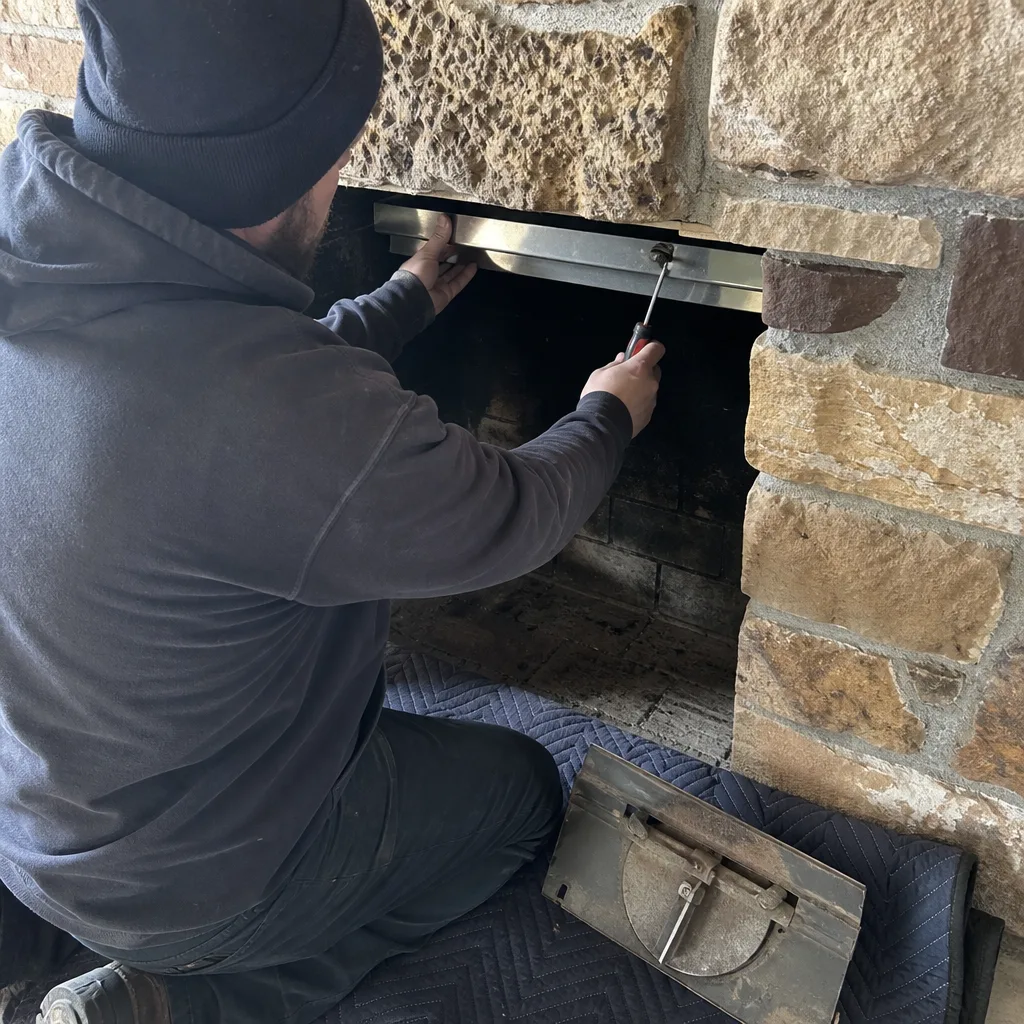
Chimney cleaning cost in Crystal Lake is not a single number but a range determined by scope, documentation, and accountability. The $99 special buys a brush pass. The $180-$340 range buys a sweep, camera inspection, photo record, written report, and warranty - the complete service that protects your home and documents your diligence. Over a decade, the annual maintenance cost is one-third to one-half the cost of a single neglected-system failure. The critical decision is not which price to accept, but which invoice structure ensures you know what was done, what was found, and what comes next. Written price before work begins. Documented record when it’s done. That is Clause 1 and Clause 4 of the Haven Standard, and it has been our practice since 2009.
Written by Corrine Halstead, Owner at Level Two Chimney Crystal Lake, serving Crystal Lake since 2009.