
Last updated September 22, 2026
Level 1 sweep and inspection to the NFPA 211 annual standard - flue, crown, cap, and flashing checked and photographed
Chimney sweep logs do not sweep chimneys. They loosen some creosote - which then falls where a brush and vacuum still have to collect it.
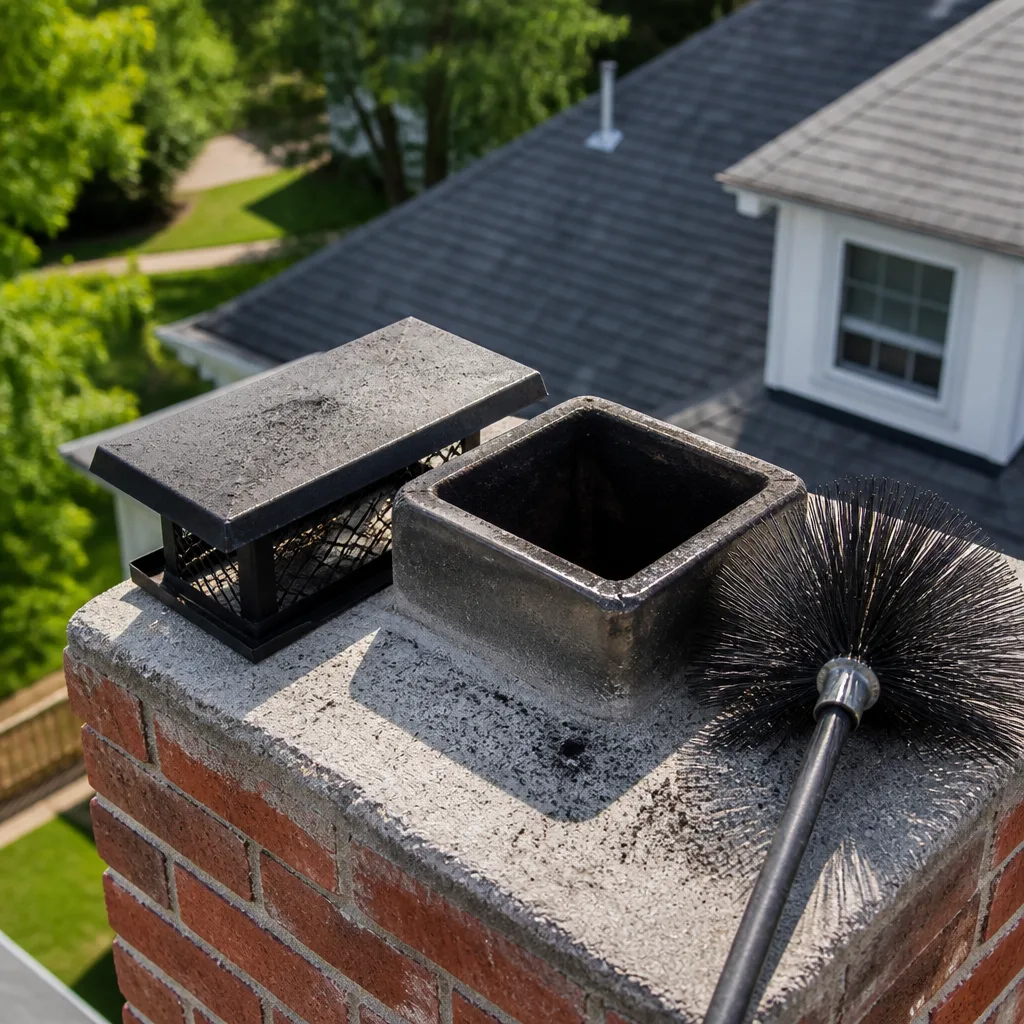
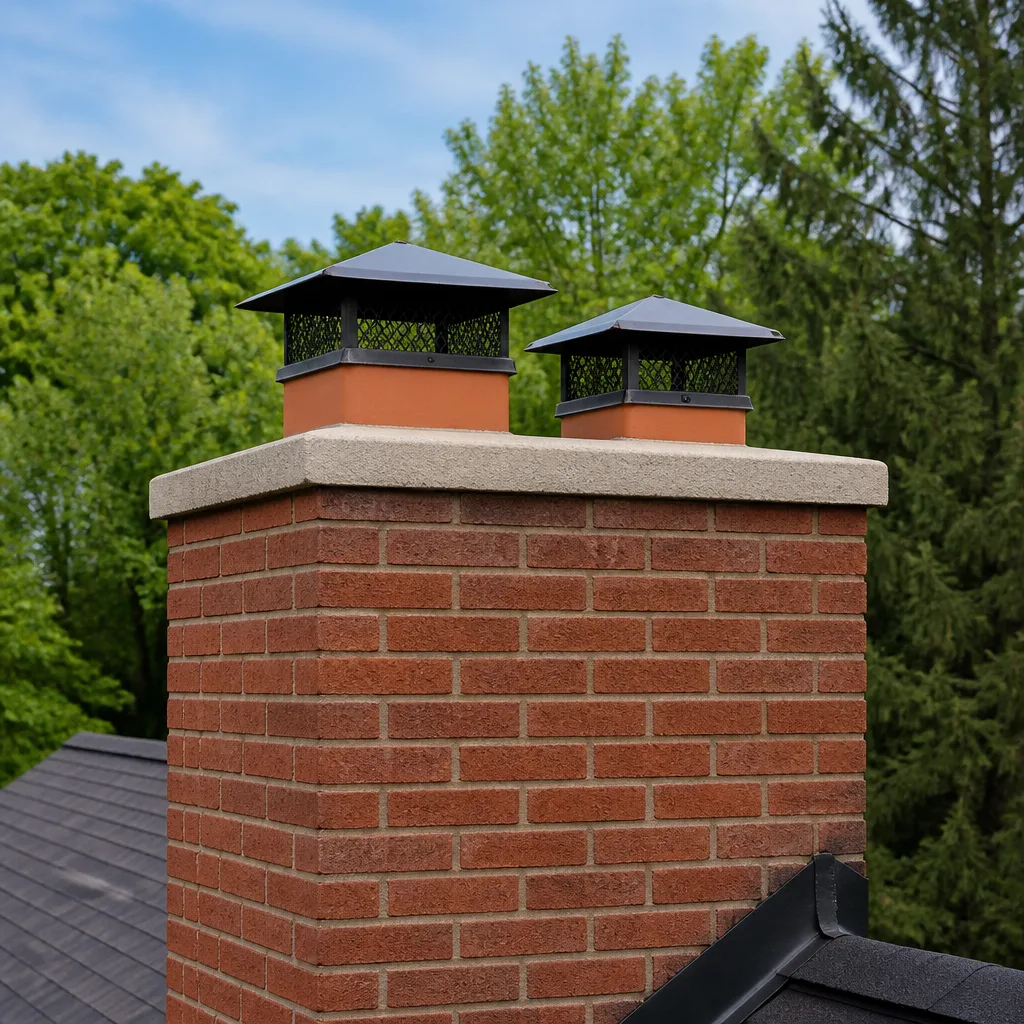
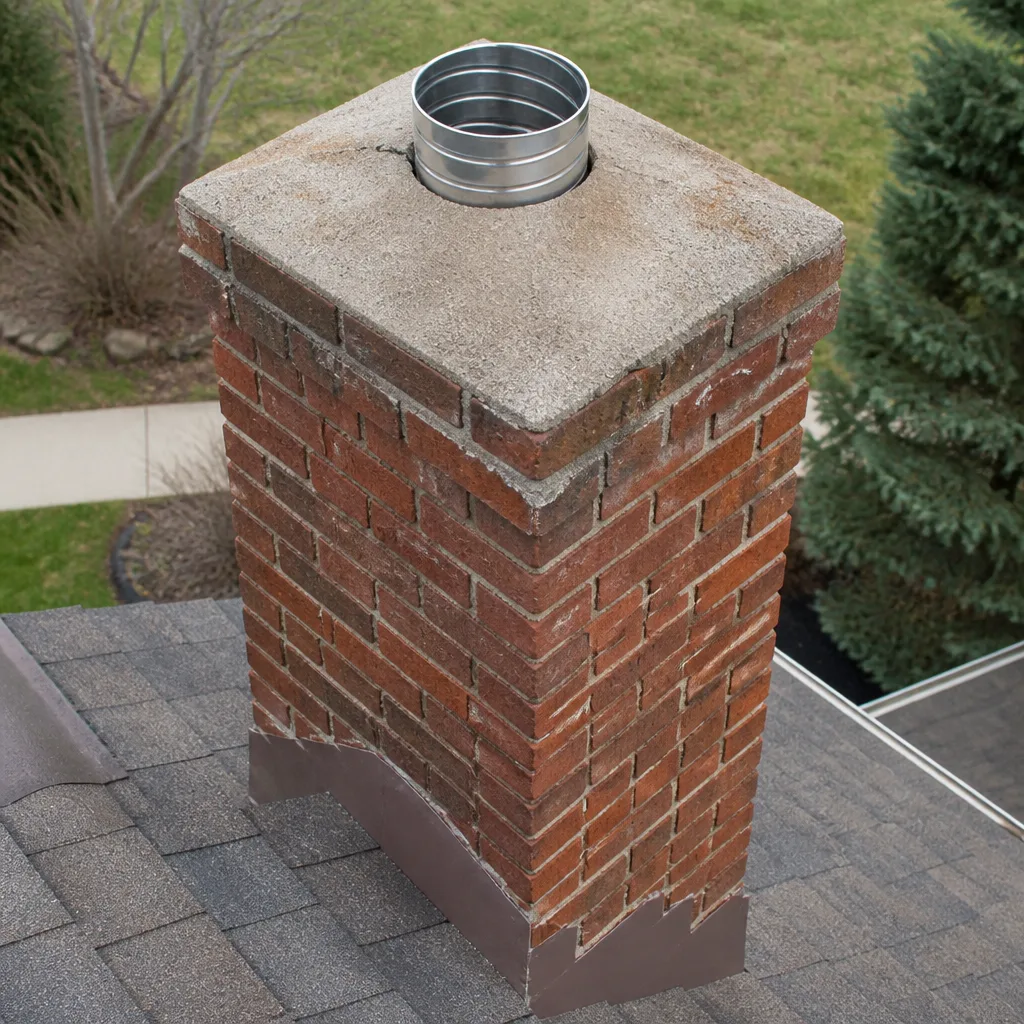
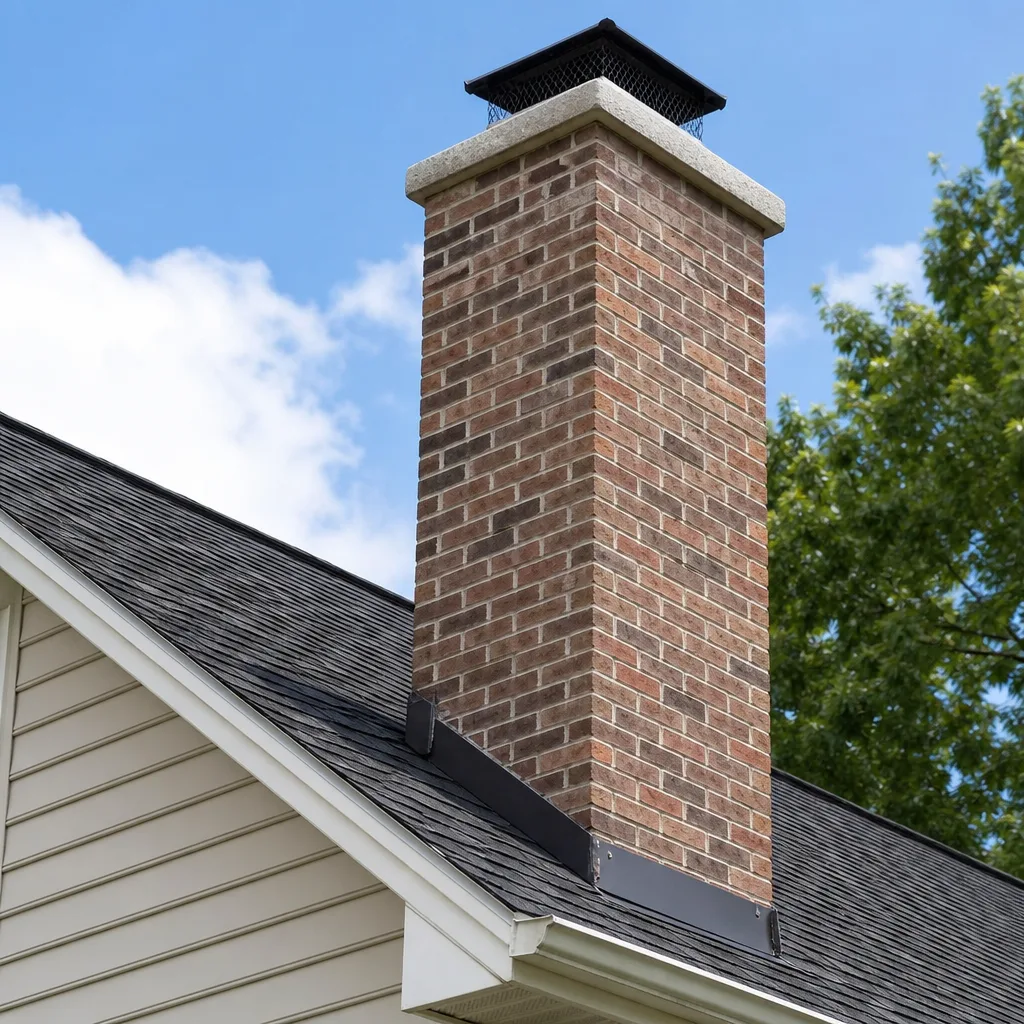
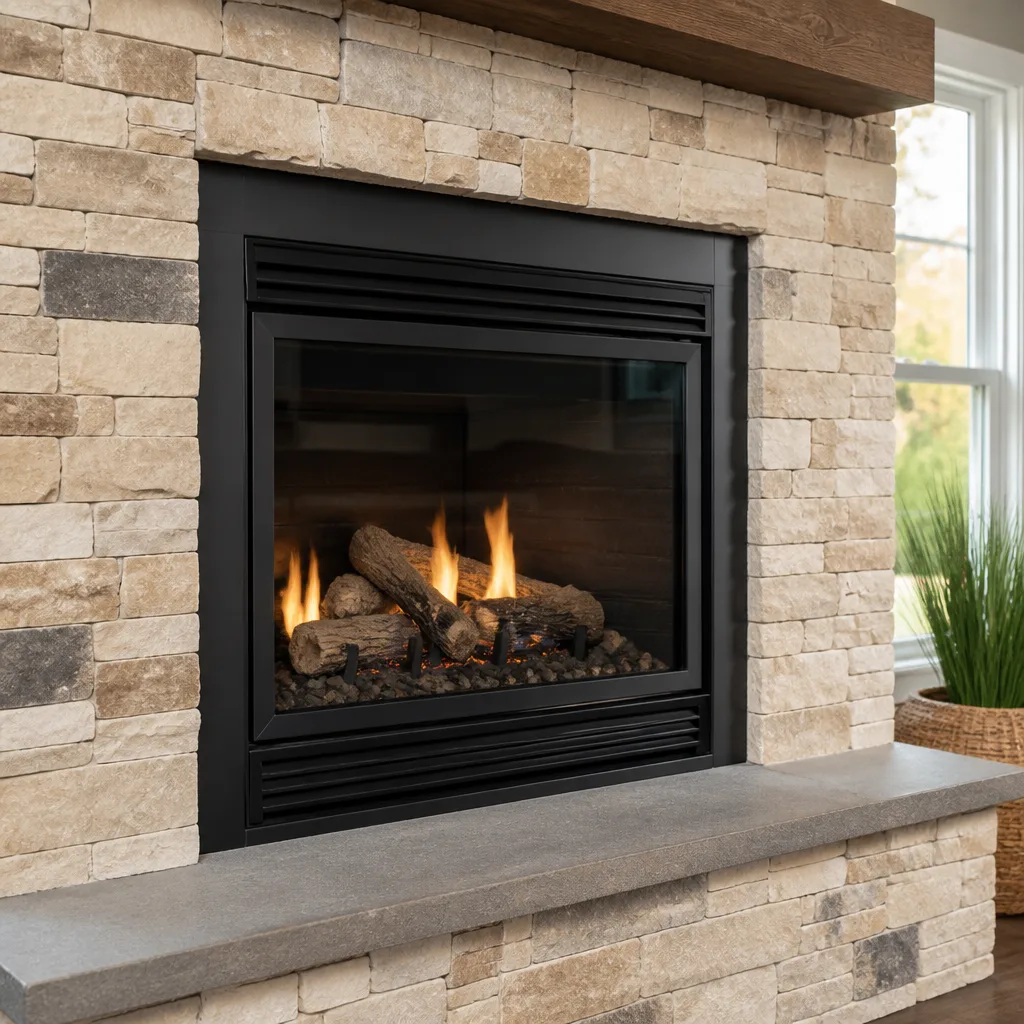
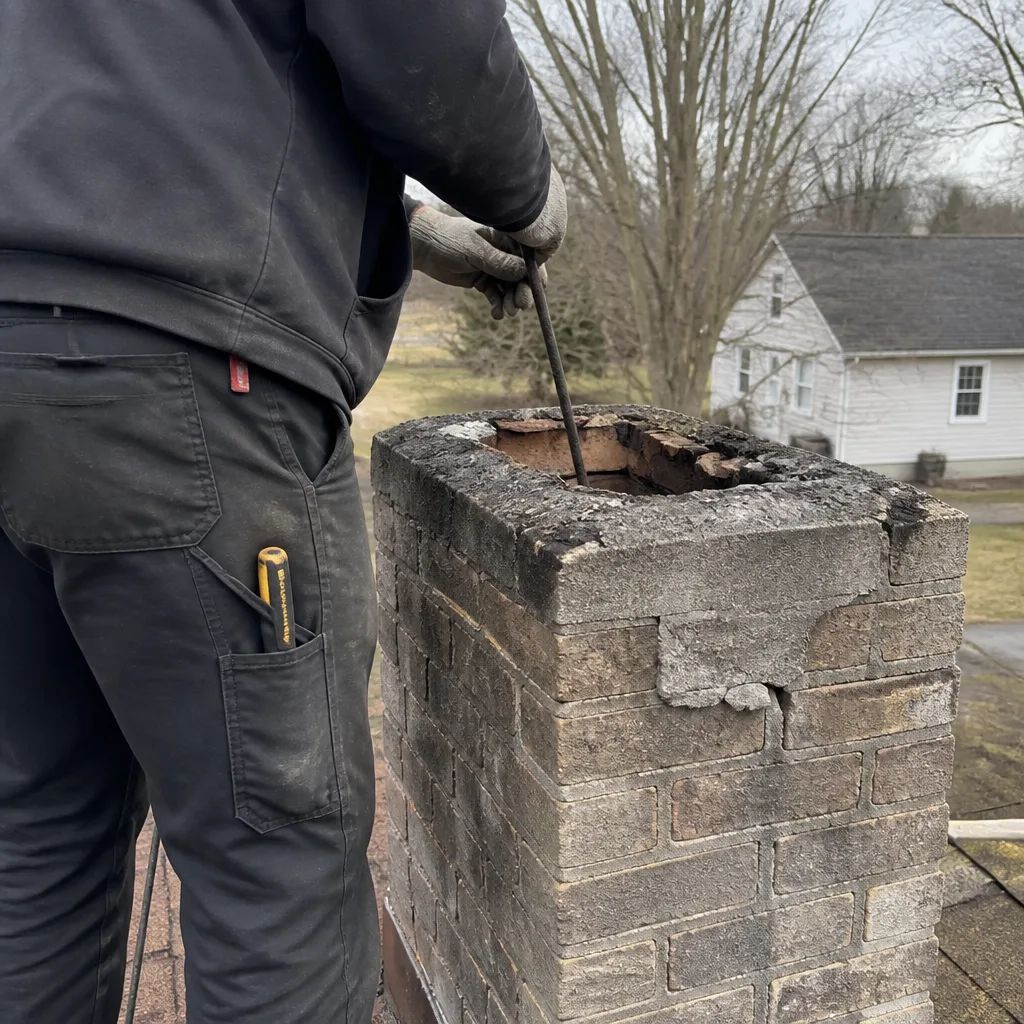 Before
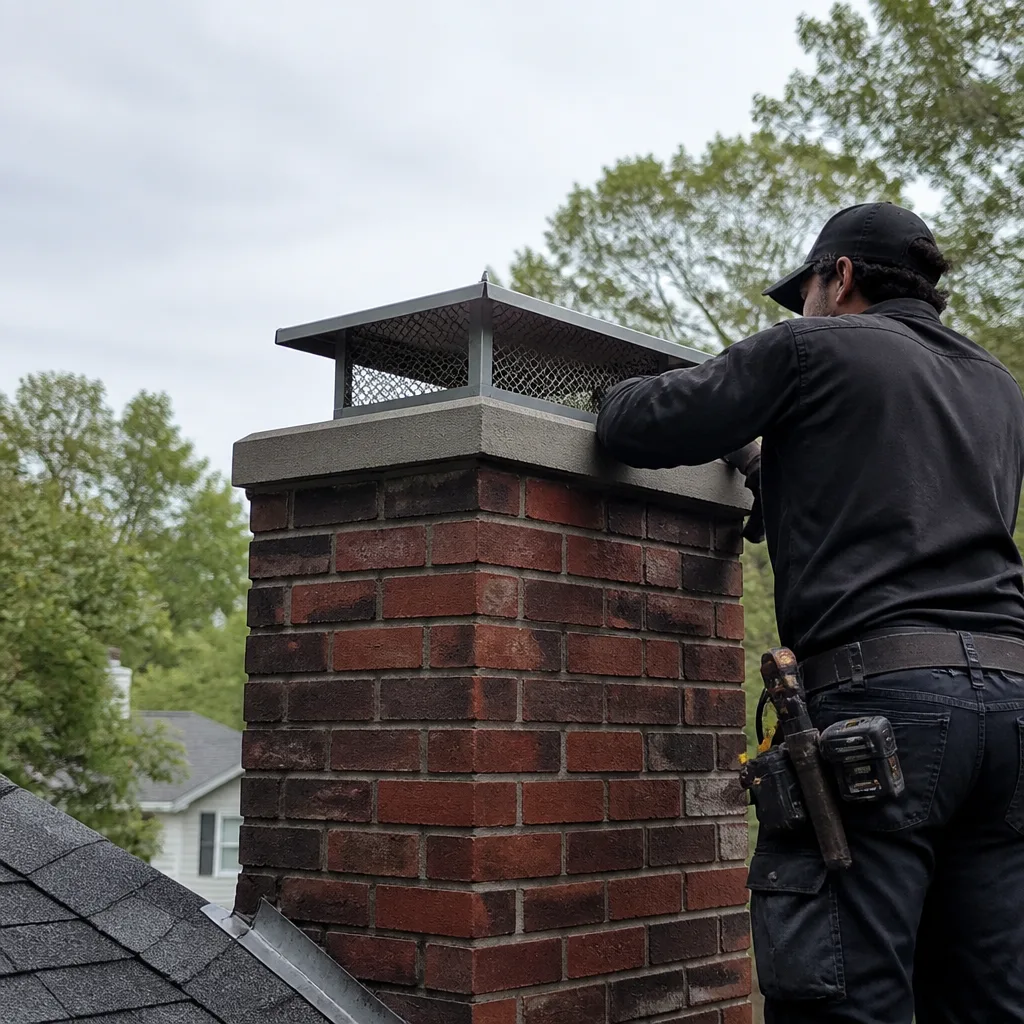 After
After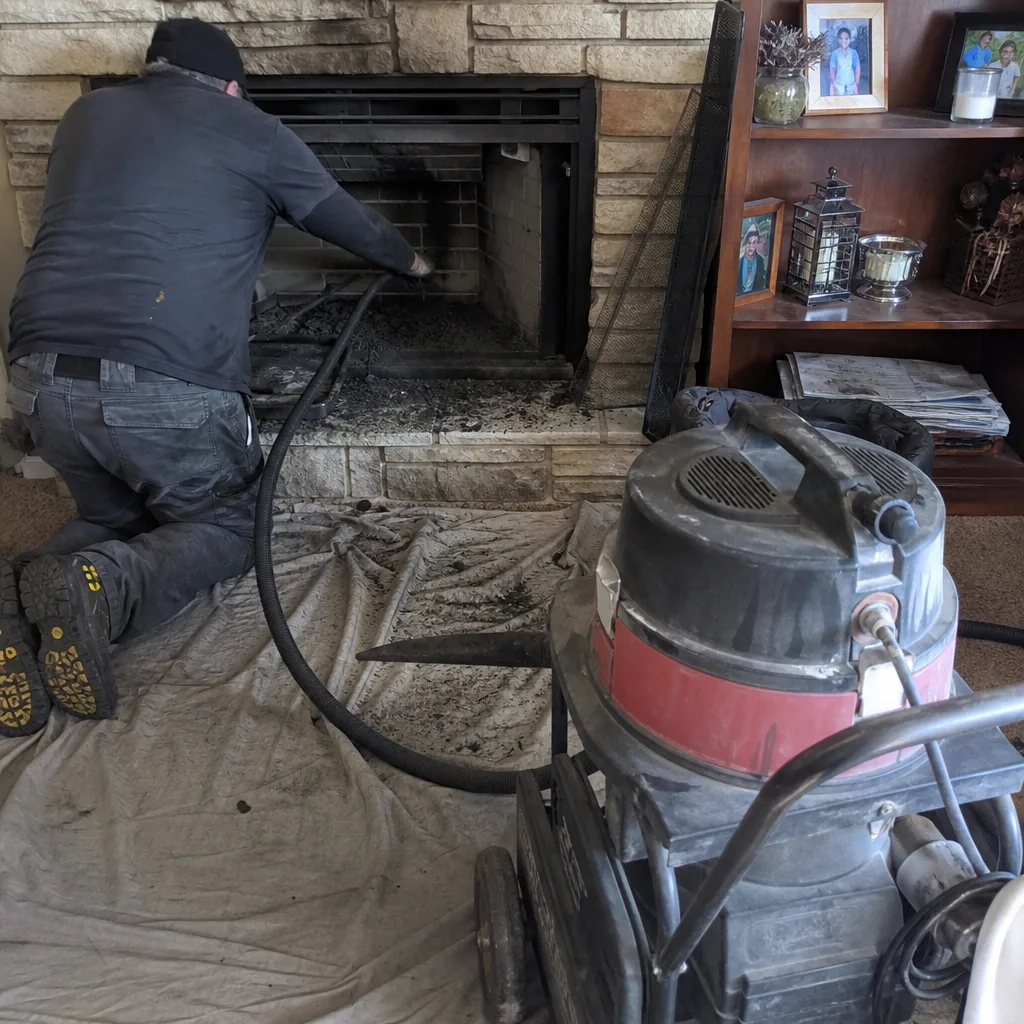 Before
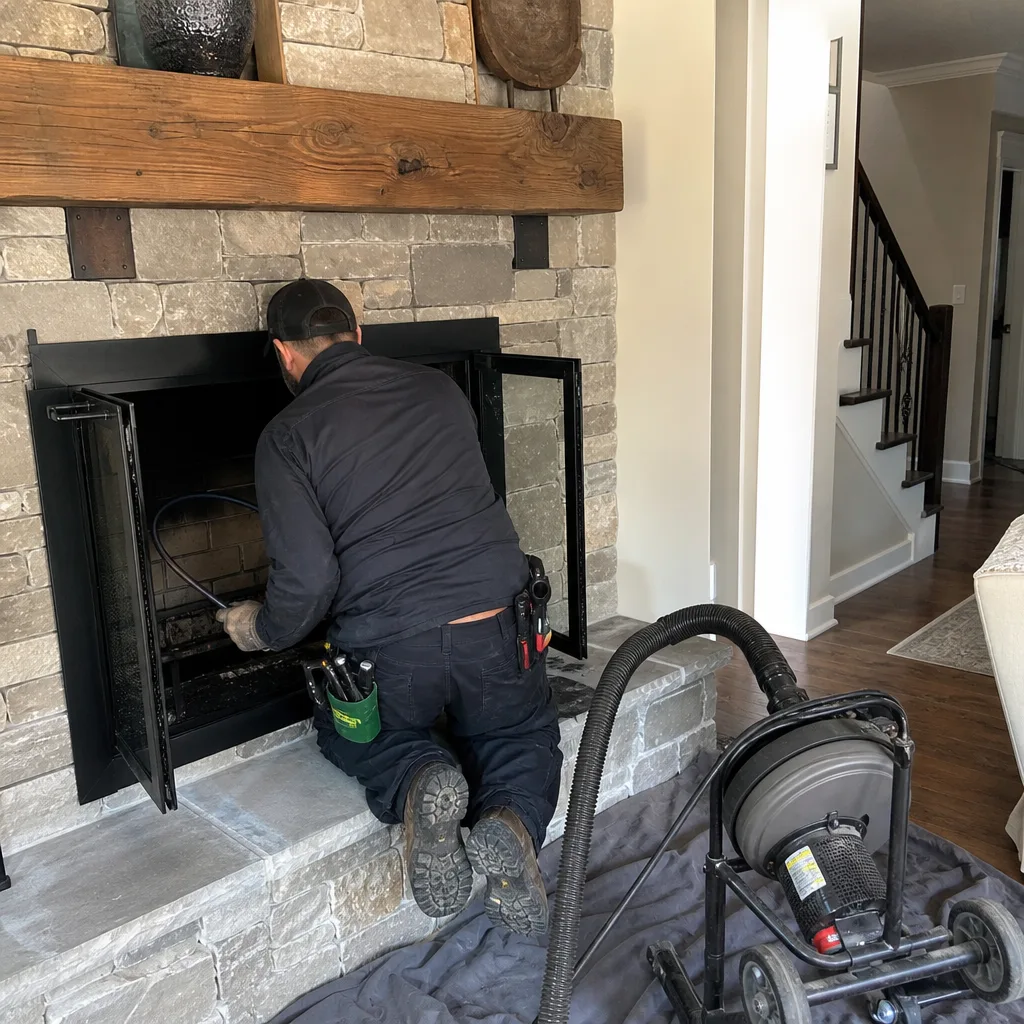 After
After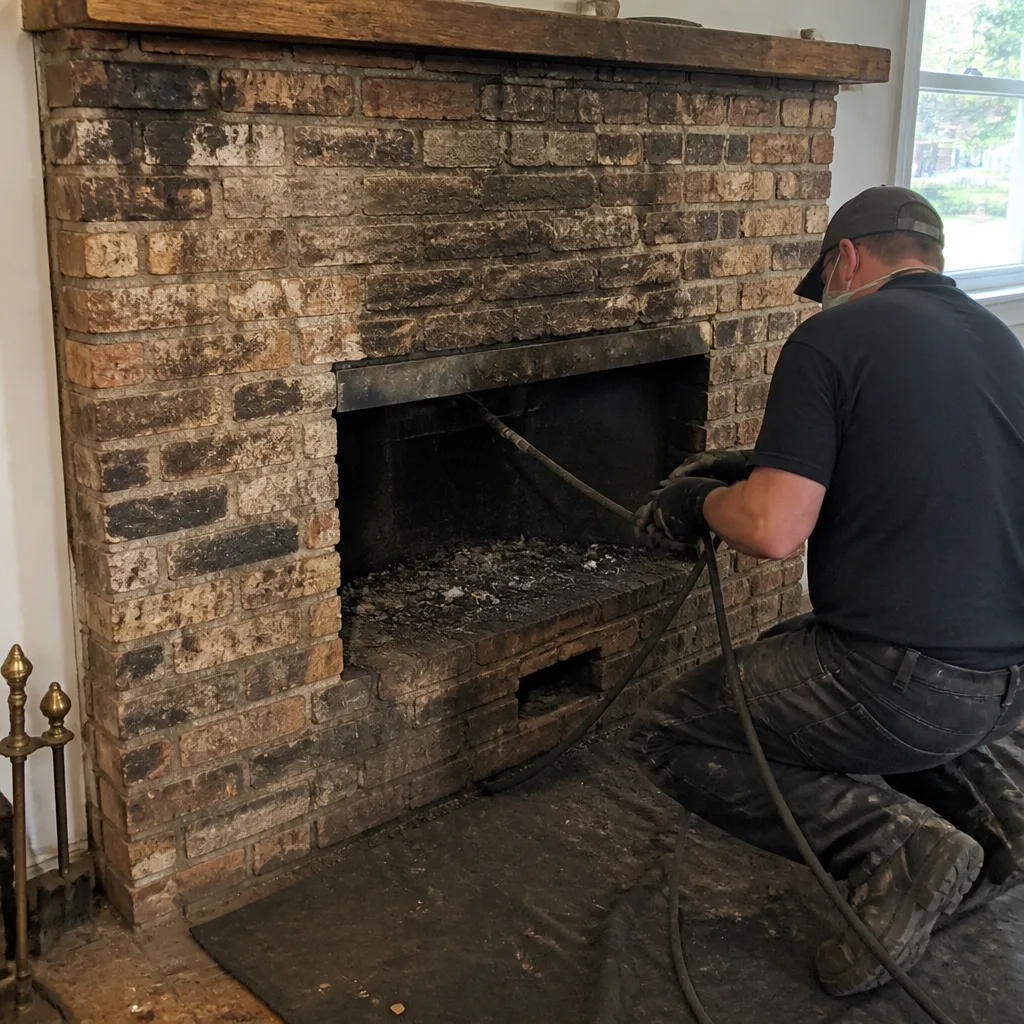 Before
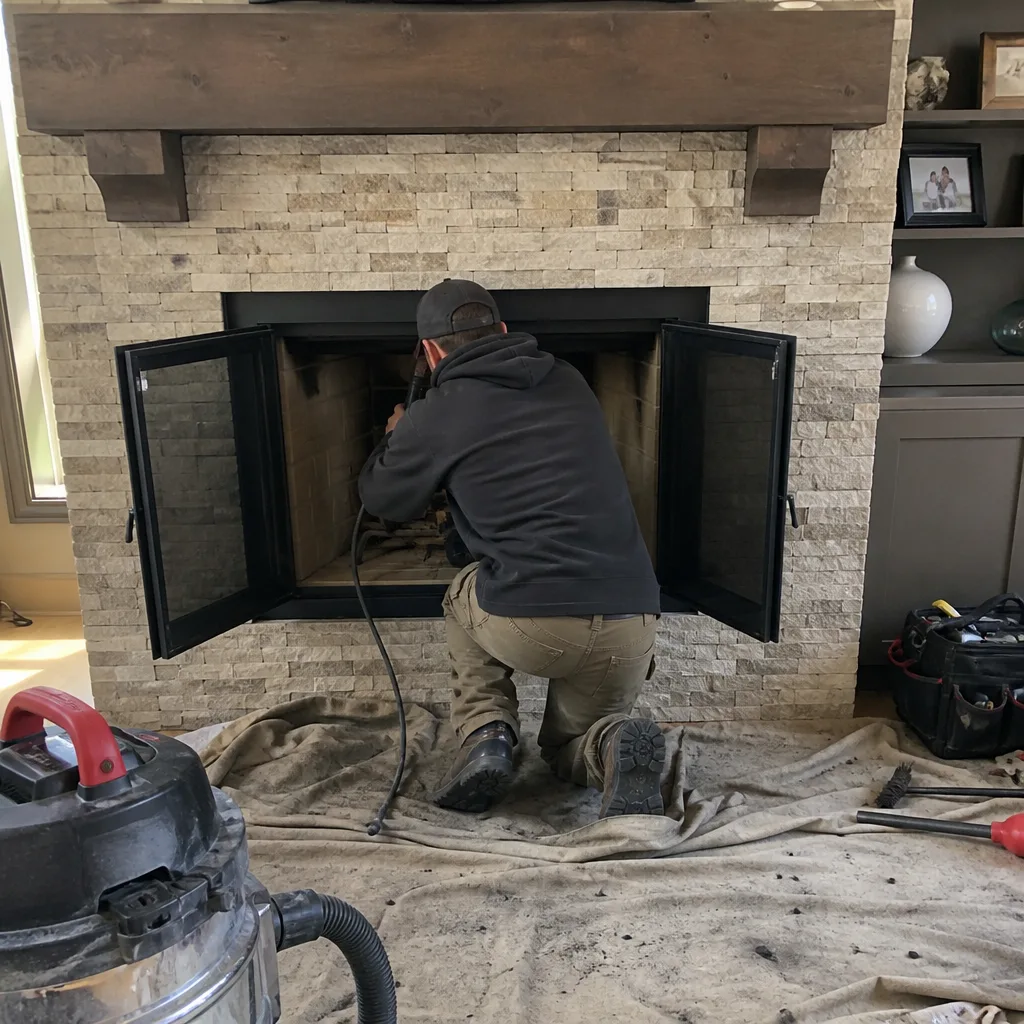 After
AfterThe Complete Guide to Chimney Cleaning in Crystal Lake
The CSIA reports that 27% of residential chimney fires follow a cleaning that was done without any inspection - because the sweep removed creosote but never identified the cracked tile behind it. In Crystal Lake, where lake-effect moisture pushes humidity higher than inland McHenry County, that risk compounds faster than most homeowners realize. This guide maps every stage from first smoke smell to documented clean flue, so nothing gets assumed and nothing gets sold without evidence you can see for yourself. For more guides & resources on chimney care, visit our blog.
Quick Answer
A professional chimney cleaning in Crystal Lake costs between $199 and $349 for a standard sweep with NFPA 211 Level 2 camera inspection included. The service removes creosote, soot, and obstructions from the flue, but the critical step is what the camera finds afterward - liner cracks, mortar gaps, or moisture damage that a brush alone cannot fix. Every cleaning should produce a written scope, photo documentation, and a clear next-step recommendation before any additional work is proposed.
Table of Contents
- Chimney Cleaning vs. Chimney Inspection: Two Separate Actions
- How Crystal Lake’s Climate Affects Your Chimney
- What a Level 2 Camera Scan Actually Reveals
- What Happens During a Professional Chimney Cleaning
- How to Read Your Inspection Report
- Chimney Cleaning Cost in Crystal Lake
- Documentation Red Flags: What Missing Paperwork Means
- How Often to Schedule Cleaning in Crystal Lake
 Before
 After
AfterChimney Cleaning vs. Chimney Inspection: Two Separate Actions
Most homeowners in Crystal Lake call for “a chimney cleaning” and expect one service. What they actually need is two distinct operations: the mechanical cleaning of the flue, and the diagnostic inspection that determines whether the flue is safe to use. Confusing them is how a $250 cleaning becomes a $4,000 reline - or worse, how a cracked liner gets a fresh coat of soot brushed off while the defect remains hidden. See our DIY vs Professional Chimney Cleaning: The Crystal Lake Homeowner’s Decision Guide for why the distinction matters.
Chimney cleaning is the physical removal of combustible deposits. A sweep uses brushes, rods, and vacuums to clear creosote, soot, bird nests, and debris from the flue liner, smoke chamber, and firebox. It improves draft, reduces fire risk, and restores proper airflow. It does not, by itself, reveal structural problems.
Chimney inspection is the visual and camera-based evaluation of the flue’s condition. NFPA 211 defines three levels:
- Level 1: Visual examination of readily accessible portions - what you can see from the firebox opening or roof without tools. Fine for annual maintenance on systems with no changes.
- Level 2: Camera scan of the entire flue interior, plus accessible exterior components, performed whenever a system changes hands, after a chimney fire, or as part of any cleaning where the technician needs to verify the flue’s integrity before declaring it safe. This is the standard Chimney Cleaning & Sweep in Crystal Lake should include by default.
- Level 3: Demolition or removal of building materials to access concealed areas - rare, triggered only when Level 2 indicates serious hidden damage.
At Level Two Chimney Crystal Lake, we do not perform a cleaning without a Level 2 inspection. Clause 4 of the Haven Standard requires a documented photo record on every job, and that record is impossible to produce without running a camera the full length of the flue. We’ve seen too many Crystal Lake homes where a previous “cleaning” left a cracked terracotta liner undetected - the homeowner burned three more seasons before a draft problem finally prompted a real inspection, by which time the gap had widened and heat had begun degrading surrounding masonry.
The separation matters for billing, too. A legitimate company quotes cleaning and inspection as distinct line items. If one is waived or bundled opaquely, ask why. Our How to Hire a Chimney Cleaning Contractor in Crystal Lake: A Step-by-Step Guide covers what to look for in a quote. The camera scan takes 20-40 minutes, requires specialized equipment, and produces the documentation your insurer may request after a claim. It is not a courtesy; it is the core of the service.
How Crystal Lake’s Climate Affects Your Chimney
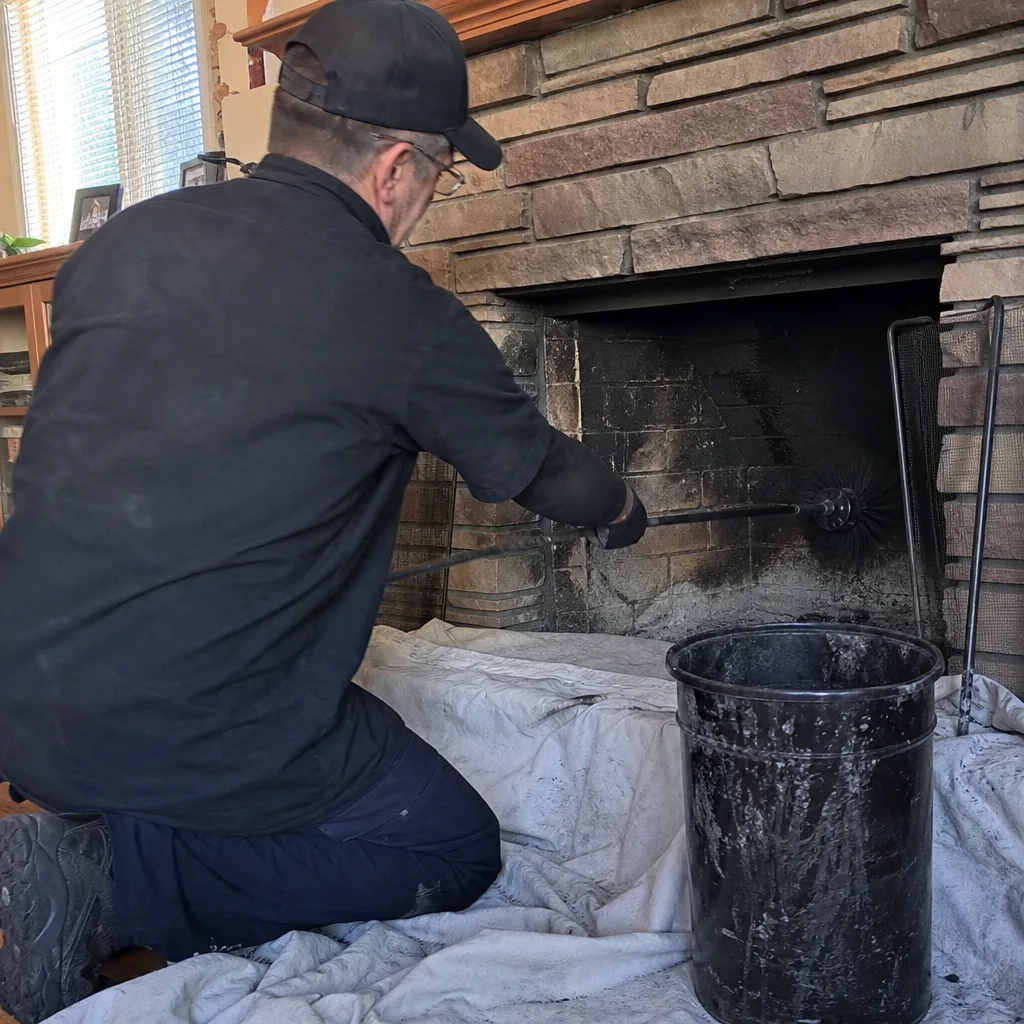
Crystal Lake sits at the edge of the Fox River watershed, with the lake itself moderating temperatures but elevating humidity compared to drier McHenry County towns like Harvard or Marengo. That moisture profile changes how creosote forms and how masonry deteriorates.
Creosote, the tar-like byproduct of incomplete wood combustion, progresses through three stages:
- Stage 1: Sooty, flaky, easily brushed away. Common with dry hardwoods and hot fires.
- Stage 2: Shiny, hardened flakes or porous crust. Requires more aggressive mechanical removal. In Crystal Lake’s humid shoulder seasons, Stage 2 forms faster because moist air slows complete combustion and cools flue gases more rapidly.
- Stage 3: Glazed, tar-like, highly concentrated fuel. Often requires chemical treatment or rotary removal. Stage 3 is the leading cause of chimney fires nationwide.
We’ve found Stage 2 creosote in Crystal Lake flues after as little as one cord of improperly seasoned oak - faster accumulation than we’d expect in drier climates where the same fuel and burn pattern might produce only Stage 1. The lake-effect humidity doesn’t just accelerate creosote; it also drives freeze-thaw cycling in brick and mortar. Water vapor condenses on the cool upper flue during shoulder-season burns, then freezes when temperatures drop. That expansion cracks flue tiles, spalls brick faces, and degrades mortar joints.
Neighborhoods near the lake itself - the historic district around Crystal Lake Avenue, the homes along Walkup Road with sightlines to the water - show this pattern most acutely. We’ve documented liner spalling in 1920s masonry chimneys there that matches what we’d expect in coastal New England, not inland Illinois. The moisture is local, and the maintenance schedule should account for it.
For homeowners in newer developments like Coventry or the areas west of Route 31, the risk shifts: prefabricated metal chimneys with factory-built clearances. These don’t suffer freeze-thaw masonry damage, but their termination caps corrode faster in humid air, and their inner liners can separate at joints if condensation accelerates. The camera finds these separations; a flashlight from the firebox cannot.
What a Level 2 Camera Scan Actually Reveals
A flashlight held at the firebox opening illuminates perhaps the first 18 inches of flue. Everything above is shadow, guesswork, and the technician’s optimism. The Level 2 camera scan - a high-resolution, articulating video head on a flexible rod - reveals what that flashlight cannot physically reach.
Here is what we document on every scan at Level Two Chimney Crystal Lake home:
- Flue liner continuity: Cracks, gaps, or missing sections in terracotta tile, stainless steel, or cast-in-place liners. Even a hairline crack can allow combustion gases to reach combustible framing - a violation of NFPA 211 and a fire hazard.
- Mortar joint condition: Eroded or missing mortar between flue tiles, which allows creosote to accumulate in the gap and creates a path for heat and gases.
- Spalling and flaking: Deteriorated liner surface that reduces draft efficiency and creates additional creosote adhesion points.
- Obstructions: Bird nests, collapsed liner sections, construction debris, or - in Crystal Lake’s older homes near the train depot - historical blockages from coal-to-wood conversions done without proper flue resizing.
- Glazed creosote deposits: Stage 3 buildup that brushing alone will not remove, requiring chemical treatment or rotary chains.
- Smoke chamber integrity: The area above the firebox and below the flue, often corbeled brick, where many house fires originate due to cracked parging or gaps.
- Water intrusion evidence: Staining, efflorescence (white mineral deposits), or rust that indicates cap, crown, or flashing failure.
The camera produces a video record, not a verbal summary. Clause 4 of the Haven Standard requires that record be archived and made available to the homeowner. We’ve had Crystal Lake clients request their 2017 scan to compare against 2024 findings - possible only because the documentation exists. Without it, you’re relying on a technician’s memory and your own.
What the camera cannot do is predict future failure. It documents condition at a moment. That’s why the written report includes recommended re-inspection intervals based on what was found: 12 months for normal conditions, 6 months for early-stage deterioration, immediate follow-up for any condition rated “requires action before next use.”
What Happens During a Professional Chimney Cleaning
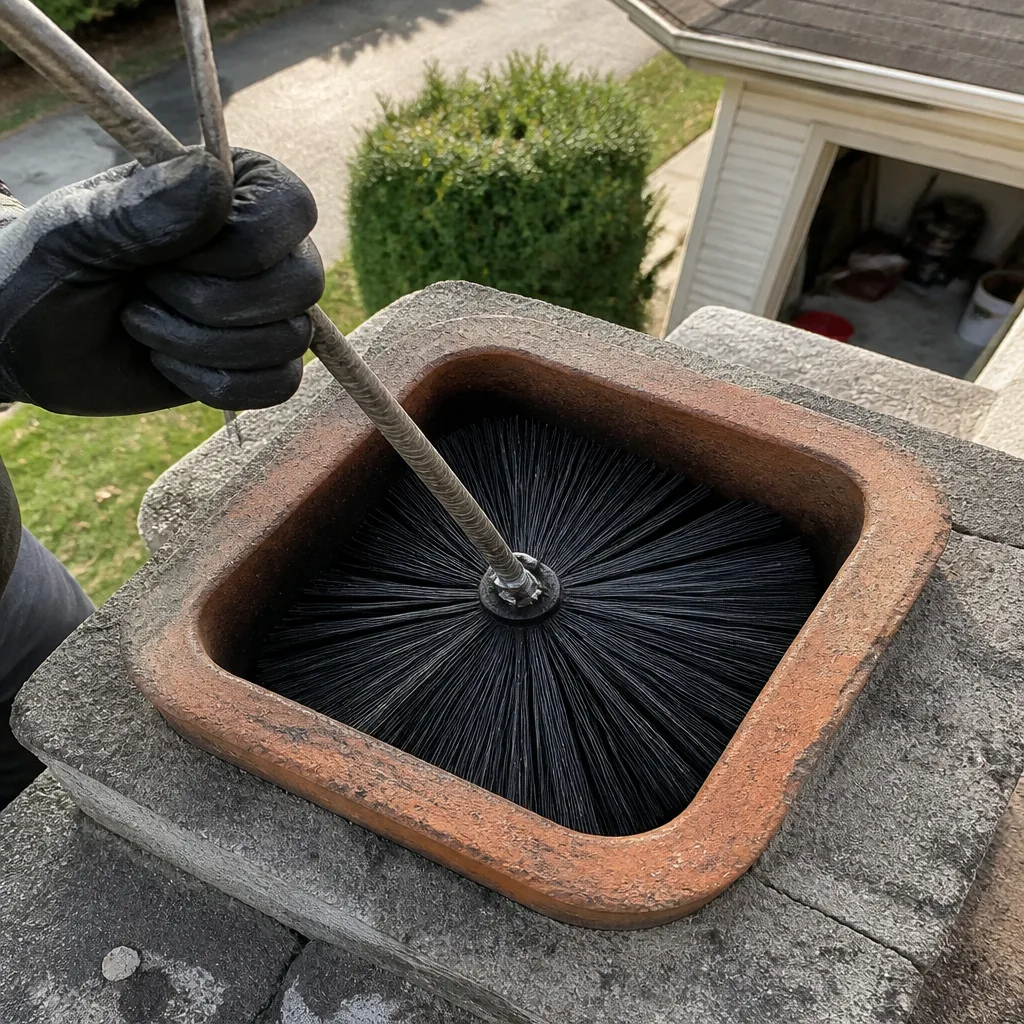
A proper cleaning follows a sequence. Skipping steps or performing them out of order risks damage, incomplete removal, or - most commonly - a “clean” flue that was never inspected.
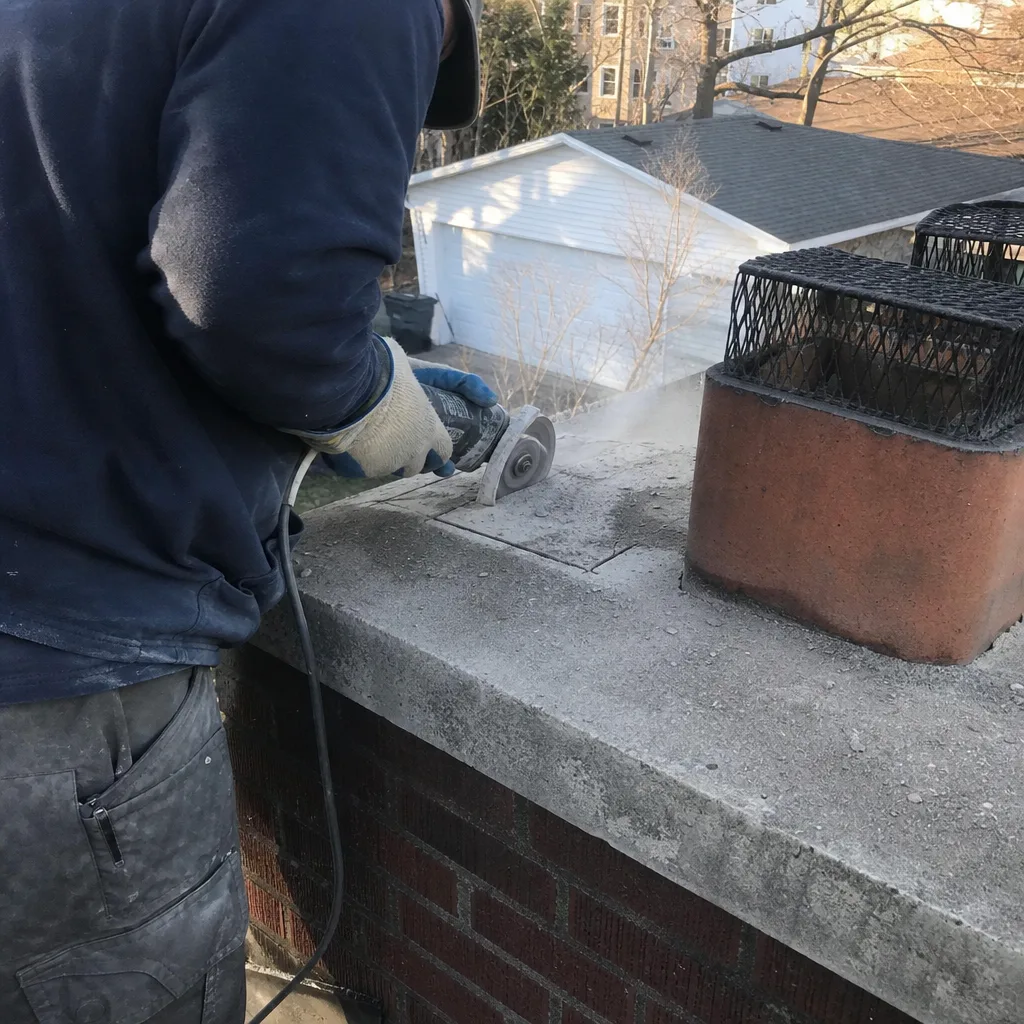
- Exterior assessment: The technician examines the chimney crown, cap, flashing, and visible masonry from the roof or ladder. In Crystal Lake, we pay particular attention to crown cracking, which allows water directly into the flue and accelerates every form of deterioration.
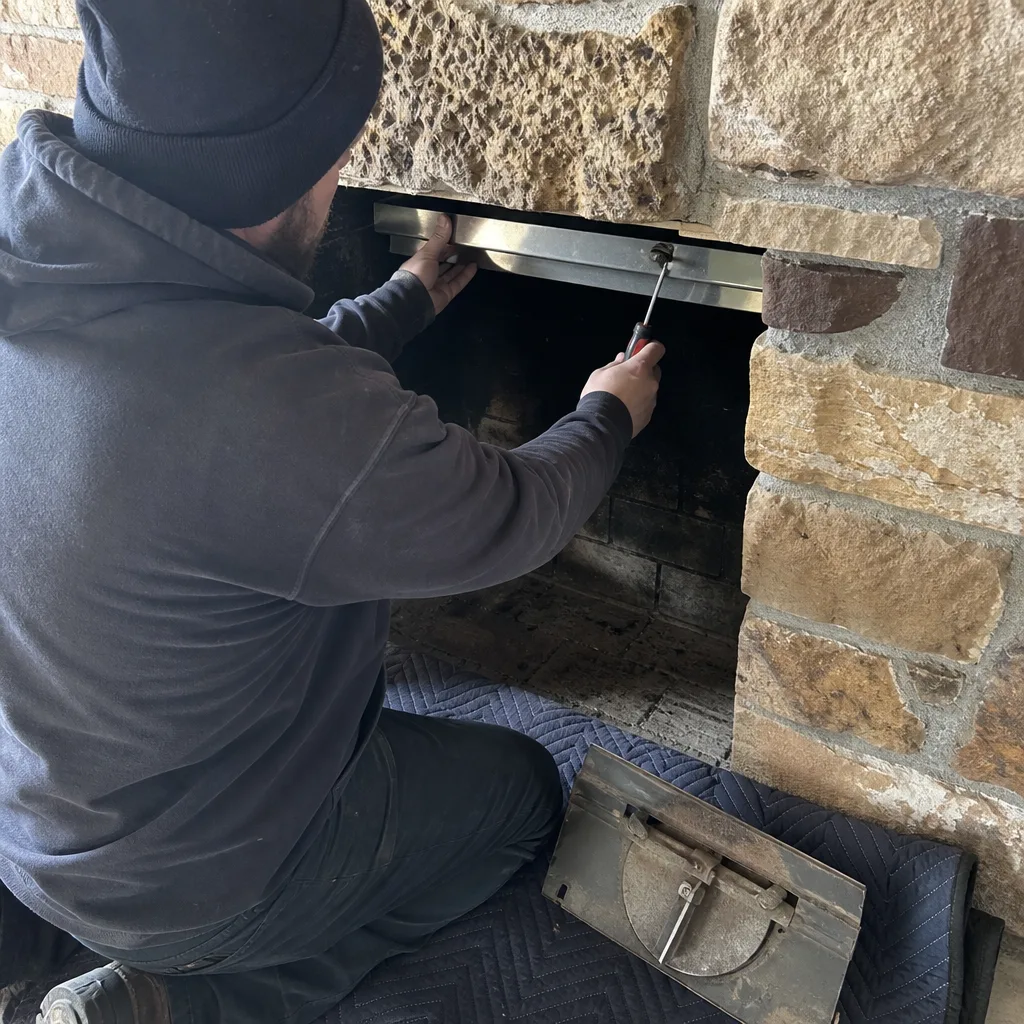
- Interior setup: Drop cloths protect flooring. A HEPA vacuum runs continuously to capture particulate. The damper is inspected for proper operation and sealed if removal is required.
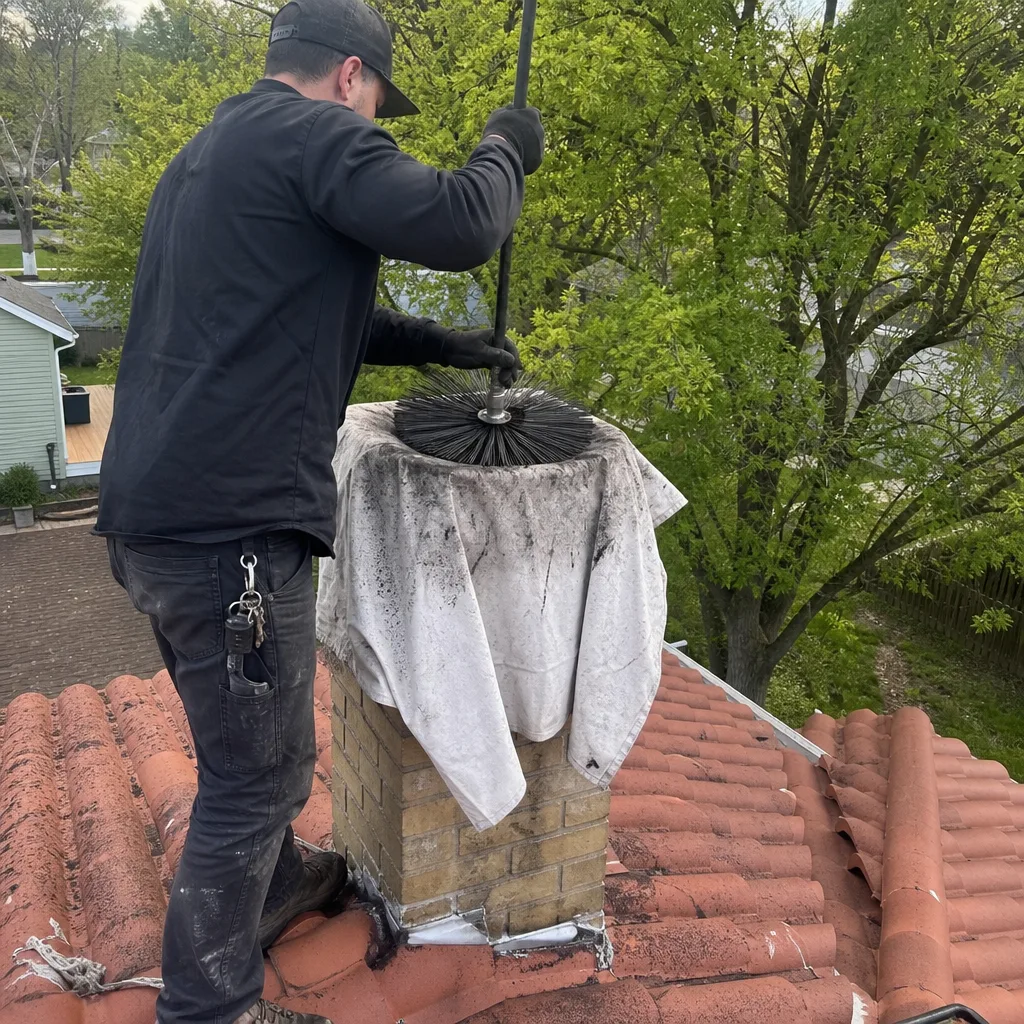
- Mechanical sweeping: Brushes sized to the flue diameter are run the full length on rods, typically from the roof down or from the firebox up depending on access. For Stage 2 or 3 creosote, rotary cleaning with chains or whips may be required.
- Smoke chamber and firebox cleaning: Soot and ash are removed. The smoke chamber is hand-brushed and vacuumed. The firebox brick or refractory panels are inspected for cracks.
- Level 2 camera scan: The video inspection is performed after cleaning, when the flue is clear of obstruction and deposits that might hide defects.
- Documentation and consultation: The technician reviews findings with the homeowner, explains any conditions requiring action, and provides a written scope with pricing before any additional work is proposed.
The entire process typically takes 60-90 minutes for a standard flue. Heavy Stage 3 buildup, multiple flues, or access complications (steep roof pitch, interior chimney in a finished space) extend that timeline. We do not quote by the hour; the written price covers the complete service regardless of time required.
Materials matter for durability. When liner repair or relining is necessary, we source from DuraFlex for stainless steel relining systems, HeatShield for cerfractory flue repair, and Gelco for caps and accessories - procured through Haven’s buying network to keep customer prices honest. The brand on the material is less important than the specification: 316Ti stainless for wood-burning, 304 for gas, proper insulation thickness for zero-clearance installations.
How to Read Your Inspection Report
The report you receive after a Level 2 inspection should be readable without a engineering degree. If it’s dense jargon or a vague checklist, that signals a process problem. Here’s what to look for.
Flue liner condition codes: Most reputable companies use a variation of this scale:
- Code 1 - Satisfactory: Fit for continued use with normal maintenance. No defects affecting safety or performance.
- Code 2 - Fair: Defects present that do not currently affect safety but will require monitoring or eventual repair. Example: minor spalling, early mortar erosion, small crown cracks.
- Code 3 - Poor: Defects that affect safety or performance and require correction before next use, or within a defined short-term interval. Example: cracked flue tile, significant mortar loss, damaged cap allowing water entry.
- Code 4 - Unsafe: Conditions that present an imminent hazard. System should not be used until repaired. Example: missing liner section, large gap exposing combustibles, structural instability.
Draft readings: A manometer or digital draft gauge measures negative pressure in the flue, in Pascals (Pa). Acceptable draft varies by appliance and flue height, but for a standard open fireplace, 10-15 Pa under steady-state conditions is typical. Below 8 Pa suggests obstruction, liner damage, or inadequate flue height. Above 25 Pa may indicate excessive draft that wastes heat and can cause over-firing.
Clearance measurements: The required distance between the flue liner and combustible framing - typically 2 inches for masonry chimneys, zero for listed factory-built systems with proper insulation. The camera cannot measure clearance directly, but visible charring, pyrolyzed wood, or improper construction visible through gaps triggers a Code 3 or 4.
Photo references: Each finding should reference timestamped images or video segments. “Figure 3: Vertical crack in third flue tile from top, approximately 4 inches long, 1/16 inch width.” Vague descriptions without visual backup are unverifiable.
Mandatory follow-up triggers: The report should explicitly state what conditions require action before next use, what can be scheduled routinely, and what is informational only. If every finding is “urgent,” the company is scare-selling. If none are, the inspection was superficial.
We’ve reviewed competitor reports from Crystal Lake homeowners who brought us Chimney Repair in Crystal Lake quotes for second opinions. The most common problem: a Code 2 condition described as “needs immediate relining” with no photo evidence of the claimed defect. Our Free Second Opinion on Any Written Estimate exists precisely for this scenario - bring us the quote, we’ll run our own camera, and we’ll show you what we find.
Chimney Cleaning Cost in Crystal Lake
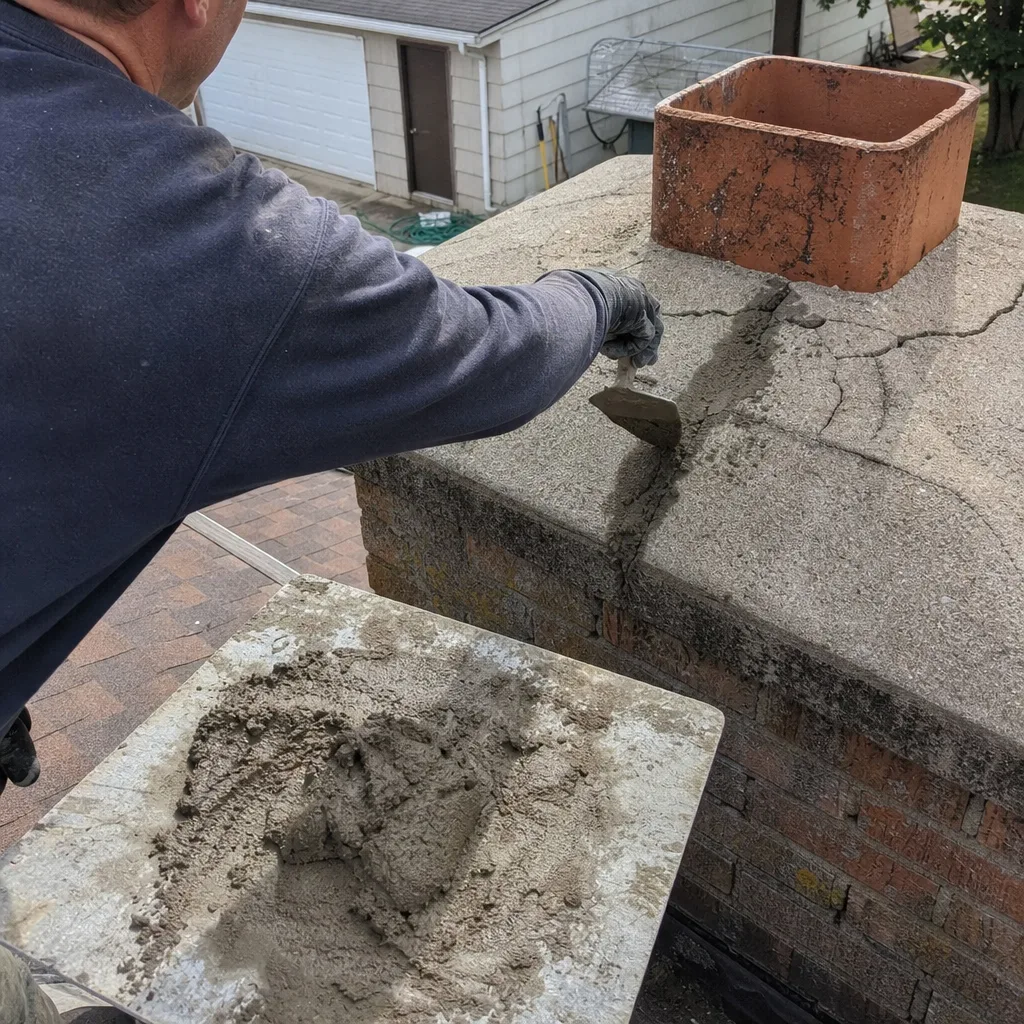
Price transparency is a core principle. The table below reflects our current pricing for Crystal Lake-area homes. These are ranges; the written quote you receive before any work begins will be exact, based on flue count, access, and condition found during initial assessment.
| Service | Price Range | What’s Included |
|---|---|---|
| Standard chimney sweep + Level 2 inspection (single flue) | $199 - $249 | Mechanical cleaning, HEPA containment, camera scan, photo/video record, written report |
| Heavy creosote removal (Stage 2-3) | $279 - $349 | Rotary cleaning, chemical treatment if needed, extended camera documentation, re-inspection scheduling |
| Additional flue (same visit) | $89 - $129 | Full sweep and camera scan for second flue (fireplace + furnace, etc.) |
| Smoke chamber parge repair (minor) | $180 - $280 | UL-listed cerfractory application, documented cure, warranty |
| Cap replacement (standard stainless) | $225 - $375 installed | Custom-fit cap, hardware, installation, warranty |
What these prices do not include: relining, crown rebuild, masonry repair, or Fireplace Services in Crystal Lake such as insert installation. Those require separate written scopes based on camera findings. We do not estimate relining costs without a Level 2 inspection; anyone who does is guessing, and their guess will be wrong in your favor or theirs.
The 365-Day Done Right Promise applies to all work: if it’s not done right, we make it right. No charge for callback labor, no argument about whether the issue is “covered.” Clause 1 of the Haven Standard requires the written price, written scope, and written warranty before work starts - so there is never a dispute about what was agreed.
Documentation Red Flags: What Missing Paperwork Means
The documentation you receive after a chimney service is as important as the service itself. Its absence, or its inadequacy, reveals how the company operates. Here are specific red flags we’ve encountered reviewing other companies’ work in Crystal Lake.
- No photo or video record: A verbal summary of “looks fine” is unverifiable and unenforceable. Clause 4 of the Haven Standard was written because we saw this problem repeatedly in 2008-2009, before we made camera documentation mandatory.
- Handwritten invoice only, no report: An invoice states what you paid, not what was found. You need a separate document describing flue condition, measurements, and recommendations.
- Pre-printed checklist with checkmarks, no narrative: “Flue: OK” tells you nothing about what “OK” means, who determined it, or what standard applies.
- Verbal estimate for additional work: Any recommendation for repair, relining, or component replacement must be in writing with scope, materials specified, and price fixed before you agree. Verbal estimates shift after you’re committed.
- No license or insurance documentation on request: Illinois requires chimney contractors to carry appropriate licensing and insurance. We display ours; any hesitation from another company is a signal.
- Warranty terms undefined: “Satisfaction guaranteed” with no written terms is marketing, not a promise. The Haven Standard’s 365-Day Done Right Promise is printed, dated, and signed.
We’ve had Crystal Lake homeowners show us “inspection reports” that were single-page carbon copies with a smiley face and a $1,200 relining recommendation. No photos, no measurements, no code references. When we ran our camera, the flue was Code 1, satisfactory for continued use. The previous company was selling fear, not service. Documentation is your protection against this.
How Often to Schedule Cleaning in Crystal Lake
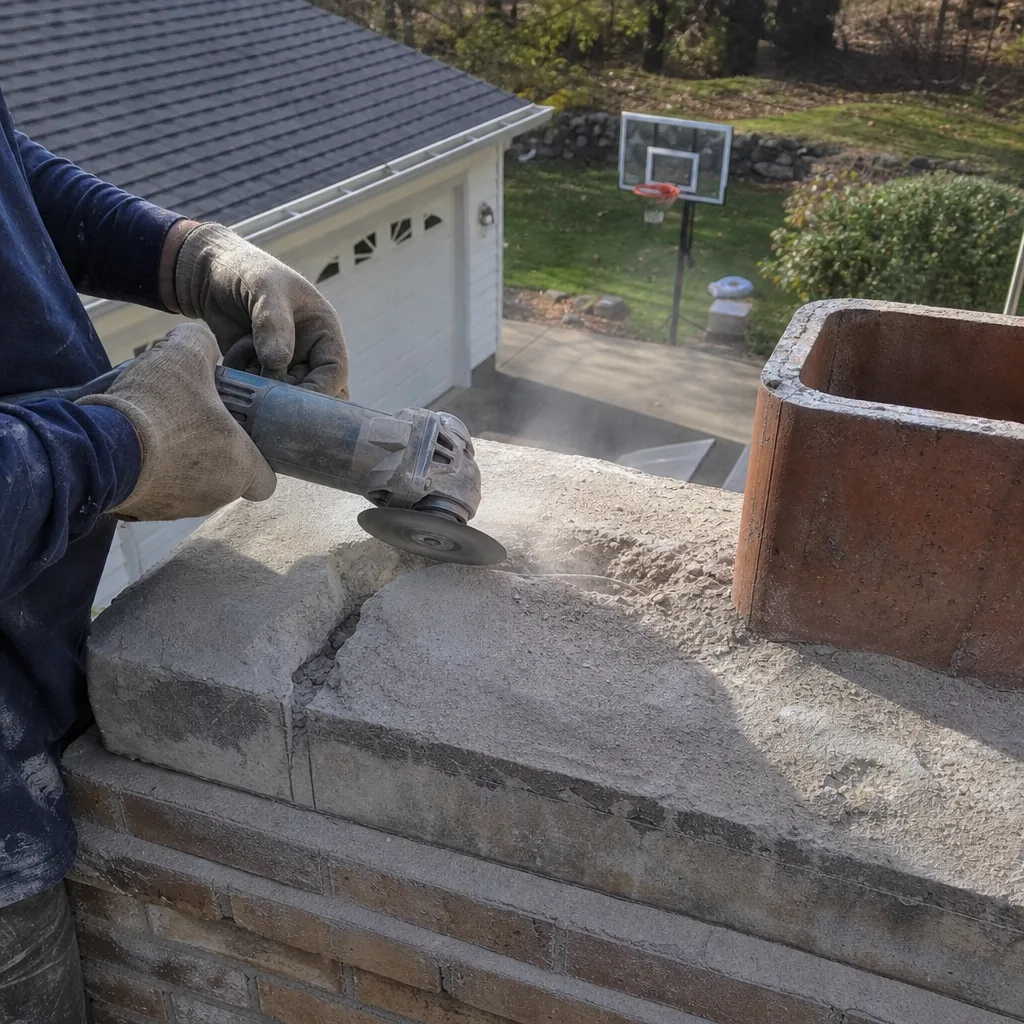
The NFPA 211 standard is annual inspection, cleaning as needed. “As needed” depends on use, fuel, and local conditions.
For Crystal Lake specifically, we recommend:
- Wood-burning fireplace, primary heat source: Annual sweep and Level 2 inspection, typically before the first burn of the season (September-October). Heavy users (2+ cords per season) may need mid-season assessment.
- Wood-burning fireplace, occasional use (weekends, holidays): Inspection annually, sweep every 1-2 years depending on creosote accumulation found during inspection.
- Gas fireplace with traditional chimney: Inspection every 2-3 years; sweep rarely needed unless debris enters flue. Focus on cap integrity and liner corrosion.
- Gas insert or direct-vent appliance: Manufacturer’s schedule, typically annual service by a hearth professional; chimney sweep not applicable but venting inspection is.
- Furnace or boiler flue: Annual inspection, especially for older mid-efficiency appliances that vent into masonry chimneys. Condensing appliances with plastic venting have different requirements.
The moisture factor in Crystal Lake means we see more frequent Stage 2 progression than drier areas. If you’re burning even moderately seasoned hardwood (20% moisture or less), you’re likely fine on a standard schedule. But if you’re burning purchased “seasoned” wood that arrived damp, or if you’re in a lakeside home with persistent cap leakage, creosote accelerates. The camera inspection determines your actual condition; the calendar is only a starting point.
We’ve documented cases in the historic district where homeowners burned exclusively kiln-dried hardwood and still developed Stage 2 creosote in 10 months due to a failed crown allowing chronic moisture into the flue. The fuel was perfect; the chimney was not. Only the camera found the root cause.
Common Mistakes to Avoid
- Hiring based on lowest price without verifying what’s included. A $99 “sweep special” that omits the camera inspection is not cheaper; it’s incomplete, and the defects it misses will cost far more later.
- Assuming a new home needs no inspection. We’ve found construction debris, missing cleanout doors, and improper clearances in Crystal Lake homes built 2015-2022. The builder’s final walkthrough rarely includes a Level 2 scan.
- Burning wet or unseasoned wood. Wood over 25% moisture content produces massive creosote, wastes fuel, and pollutes. Buy a $20 moisture meter; use it.
- Ignoring the smell of smoke in the house. Smoke odor when the fireplace is not in use often indicates negative pressure and backdrafting, a carbon monoxide risk. Don’t mask it with air freshener; investigate it.
- DIY cleaning without inspection capability. A homeowner can brush a flue from the roof. Without a camera, they cannot verify they haven’t damaged liner tiles, missed a gap, or created a new obstruction. The risk-reward is poor.
- Deferring maintenance after a chimney fire. Even a small chimney fire (often undetected, sounding like a freight train or cracking noise) causes liner damage that requires Level 2 evaluation before next use. Continuing to burn is gambling with structural fire.
- Accepting verbal recommendations for major work. Relining, rebuild, or crown replacement should never proceed from a conversation. Written scope, written price, written warranty - Clause 1 of the Haven Standard, every time.
When to Call a Professional
Call for service when you notice smoke spilling into the room during operation, a persistent smoky odor when the system is cold, visible creosote flakes falling into the firebox, or any change in draft performance after weather events or home modifications. After any chimney fire, suspected or confirmed, schedule Level 2 inspection before the next burn. If you’ve purchased a home in Crystal Lake and the seller provided no inspection documentation, treat it as unknown condition - because it is.
Level Two Chimney Crystal Lake offers free estimates in Crystal Lake - call (815) 923-3185. A live person answers 24 hours a day. We’ll schedule a visit, run the camera, show you what we find, and provide a written price before any work begins. If you have a competitor’s written estimate, our Free Second Opinion applies: we’ll inspect, document, and compare findings with no obligation.
Frequently Asked Questions
A standard chimney sweep with Level 2 camera inspection in Crystal Lake typically runs $199 to $249 for a single flue. Heavy creosote removal or additional flues increase the price to $279-$349. We provide a written, exact quote before any work starts - call (815) 923-3185 for a free estimate.
You need a new liner only if the existing one is cracked, separated, missing sections, or improperly sized for your appliance - and only if those findings are documented with camera evidence you can see. At Level Two Chimney Crystal Lake, we show you the video; we don’t describe problems we won’t let you witness. Bring us any written estimate recommending relining; our Free Second Opinion includes our own camera inspection and honest assessment of whether the work is necessary.
Annual inspection is the baseline for all wood-burning systems; cleaning frequency depends on creosote accumulation. In Crystal Lake’s humid climate, Stage 2 creosote forms faster than in drier areas, so heavy users often need annual sweeping. Occasional users may stretch to every two years if the camera confirms minimal buildup. Gas systems need less frequent mechanical cleaning but still require periodic venting inspection.
Skipped cleaning allows creosote to accumulate, reducing draft and increasing chimney fire risk. Stage 3 creosote ignites at approximately 451°F - lower than the sustained temperatures in a normal flue. The fire can crack liners, damage masonry, and spread to combustible framing. Beyond fire risk, obstructions from nests or debris can force carbon monoxide back into living spaces. The cost of prevention is modest; the cost of remediation after failure is not.
A sweep is the physical removal of deposits; an inspection is the diagnostic evaluation of condition. They are separate operations with separate purposes. A sweep without inspection leaves structural defects undetected; an inspection without sweep leaves combustible material in place. At Level Two, they are performed together, with the camera scan following the cleaning, and both are documented under Haven Standard Clause 4.
You can brush accessible flue sections from the roof or firebox, but you cannot perform a Level 2 camera inspection without specialized equipment and training. Without that inspection, you cannot verify liner integrity, mortar condition, or clearance compliance. For the cost of a professional service - which includes documentation, insurance protection, and expert interpretation - DIY cleaning saves little and risks much. We do not recommend it for occupied homes.
The Bottom Line
Chimney cleaning in Crystal Lake is not a single service but a process: mechanical removal, camera inspection, documented findings, and written recommendations before any additional work. The lake-effect humidity accelerates creosote and masonry damage compared to drier inland areas. A flashlight look from the firebox cannot find cracked liners or mortar gaps; only a Level 2 camera scan can. The documentation you receive - photos, video, written report, written warranty - is your protection against unnecessary repairs and your proof of proper maintenance for insurance or resale. Anything less is incomplete, and incomplete costs more in the long run.
Level Two Chimney Crystal Lake has completed more than 38,000 chimney inspections and cleanings since 2009, every one with a written price before work started and a documented record when done. The Haven Standard governs every interaction: written scope, verified crew, on-schedule arrival, photo documentation, and the 365-Day Done Right Promise. Materials come from DuraFlex, HeatShield, Gelco, and other specified manufacturers through Haven’s buying network.
Call (815) 923-3185 for a free estimate. A live person answers, 24 hours a day. We’ll schedule your visit, run the camera, show you what we find, and give you a written price before any work begins. If you have a competitor’s quote, bring it - our Free Second Opinion is always available.
Written by Corrine Halstead, Owner at Level Two Chimney Crystal Lake, serving Crystal Lake since 2009.