
Last updated September 22, 2026
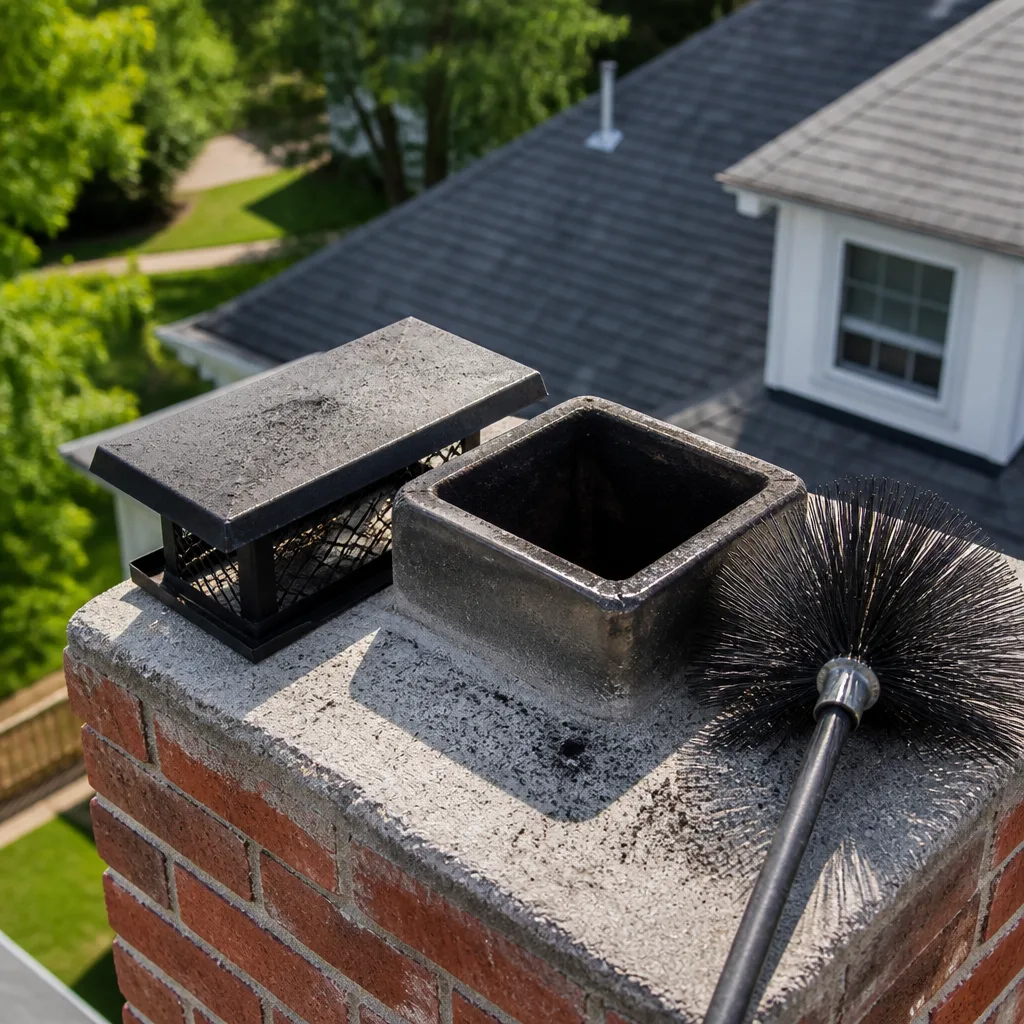
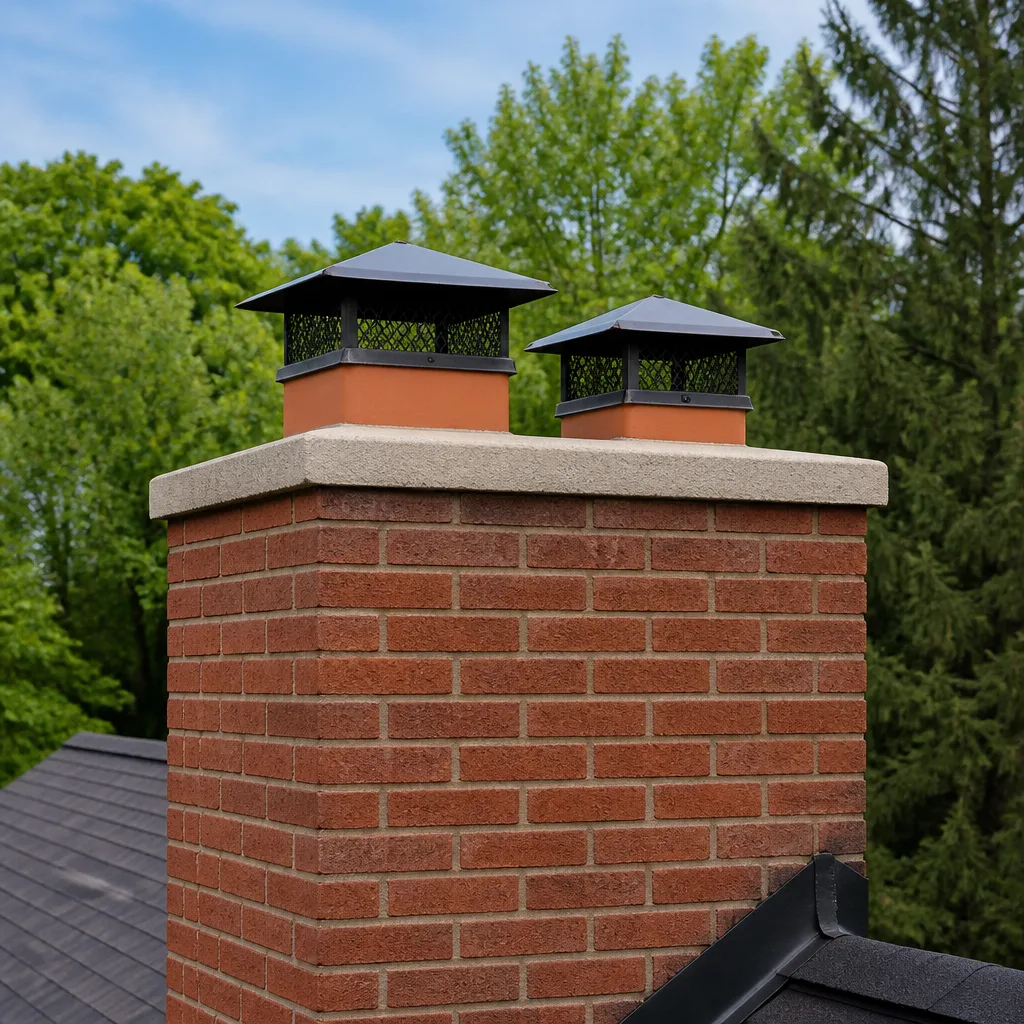
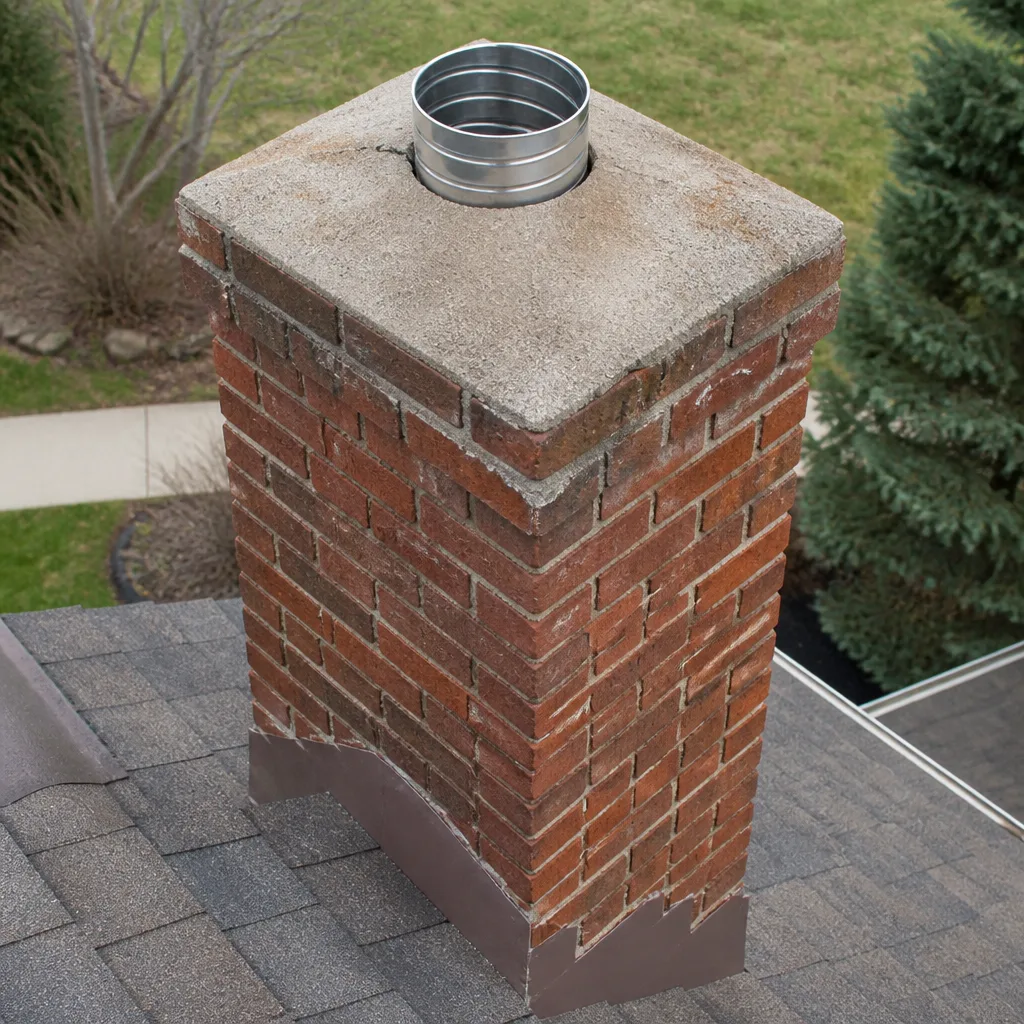
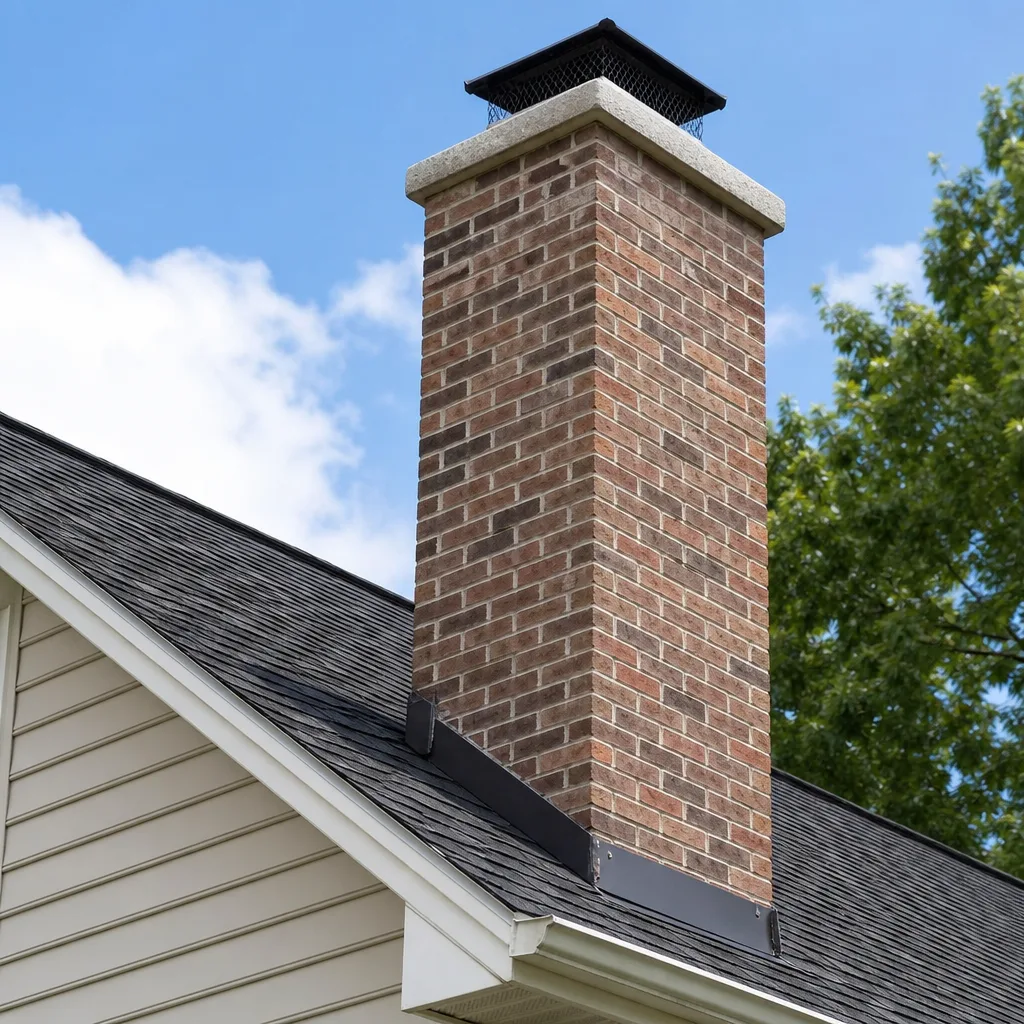
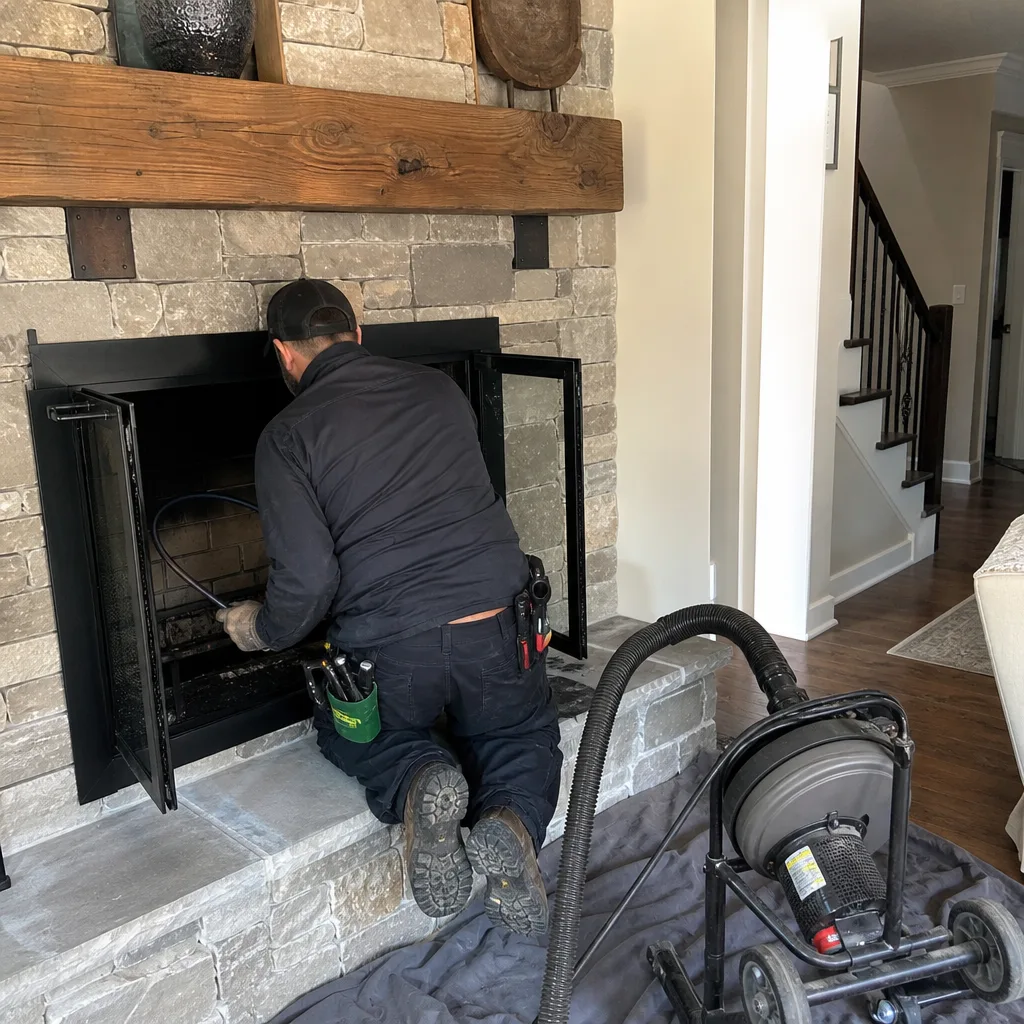
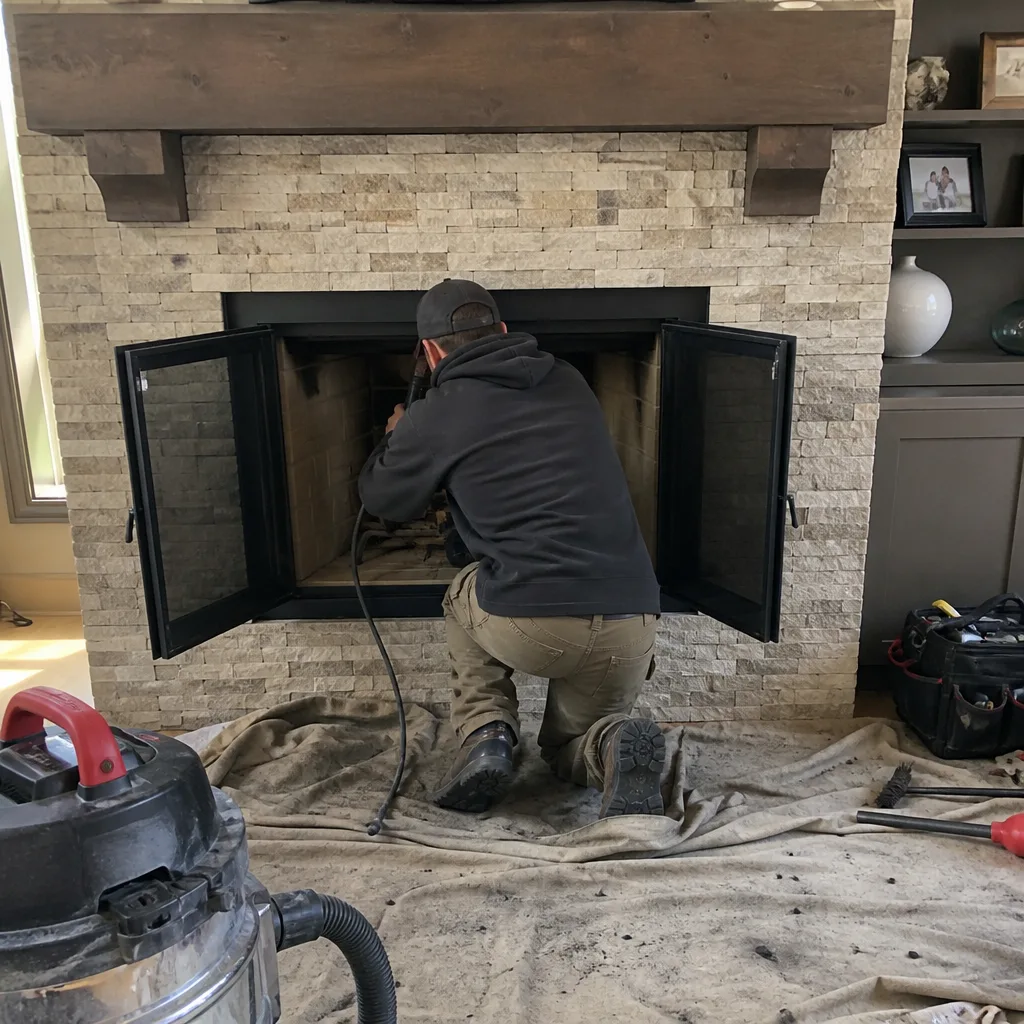
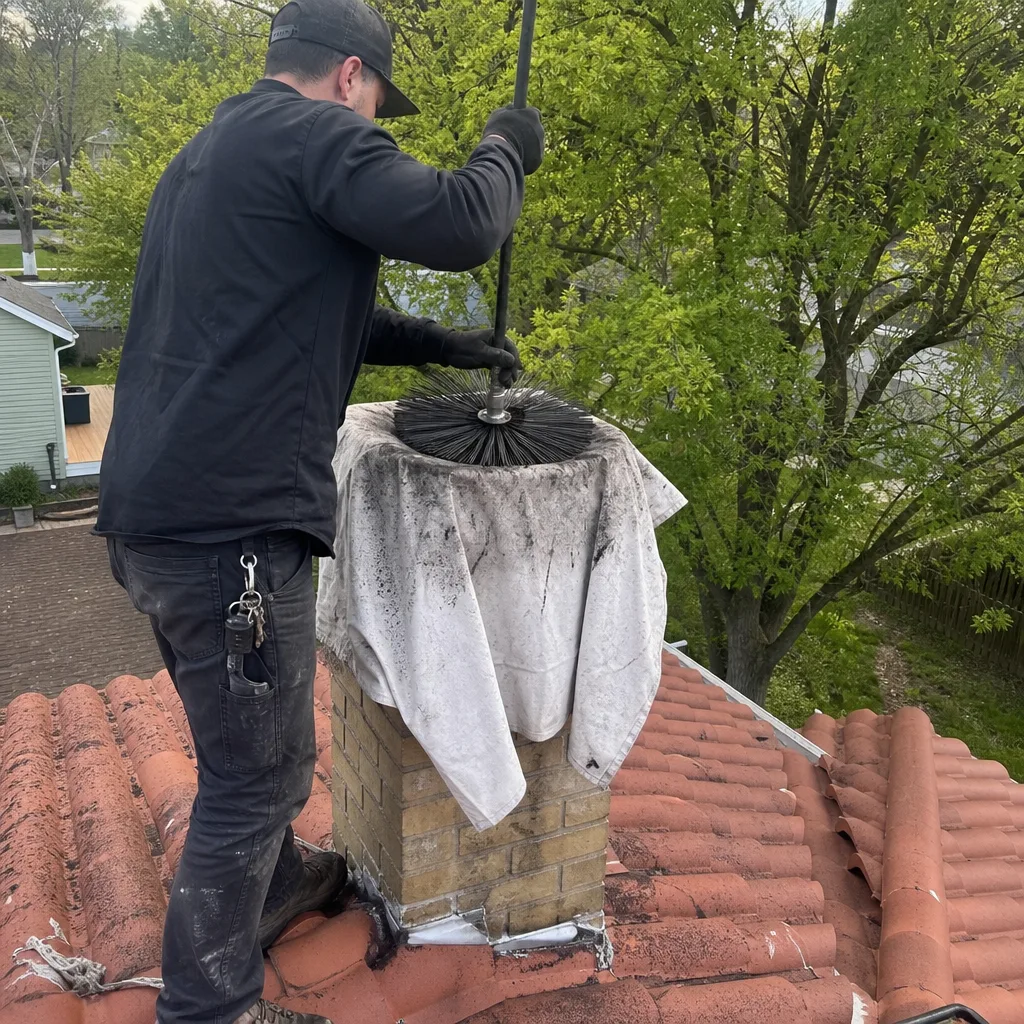
Level 1 sweep and inspection to the NFPA 211 annual standard - flue, crown, cap, and flashing checked and photographed
Chimney sweep logs do not sweep chimneys. They loosen some creosote - which then falls where a brush and vacuum still have to collect it.
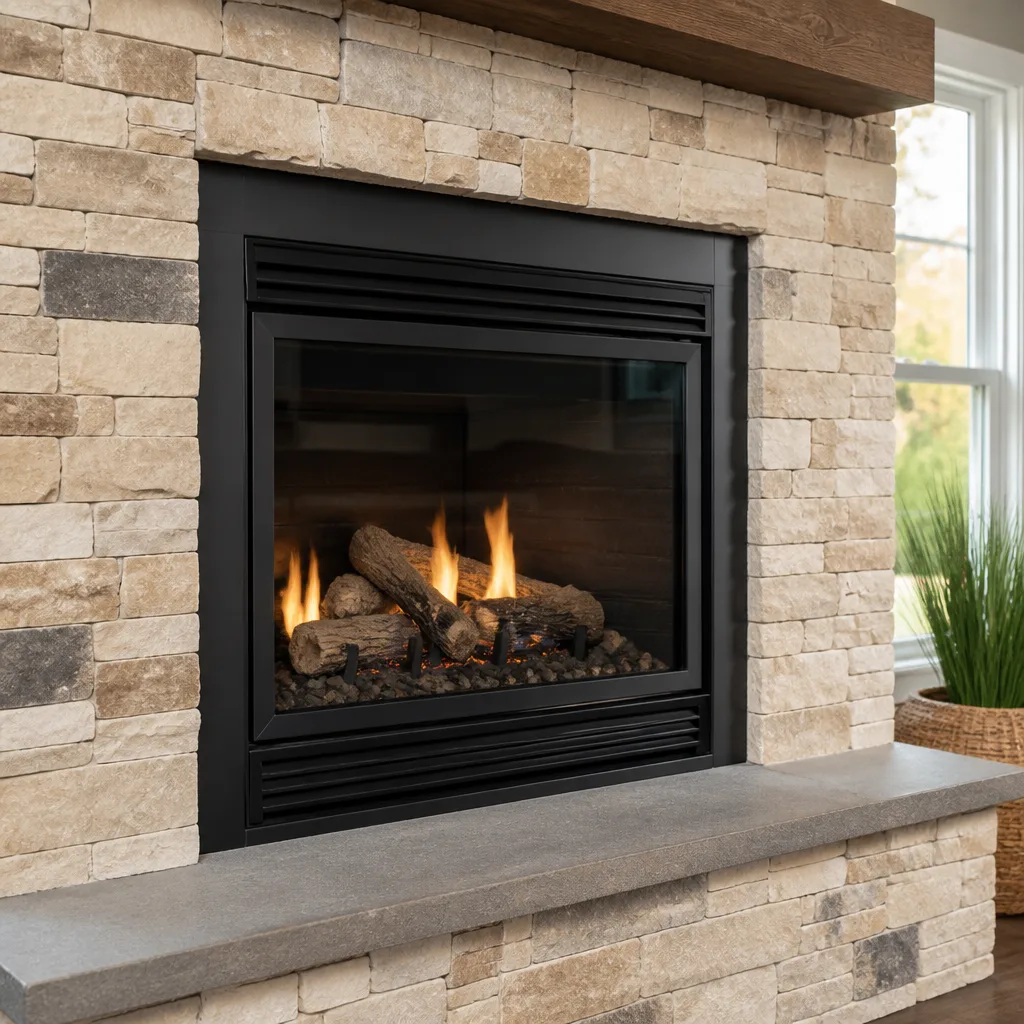
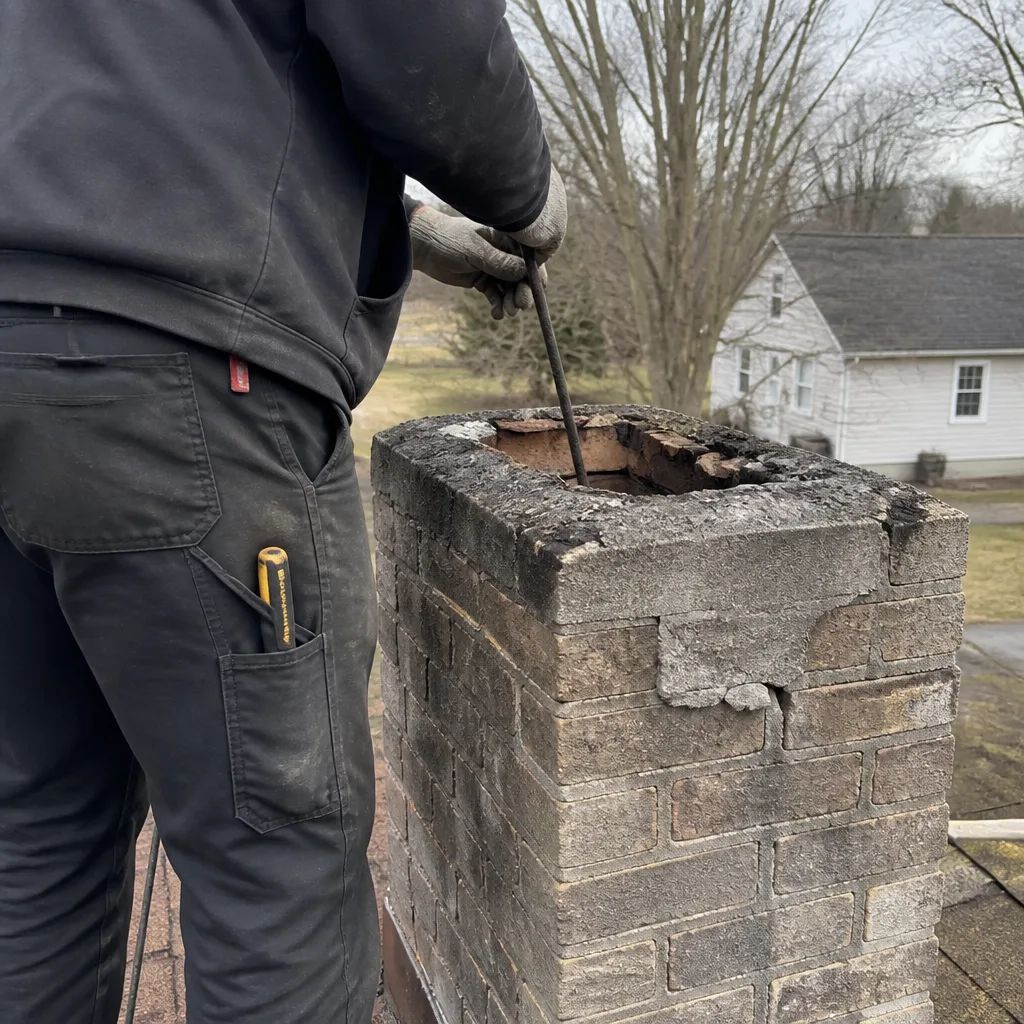 Before
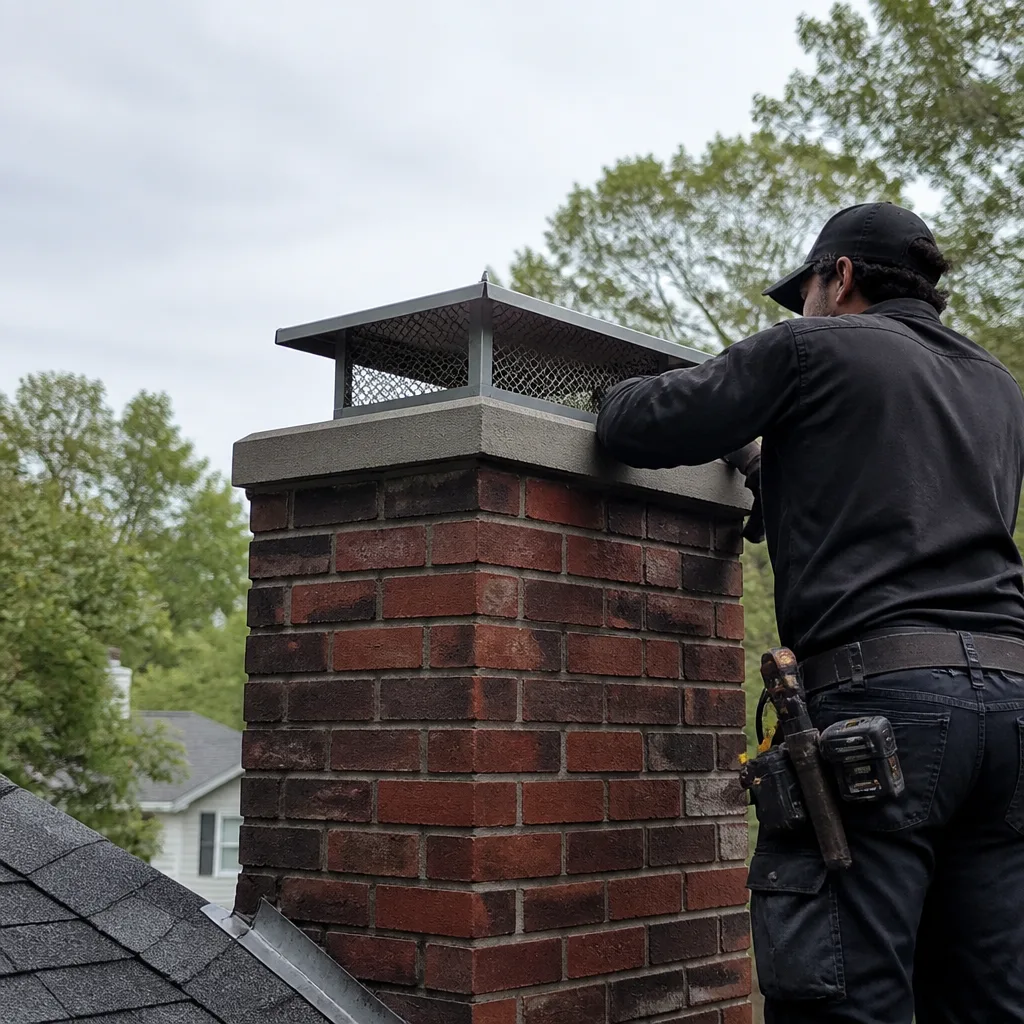 After
After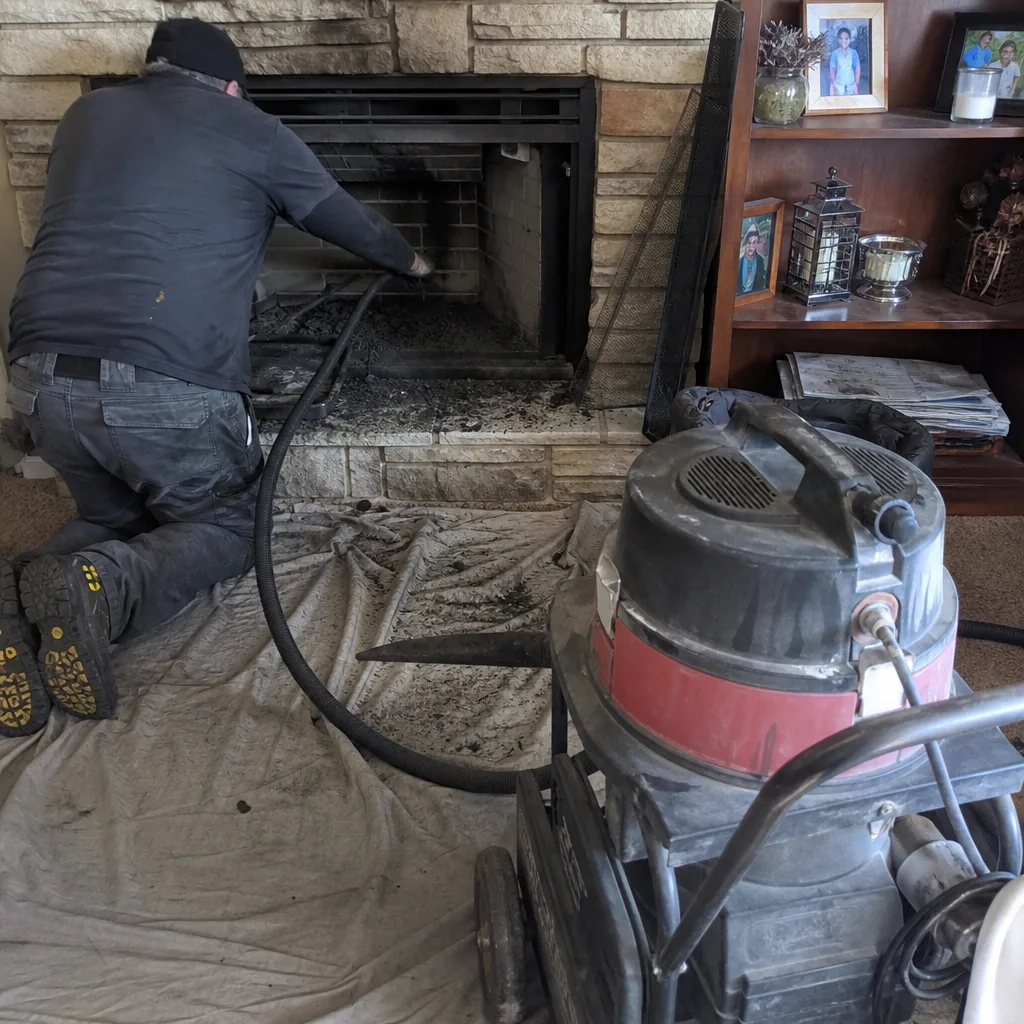 Before
 After
After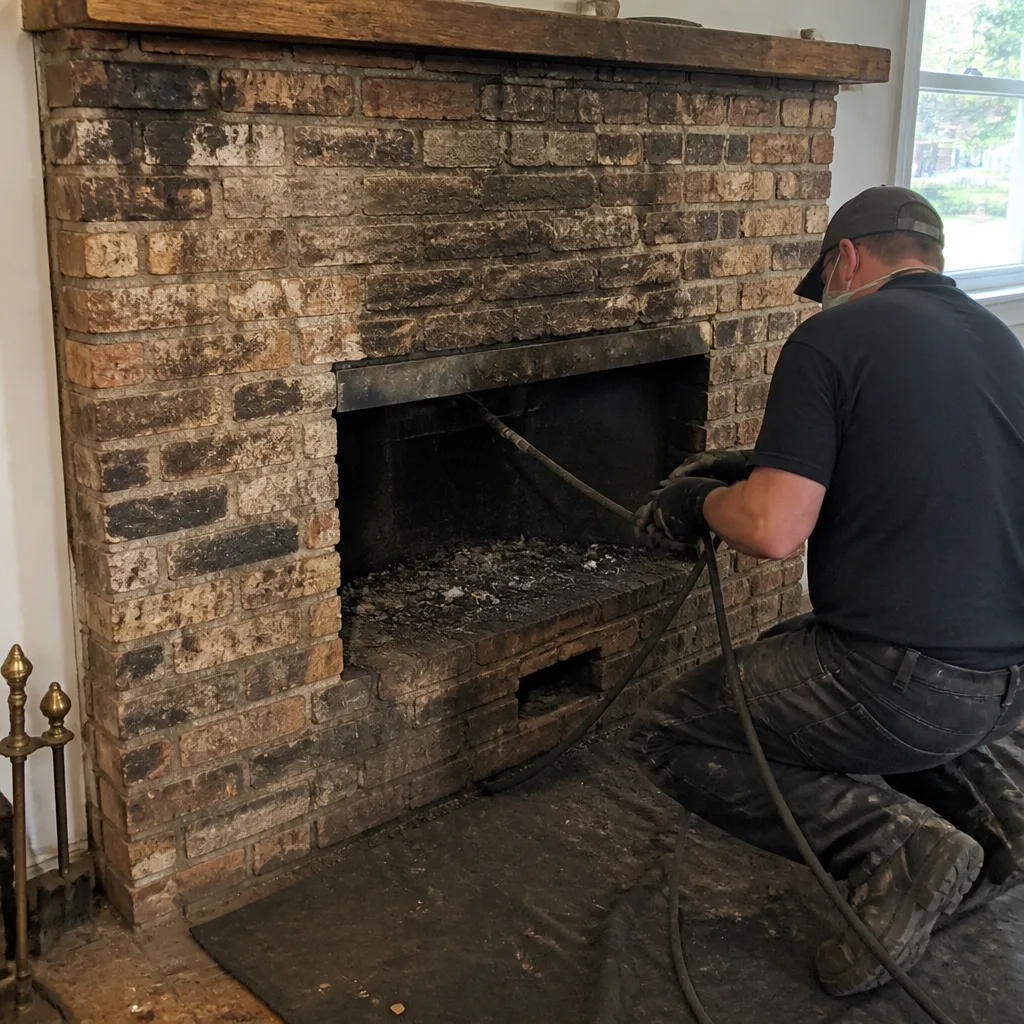 Before
 After
AfterChimney Cleaning & Sweep Maintenance Checklist for Crystal Lake Homeowners
Most Crystal Lake homeowners treat chimney maintenance like an oil change - show up, pay, leave. But a sweep who arrives without your notes on smoke rollback after northwest winds, or that sulfur smell that started in January, burns 15 minutes of billable time just getting oriented. Since 2009, we’ve completed more than 38,000 chimney inspections, and the appointments that start with homeowner observations consistently reveal problems the camera alone would miss. This checklist turns you into a credible witness before our truck reaches your driveway.
Quick Answer
A complete chimney maintenance checklist for Crystal Lake homeowners includes four phases: pre-appointment observation of firebox, damper, and exterior conditions; documentation of burn frequency and wood moisture from the prior season; a structured post-cleaning verification of five deliverables; and proper archival of the written report and warranty for resale or insurance purposes. Most homes in Crystal Lake need our Chimney Cleaning & Sweep services with a Level 2 camera inspection every 12 months given the roughly 180-day heating season from October through April.
Table of Contents
- Room-by-Room Pre-Appointment Checklist: What to Observe Before the Sweep Arrives
- Burn Frequency Benchmarks for Crystal Lake’s Heating Season
- How to Document Wood Type and Moisture Content
- Post-Cleaning Sign-Off Checklist: Five Things to Verify
- How to Store Your Written Report and Warranty for Resale or Claims
- What Chimney Maintenance Costs in Crystal Lake
- Common Mistakes to Avoid
- When to Call a Professional
- Frequently Asked Questions
 Before
 After
AfterRoom-by-Room Pre-Appointment Checklist: What to Observe Before the Sweep Arrives
The best chimney inspection in Crystal Lake starts with evidence you collected. Our NFPA 211 Level 2 camera scan will find what it finds, but your observations tell us where to look first and whether conditions have changed since last season.
At the Firebox
Check these items during or immediately after your last fire of the season, when memory is fresh:
- Smoke staining above the lintel. Dark streaks on the brick or refractory panel above the firebox opening mean smoke is escaping the throat before the damper. Note whether this is new or worsening.
- Cracked or shifted firebrick. Heat expands cracks; freeze-thaw in unheated Crystal Lake basements widens them. A pencil-width crack is worth photographing.
- Depth of ash accumulation. More than two inches of ash insulates the firebox floor and changes combustion efficiency. Note the depth, not just “it needs cleaning.”
- Log grate position. If the grate has settled or tilted, it may indicate deteriorating hearth support or prior chimney fire damage to the structure below.
At the Damper
The damper is the most frequently replaced component we see in Crystal Lake homes built between 1985 and 2005. Operate it fully open and fully closed:
- Does it seat completely when closed? A gap as narrow as a nickel wastes heated air and admits cold drafts down the flue.
- Does the handle or chain move freely through its full range? Stiffness often means creosote buildup on the throat, not just handle corrosion.
- Is there a cold draft even when closed? This may indicate a missing or degraded chimney cap, common after the wind events that roll across the farmland west of Crystal Lake.
At the Smoke Chamber
The smoke chamber - the area above the damper and below the flue liner - is where most chimney fires begin. You cannot see it without a camera, but you can observe symptoms:
- Heat radiating from the masonry wall adjacent to the smoke chamber. In two-story Crystal Lake colonials, this often manifests as a warm spot on the second-floor wall directly above the fireplace.
- Bits of mortar or sand in the firebox. These fall from deteriorating smoke chamber parging (the smooth mortar coating that directs smoke into the flue).
- Unusual odors after rain. A musty smell distinct from fireplace ash suggests water intrusion through the smoke chamber wall, not just a leaky cap.
Exterior: Crown, Cap, and Flashing
Walk the perimeter with binoculars after a hard rain. Crystal Lake’s freeze-thaw cycle is severe; water trapped in crown cracks expands and fractures the concrete within two seasons.
- Crown condition. Look for cracks wider than a dime, especially radiating from the flue tile. The crown should slope away from the flue opening; pooling water indicates improper pitch or settlement.
- Cap integrity. Mesh screens should be intact - no gaps larger than a quarter-inch where squirrels or starlings can enter. Crystal Lake’s mature oak canopy supports significant bird pressure.
- Flashing at the roofline. Lifted or corroded step flashing is the leading cause of interior water damage we document. Note any new ceiling stains after wind-driven rain from the west.
- Spalling brick or deteriorated mortar joints. Flaking brick faces (spalling) indicate moisture saturation and freeze damage. Common on north-facing exposures in Crystal Lake’s older neighborhoods near the historic district.
Photograph everything. Date the photos. Email them to yourself with a subject line you’ll find later: “Chimney observations, [address], [date].” When our technician arrives, these photos become the first screen of our inspection plan.
Burn Frequency Benchmarks for Crystal Lake’s Heating Season
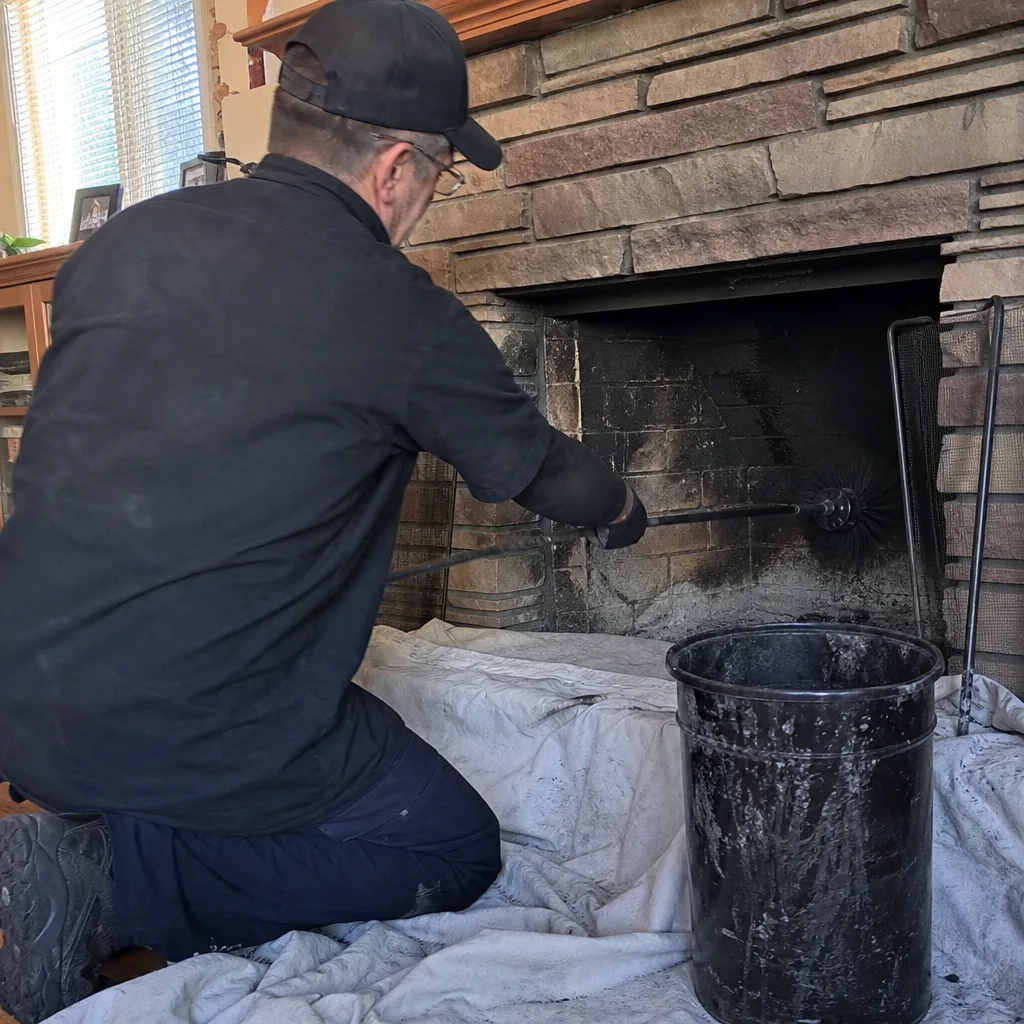
Crystal Lake’s heating season runs roughly October through April - about 180 days when overnight lows drop below 40°F. How you burn during this period determines how fast creosote accumulates and whether “annual cleaning” is adequate or optimistic.
The Burn Frequency Scale
We use this framework with homeowners across McHenry County. Be honest about your usage; understating it leads to deferred maintenance and, in our experience, the most expensive surprises.
| Usage Level | Fires Per Week (Heating Season) | Recommended Sweep Interval | Typical Creosote Class |
|---|---|---|---|
| Occasional ambiance | 1-2 | 18-24 months | Class I (sooty, brushable) |
| Regular supplemental heat | 3-5 | 12 months | Class I-II (some flaky glaze) |
| Primary or heavy supplemental | 5-7+ | 6-9 months | Class II-III (hardened or tar-like) |
| Continuous wood heat | Daily, all day | 3-6 months | Class III (glazed, requires chemical treatment or rotary removal) |
Crystal Lake’s position in the Fox River Valley creates a local wrinkle: temperature inversions in late November and February can trap combustion byproducts against the chimney exterior, cooling the flue faster than in open prairie. A cooler flue surface means more condensation and faster creosote buildup at any given burn frequency. Homeowners in the lower-lying areas near the river or Crystal Lake itself often need cleaning 15-20% more frequently; see Chimney Cleaning Warning Signs: A Crystal Lake Homeowner’s Reference Guide for what to watch for.
What to Record Each Season
Before your sweep appointment, write down:
- Approximate number of fires this season (estimate if necessary: “weekends only” = ~30 fires; “most evenings” = ~90 fires)
- Average burn duration (a 2-hour evening fire versus an all-day burn produce different residue patterns)
- Whether you burned overnight or let fires die naturally (smoldering produces more creosote than active combustion)
- Any change in draft performance mid-season (often the first sign of partial blockage)
This information lets us calibrate our inspection intensity. A homeowner reporting 120+ fires with declining draft in February gets a more aggressive flue scan than one who burned a dozen times for ambiance.
How to Document Wood Type and Moisture Content
Not all creosote is the same. Wet wood residue is categorically different from dry-wood creosote in composition, removal difficulty, and fire risk. The sweep who does not know your wood source is guessing at what they’ll find.
Wood Type: What to Record
Hardwoods (oak, hickory, maple) burn hotter and cleaner than softwoods (pine, fir, spruce) but produce a denser, more adherent ash residue. Crystal Lake homeowners typically burn:
- Red and white oak - most common, sourced from local tree services or purchased by the cord from sellers near Woodstock or Marengo
- Silver maple and box elder - often free from neighborhood removals; acceptable if seasoned but burn faster and cooler
- Mixed hardwood - purchased cords; ask your seller for the species mix and note it
- Occasional pine or spruce - holiday tree remnants or construction scrap; note this specifically
Write the primary species and any secondary burning. “Mostly oak, some maple, two pine fires from Christmas tree” is a useful record.
Moisture Content: The Critical Number
Properly seasoned wood reads 15-20% moisture on a split face. Above 25%, combustion is incomplete, flue temperatures drop, and creosote production increases exponentially. We have removed Class III glazed creosote from Crystal Lake chimneys where the homeowner burned “seasoned” wood that tested at 35% moisture.
You do not need a moisture meter, though they’re inexpensive. Instead, document these observable characteristics:
- Split face appearance. Seasoned wood shows radial cracks, grayed color, and loose bark. Green wood looks freshly cut, bark adheres tightly, and the face is smooth.
- Weight for size. A seasoned oak split feels noticeably lighter than a green one of the same dimensions.
- Hissing or sizzling in the fire. Audible moisture escape means the wood is too wet. Note if you heard this regularly.
- Black, tarry droplets on the glass. This is unburned volatile condensation, almost always from wet wood or insufficient air supply.
- Source and purchase date. “Bought April 2023, stacked uncovered until October” tells us the wood was rained on during seasoning. “Inherited from prior homeowner, age unknown” is also worth noting.
When we find heavy glazed creosote, knowing your wood was wet helps us explain the cause and recommend solutions - denser stainless liners from Olympia Chimney for improved draft, or improved wood storage practices - rather than simply billing for difficult removal.
Post-Cleaning Sign-Off Checklist: Five Things to Verify Before the Truck Leaves
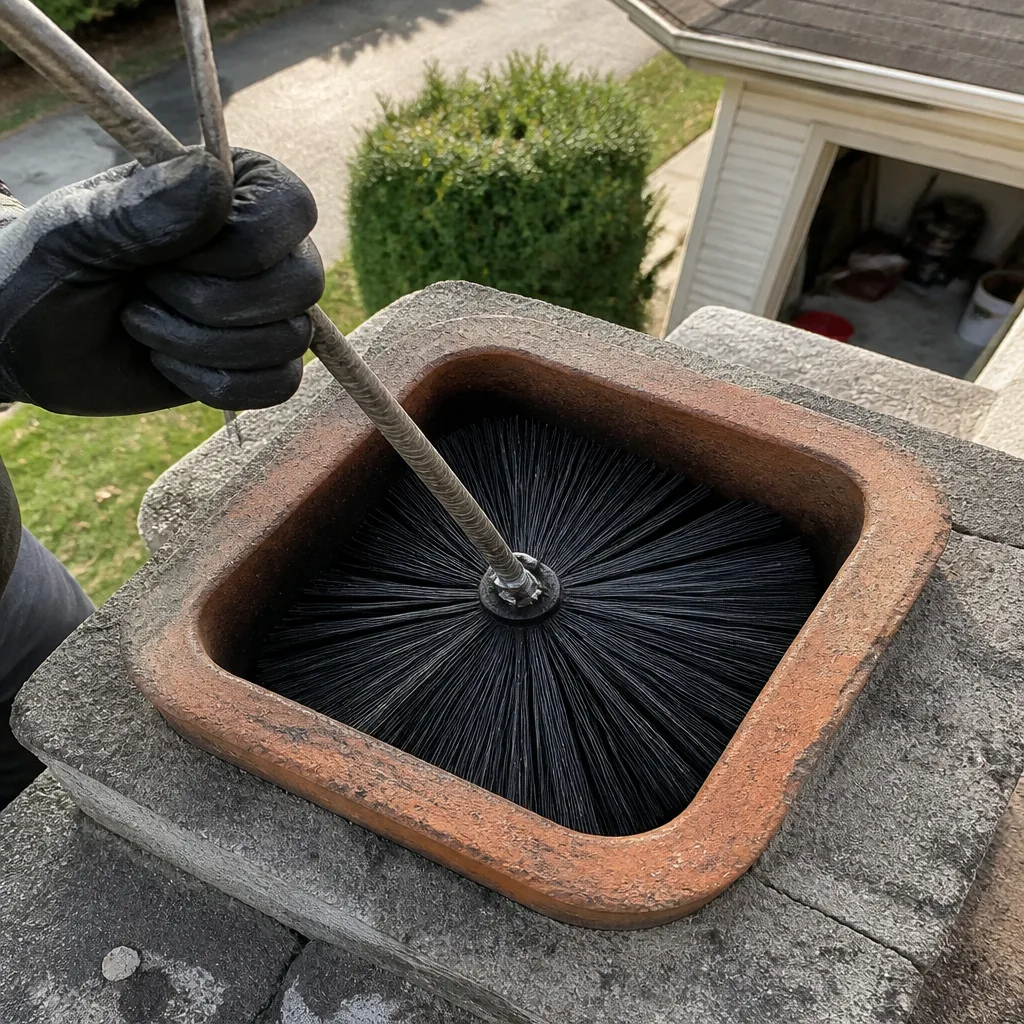
A proper chimney service in Crystal Lake should conclude with documentation, not just a clean flue. Under Clause 4 of the Haven Standard, we provide a documented photo record on every job. But every company promises something. Here’s what to verify while the technician is still on site.
1. The Camera Footage or Photo Record
Request to see the flue scan before and after cleaning. You should observe:
- Clear identification of the flue segment (top, mid, bottom, or transition)
- Visible change in surface condition - from glazed or soot-coated to brush-cleaned masonry or liner
- Any noted defects still visible after cleaning (cracks, gaps, missing mortar) with the technician’s verbal explanation
If the company cannot show you dated, labeled images, they did not perform a documented inspection. This is non-negotiable under Haven Standard Clause 4, which we’ve followed since 2009.
2. The Written Scope and Price
Before any work began, you should have received a written price and written scope. After completion, verify:
- The work performed matches the scope exactly
- Any deviations were discussed and documented in writing with adjusted pricing
- The final invoice references the original written estimate number
Haven Standard Clause 1 requires this. We do not start work without it, and no reputable sweep should.
3. The Condition Assessment
A cleaning is not an all-clear. Ask specifically:
- What is the condition of the flue liner? (Sound, cracked, spalled, or missing sections?)
- Is the smoke chamber parged and intact?
- What is the crown and cap condition? Will water enter before next season?
- Are there any conditions that require monitoring, repair, or replacement?
The technician should answer in plain terms with reference to the visual evidence. Vague reassurance - “it looks fine” - without specifics is not a professional assessment.
4. The Warranty Documentation
Our 365-Day Done Right Promise is stamped on every job: if it’s not done right, we make it right. Whatever your provider offers, get it in writing with:
- What is covered (cleaning quality, damage during service, re-inspection if problems arise)
- Duration (ours runs 365 days from service date)
- How to invoke it (phone number, required documentation)
5. The Next Service Recommendation
Based on your burn frequency, wood quality, and flue condition, the technician should recommend:
- Next sweep date or interval
- Any interim inspections (after severe weather, after chimney fire, before home sale)
- Repairs or improvements to schedule before next burning season
Do not let them leave with “call us next year.” Get a specific month or season, and ask what conditions would accelerate that timeline.
How to Store Your Written Report and Warranty for Resale or Claims
The chimney inspection report you receive today becomes evidence in three future scenarios: home sale, insurance claim, or dispute with a subsequent service provider. Most homeowners file it and forget it. Here’s how to make it retrievable and credible years later.
File Format That Holds Up
Paper degrades, ink fades, and filing cabinets relocate. We provide:
- Printed report with dated photos - for immediate reference and home file
- PDF with embedded images - emailed to you, suitable for forwarding to insurers, buyers, or attorneys
- Cloud archive access - our documented record system, running since 2009, retains every report with searchable address and date fields
PDF is the archival standard. JPEGs of individual photos lack context and can be challenged as undated or misattributed. A single PDF with cover page, scope, findings, photos with captions, technician notes, and warranty terms creates an unbroken chain of documentation.
Storage Protocol
- Immediate: Save the PDF to a dedicated folder: “Home / Chimney / [Year]”. Email it to yourself with a searchable subject line.
- Annual: After each service, add the new PDF and update a simple spreadsheet: date, company, technician name, findings summary, next recommended service, warranty expiration.
- Before sale: Compile all reports into a single folder. Buyers and inspectors in Crystal Lake’s competitive market increasingly request 3-5 years of maintenance records.
- After claim or dispute: The dated, geotagged photo record from our system provides independent verification of condition at a specific time. This has resolved multiple insurance disputes for our customers.
We use materials from Gelco, Famco, and Copperfield for repairs and installations, and our reports specify manufacturer and part number when applicable. This granularity matters for warranty transfers and insurance substantiation.
What Chimney Maintenance Costs in Crystal Lake
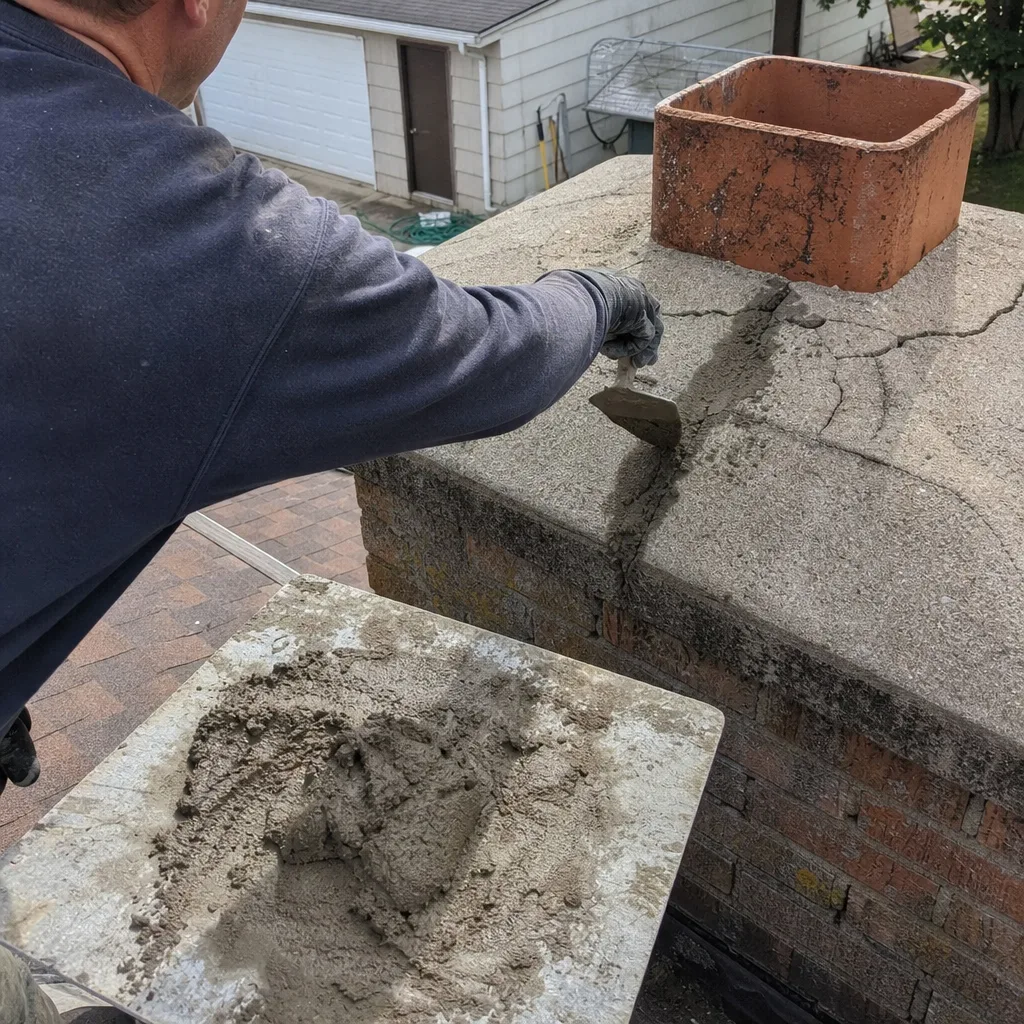
Price transparency is central to how we operate. Below are the ranges we see in the Crystal Lake market for standard services, based on our experience and competitor estimates reviewed through our Free Second Opinion service.
| Service | Crystal Lake Price Range | What Affects Cost |
|---|---|---|
| Level 1 sweep and basic inspection | $129-$189 | Accessibility, number of flues, amount of ash/debris |
| NFPA 211 Level 2 inspection with camera scan | $249-$379 | Flue height, liner type, number of appliances served, documentation detail |
| Class I-II creosote removal (standard sweep) | Included in inspection | Normal residue from dry hardwood, brushable |
| Class III glazed creosote removal | $180-$450 additional | Chemical pretreatment, rotary cleaning, multiple passes, disposal |
| Chimney cap replacement (standard stainless) | $285-$495 | Flue count, mesh specification, wind rating for Crystal Lake exposure |
| Crown repair (sealant or resurfacing) | $350-$750 | Crack extent, surface area, access complexity |
| Smoke chamber parging | $850-$1,800 | Chamber size, access, material (cementitious vs. refractory) |
| Stainless steel liner installation | $2,400-$4,800 | Flue length, diameter, insulation requirements, appliance type |
These are ranges, not quotes. Your written price before work starts - Haven Standard Clause 1 - will reflect your specific chimney configuration and condition. We do not charge by the hour; the price we write is the price you pay.
Factors that increase cost in Crystal Lake specifically:
- Tall chimneys on three-story homes common near the lake and in newer subdivisions - more liner length, more scaffolding or ladder work
- Historic masonry in the original downtown grid - fragile brick, custom cap fabrication, careful mortar matching
- Severe creosote from wet wood or prior neglected maintenance - may require chemical treatment and return visit
- Multiple appliances (fireplace plus furnace or water heater) sharing a flue - requires more extensive inspection and often separation upgrades
Call (815) 923-3185 for a free estimate with exact pricing for your home.
Common Mistakes to Avoid
- Assuming “no problems” means no inspection needed. Carbon monoxide leaks and liner deterioration produce no visible smoke or odor until they’re dangerous. Crystal Lake’s tight, energy-efficient homes built since 2010 are particularly susceptible to low-level CO accumulation.
- Burning Christmas trees or construction scrap. The rapid, uncontrolled combustion produces flue temperatures that crack liners and ignite creosote. We see this every January in Crystal Lake emergency calls.
- Storing firewood against the house foundation. Besides termite and carpenter ant risk, wood against the foundation traps moisture against masonry and creates a direct path for pests into the home. Stack 18 inches away, elevated, with south or west sun exposure.
- Accepting a “flashlight inspection” as adequate. NFPA 211 Level 2 requires camera documentation of the full flue interior. A flashlight from the top or bottom misses cracks, gaps, and creosote buildup in the middle third where temperatures fluctuate most.
- Ignoring wind-direction draft problems. Northwest winds across Crystal Lake’s open prairie can reverse chimney draft in homes without proper cap design or adequate flue height. “Sometimes it smokes back” is a symptom, not a quirk.
- Delaying cap or crown repair to “save money.” Water entry destroys masonry from the inside. A $350 crown repair prevents $3,000+ rebuild. We’ve documented this progression repeatedly in homes near the Fox River where freeze-thaw is most severe.
- Discarding documentation after “the job is done.” Insurance claims for chimney-related fires are routinely denied without proof of maintenance. Your report is a financial protection instrument, not clutter.
When to Call a Professional
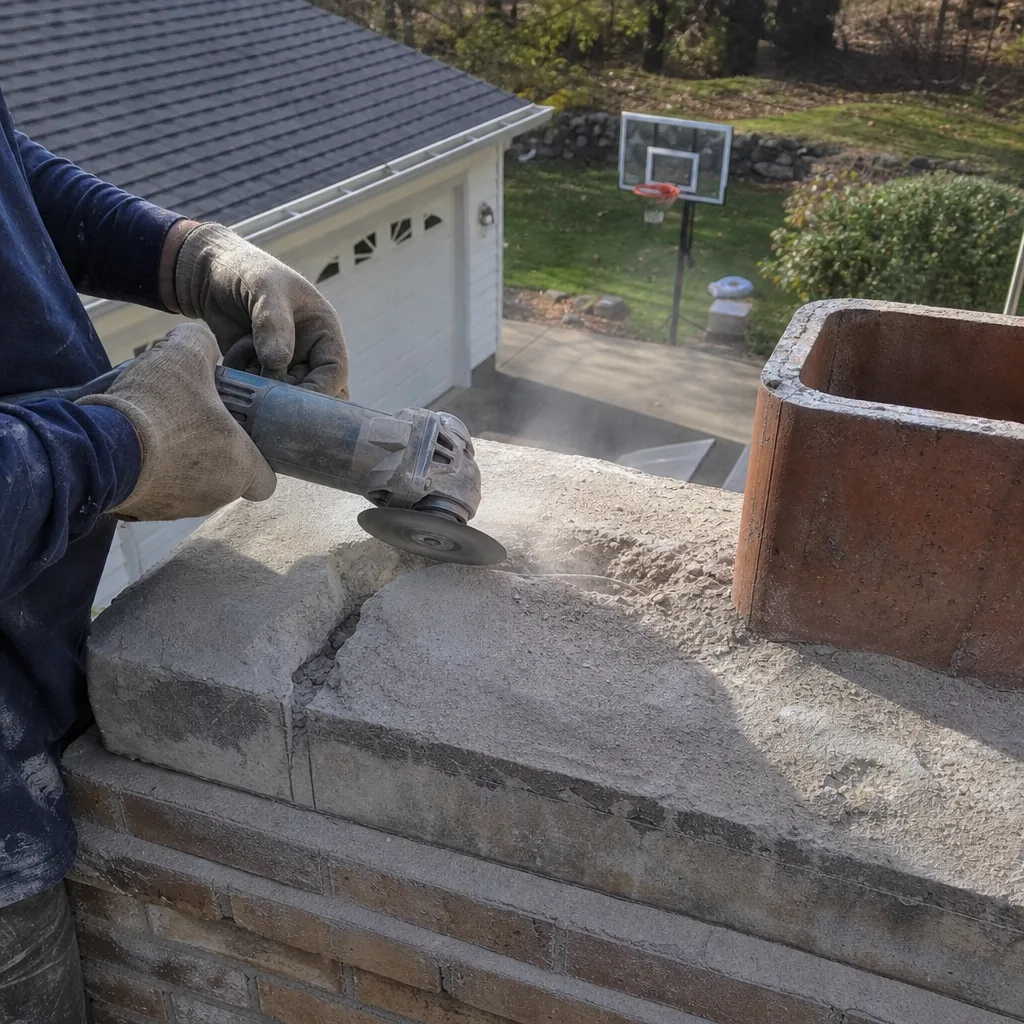
Some conditions require immediate professional evaluation regardless of your scheduled maintenance calendar. Call a sweep if you observe: visible flames or glowing material in the flue (chimney fire); sudden draft reversal with headache or nausea (possible CO); pieces of tile or masonry in the firebox (liner collapse); water streaming down the flue during rain (cap or crown failure); or any odor of gas near a gas-log fireplace (leak, not chimney issue).
For routine maintenance, scheduling before the October rush ensures availability and often better pricing. Chimney Cleaning & Sweep in Crystal Lake from Level Two Chimney Crystal Lake includes the NFPA 211 Level 2 camera inspection, documented photo record, and written price before work begins. We offer free estimates in Crystal Lake - call (815) 923-3185.
Frequently Asked Questions
A professional chimney sweep with NFPA 211 Level 2 camera inspection in Crystal Lake typically runs $249-$379 for a standard single-flue system, with Class III creosote removal adding $180-$450 if needed. Basic sweeps without camera documentation may cost less but do not satisfy insurer or home sale requirements. Call (815) 923-3185 for a free written estimate with exact pricing for your chimney configuration.
Most Crystal Lake homeowners need a complete inspection and sweep every 12 months given the roughly 180-day heating season from October through April, as detailed in The Complete Guide to Chimney Cleaning in Crystal Lake. Heavy users burning daily should schedule every 6-9 months, while occasional ambiance fires may extend to 18-24 months. The NFPA recommends annual inspection regardless of use; actual cleaning frequency depends on creosote accumulation measured during that inspection.
You should never accept a liner replacement recommendation without seeing dated camera footage of the damage and a written explanation of why repair is insufficient. At Level Two Chimney Crystal Lake, we show you the crack, gap, or corrosion pattern, explain the failure mode, and provide a written scope with alternatives if they exist. Our Free Second Opinion on any competitor’s written estimate is always available - bring us their documentation and we’ll review it against what our camera finds.
Skipped maintenance leads to progressive creosote buildup, which restricts draft and fuels chimney fires; moisture intrusion through degraded crowns or caps, which destroys masonry and rusts metal components; and undetected liner damage, which can allow combustion gases including carbon monoxide to enter living spaces. In Crystal Lake’s tight modern homes, low-level CO exposure presents particular risk because air exchange rates are low. The cost of deferred maintenance typically exceeds preventive care by 5-10x when failure occurs.
Homeowners can remove light ash and debris from the firebox and operate the damper, but flue cleaning requires specialized brushes, rods, and vacuum equipment sized to your liner diameter. More critically, without a camera inspection you cannot assess liner condition, creosote class, or hidden damage. The NFPA 211 Level 2 inspection - which we include on every visit - is not a DIY procedure. For safety, we recommend professional service; chimney fires and carbon monoxide exposure are serious hazards. Browse more guides & resources to stay informed.
A Level 1 inspection is a visual examination of accessible portions of the chimney exterior and interior, appropriate for continued use under unchanged conditions. A Level 2 inspection adds internal camera scanning of the full flue length, accessible areas in attics and basements, and documentation of all findings - required at sale, after chimney fire, after weather damage, or when changing appliance type. Level Two Chimney Crystal Lake performs Level 2 as our default on every visit; we have not performed a Level 1 as a standalone service since 2009.
Documented maintenance supports insurance coverage but does not typically affect premium rates. However, insurers increasingly deny claims for chimney-related fires or water damage when no inspection record exists. Our PDF reports with embedded photos, dated and address-specific, satisfy documentation requirements for all major carriers writing policies in McHenry County. Store them with your policy documents.
The Bottom Line
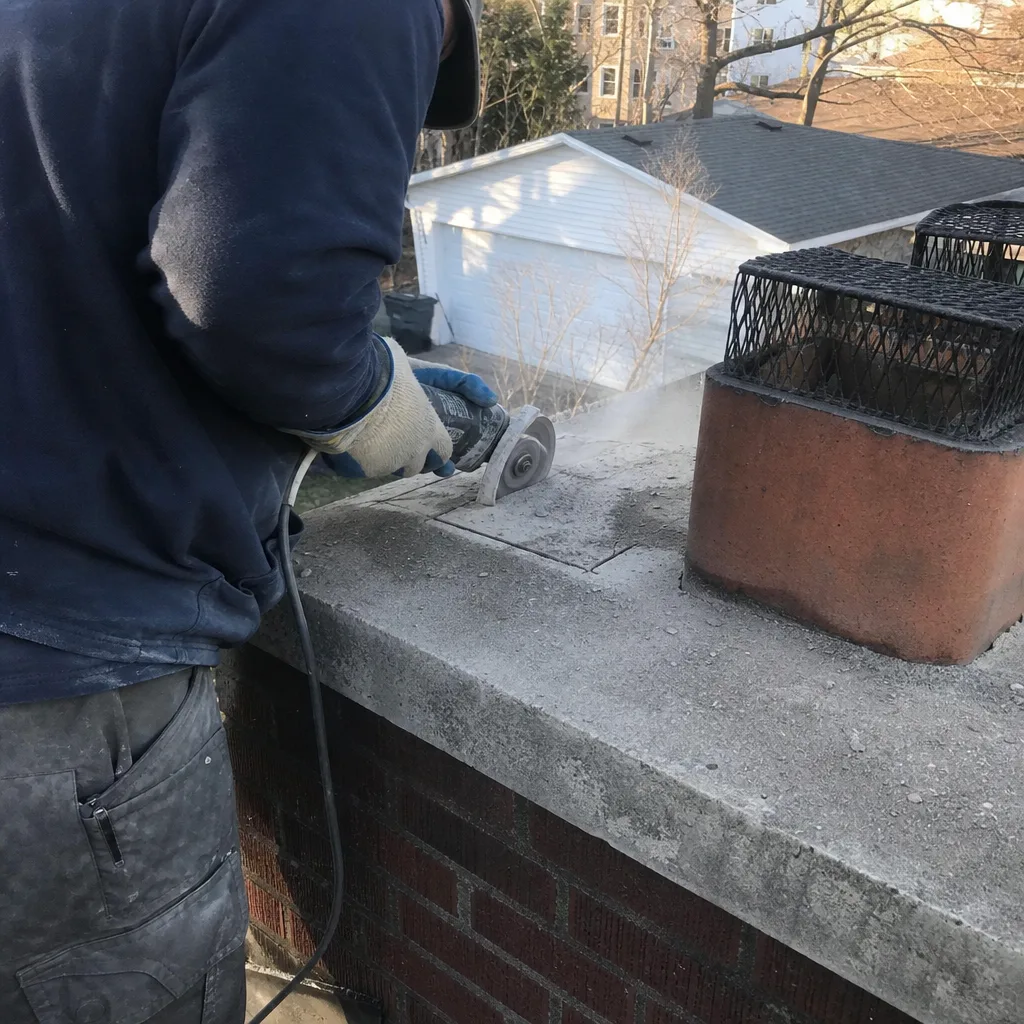
Effective chimney maintenance in Crystal Lake is not a calendar reminder - it is an evidence-based practice built on homeowner observation, documented burn history, verified post-service deliverables, and archival discipline. The checklist above gives you the framework; our Level Two Chimney Crystal Lake home service provides the professional execution. Since 2009, we’ve applied the Haven Standard’s written-price, camera-documented, warranty-backed approach to more than 38,000 chimneys. The homeowners who participate actively in their maintenance - who arrive at the appointment with observations, questions, and records - get the most value from every dollar spent.
Ready to schedule? Call (815) 923-3185 for a free estimate. We’ll provide a written price before any work starts, a full camera inspection with documented photo record, and our 365-Day Done Right Promise on every job.
Written by Corrine Halstead, Owner at Level Two Chimney Crystal Lake, serving Crystal Lake since 2009.